Roof repair and replacement in St. Louis Hills (63109)
St. Louis Hills, around Francis Park, is a neighborhood of well-kept brick homes from the 1930s to the 1950s. We repair and replace their roofs, gutters and siding, and our line is answered 24/7.
- ZIP codes
- 63109
- County
- St. Louis City
- Phone
- (314) 461-6440, answered 24/7
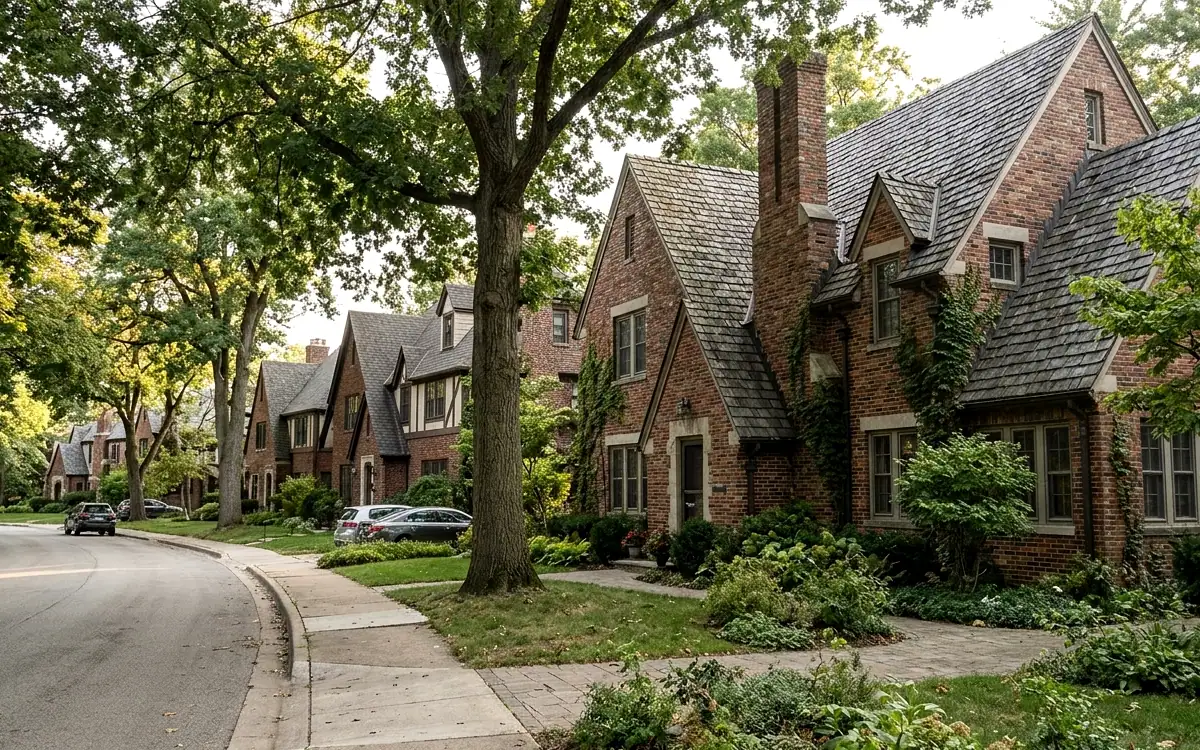
Stars and Stripes repairs and replaces roofs, gutters and siding in St. Louis Hills. Most homes here are brick houses from the 1930s to the 1950s with steep gables, dormers and long valleys. We start with a walk around and an attic check, show you photos of what we find, and lay out repair and replacement options. Our line, (314) 461-6440, is open every hour.
What St. Louis Hills, St. Louis homeowners call us about
Around Francis Park, St. Louis Hills feels settled and orderly: brick houses on generous lots, tree-lined streets and lawns that get real attention. The homes date mostly from the 1930s to the 1950s, and many have the steep roof lines and decorative gables of Tudor and period revival styles. Those details look great from the curb and make the roof harder to keep tight. Slate and tile touches are common on the finer blocks.
Steep pitches mean water moves fast and lands hard where roof planes meet. A valley carries the runoff of two slopes into one narrow channel, and in this neighborhood a single house may have four or five of them. We spend most of a St. Louis Hills inspection looking at what happens in those valleys and at every spot where a dormer joins the main roof. Cleaning and rebuilding a valley costs far less than replacing a ceiling.
Owners here tend to maintain their homes, which helps. It also means many roofs have already been replaced once, sometimes over an older layer. When a leak shows up, we check how many layers sit on the deck and what shape the plywood or planks underneath are in before suggesting repair or full replacement. Call anytime and we will talk through what you are seeing. Deck condition drives that decision more than shingle age does.
Brick revival homes with steep, complicated roofs
Typical St. Louis Hills houses are solid brick with slate, tile or asphalt shingle roofs, front-facing gables, arched doorways and a chimney that rises through the middle of the roof. Original slate and tile survive on some of the grander homes, but most have been recovered in architectural asphalt shingles. Garages are often attached by a lower roof that adds one more transition to seal. Lower garage roofs often match the house in color, if not in age.
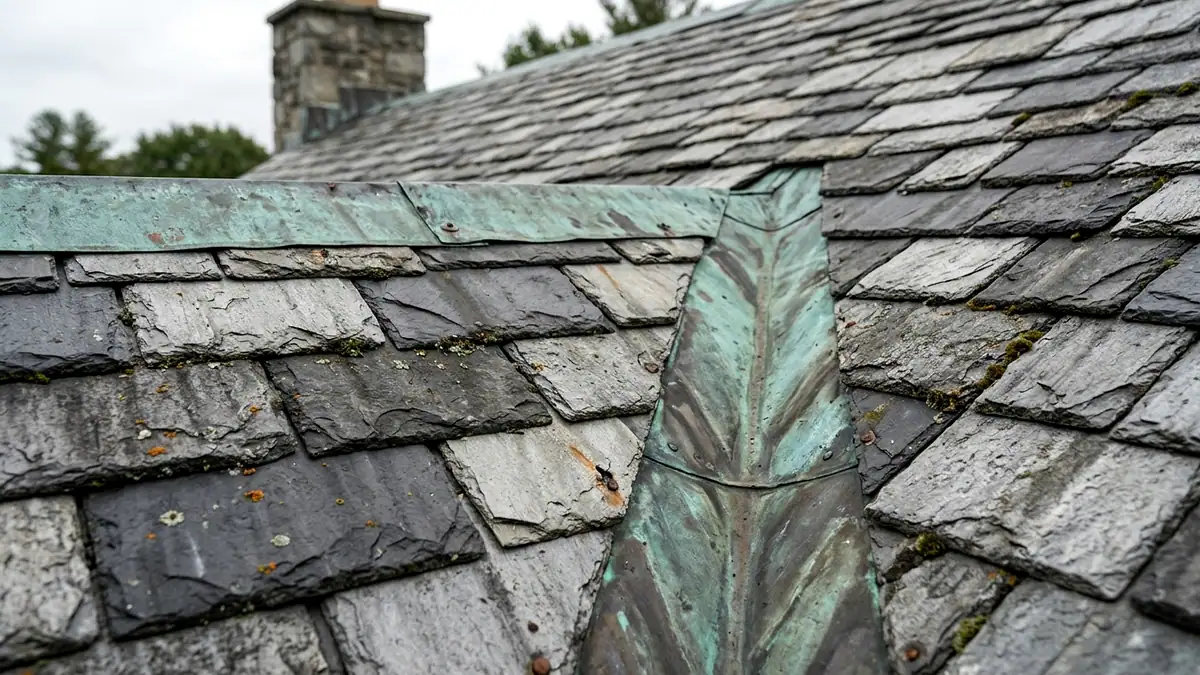
Those intersections are where we find the most wear. Step flashing along a dormer wall, the apron under a front gable and the saddle behind a chimney all depend on metal that is sealed with caulk or roofing cement. When that sealant dries out, water slips behind the shingles. A careful repair rebuilds the flashing and does not just patch the surface above it. Fresh metal at each of those spots usually restores a roof that is otherwise healthy.
Why steep revival roofs leak where they do
Valleys clogged and worn thin
Where two steep slopes meet, runoff concentrates and carries leaves and seed pods. Shingles in the valley wear faster than the field of the roof, and a small gap soon becomes a ceiling stain.
Granule loss on sun-baked slopes
South and west faces on large roof planes take the heaviest sun. Shingles there lose granules, curl at the edges and turn brittle well ahead of the shaded north side.
Rotting rake boards and fascia
On steep gables, the wood trim at the roof edge soaks up wind-driven rain. Paint fails first, then the board softens, and the shingle edge loses its support.
Heat trapped under dormers
Dormers and tall attics hold heat if intake and exhaust vents are not balanced. The extra heat cooks the underside of the decking and shortens shingle life from below.
Branches abrading the surface
Mature trees line these streets, and limbs rubbing the roof in wind wear through granules. Leaf buildup also keeps moisture sitting along valleys and against walls.
Seeing one of these in St. Louis Hills, St. Louis?
Call (314) 461-6440 any hour. We inspect in daylight and show you photos of what we find.
What our crew checks first on a St. Louis Hills roof
- Every valley, looking for worn shingles and trapped debris
- Dormer cheek walls and the step flashing along each one
- Rake boards, fascia and soffits for soft or peeling wood
- Attic intake and exhaust venting under the large roof planes
- Overhanging branches and the shingle surface beneath them
Services St. Louis Hills, St. Louis homes need most
Roof Repair
Everyday roof repair. Most roof problems start small: a few lifted shingles, a cracked boot, a nail that backed out.
Roof Replacement
Full tear-off, start to finish. A roof replacement strips the old covering down to the deck, repairs what is hiding underneath, and builds a new system on top.
Roof Flashing Repair
Flashing joint repair. Flashing is the thin metal and rubber that turns water away at every joint in a roof.
Roof Ventilation
Attic airflow that protects shingles. A roof needs air moving under it to shed summer heat and winter moisture.
Asphalt Shingle Roofing
Shingles done properly. Asphalt shingles cover most St.
Soffit & Fascia Repair
Roof edge trim repair. The soffit and fascia close the edge of your roof, keep out birds and wasps, and carry your gutters.
Nearby areas we also cover
Roofing questions from St. Louis Hills, St. Louis
How do I know if my St. Louis Hills roof needs repair or replacement?
Look at how widespread the trouble is. A few lifted shingles or one failed flashing is a repair. Curling, bare patches and granules in the gutters across most slopes point to replacement. We inspect the roof and attic, show photos, and tell you which path makes sense.
Do steep roofs in St. Louis Hills cost more to replace?
Steeper pitches take more time and safety equipment, and complex roofs with many valleys and dormers use more flashing and create more cutting waste. That usually raises the price compared with a plain gable. We point out which features drive the number when we walk you through the photos.
Can you repair the original slate on my St. Louis Hills home?
Sometimes repair with matching salvage slate is the right answer, and sometimes synthetic slate is a sensible choice for a section or the whole roof. We look at the condition of what you have, the cost of each path and how the house reads from the street, then lay out the options.
What should I do about a leak in St. Louis Hills at night?
Call (314) 461-6440, because we answer 24/7. Move belongings away from the drip, put a bucket underneath and take photos if it is safe. Do not climb a wet, steep roof yourself. We talk you through next steps and arrange a tarp or repair.
Roof or siding trouble in St. Louis Hills, St. Louis?
Call any hour. We set up a daylight inspection and walk you through what we find.