Historic and flat roof repair in St. Charles, MO (63301)
St. Charles pairs a historic Main Street of old brick buildings with miles of newer subdivisions. Each needs different roofing knowledge, and we bring both to the job.
- ZIP codes
- 63301, 63303, 63304
- County
- St. Charles County
- Phone
- (314) 461-6440, answered 24/7
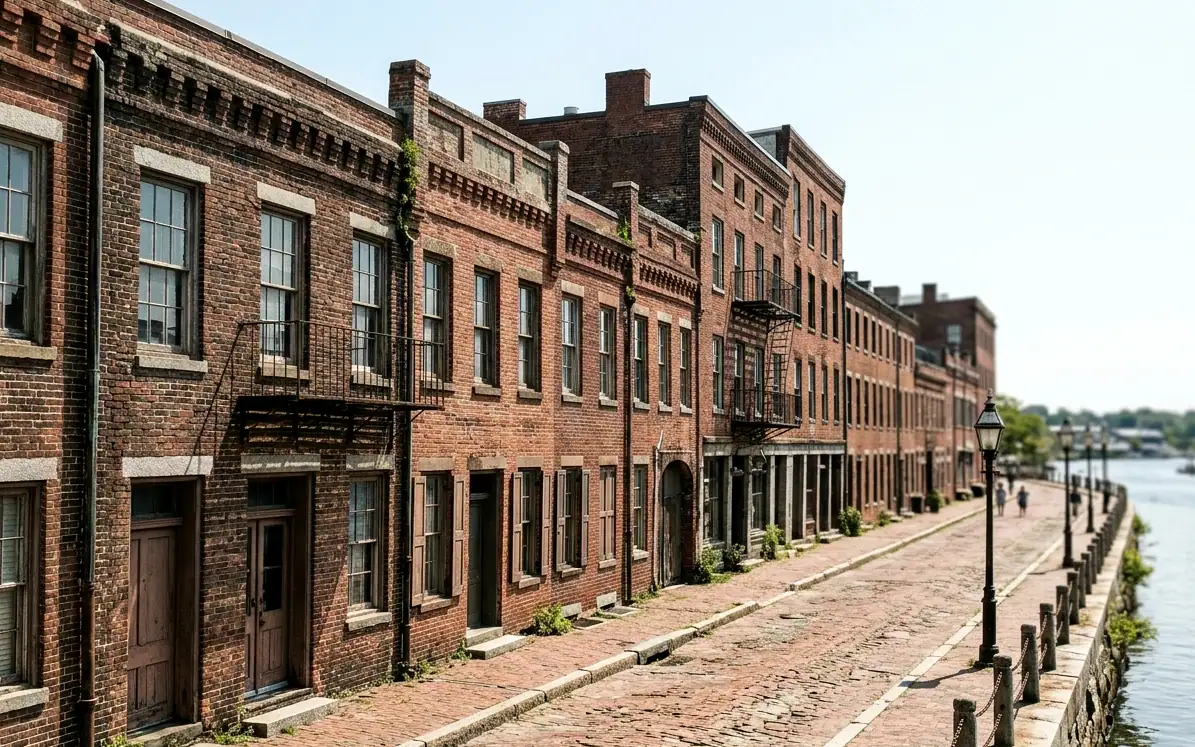
We repair and replace flat roofs, parapets and shingle roofs across St. Charles, from the brick buildings along historic Main Street to newer subdivision homes. A visit covers the roof surface, the drains or gutters and the attic or top floor ceiling, followed by a photo walkthrough. Call 24/7, including after storms and overnight.
What St. Charles, MO homeowners call us about
Walk the brick-paved blocks of Main Street along the Missouri River and you see why roofing in St. Charles differs from most suburbs. Many of the buildings date to the nineteenth century, with shared walls, parapets and low-slope roofs hidden behind the brick front. Above the shops and restaurants are apartments, offices and storage spaces, and every one of them depends on a roof the public never sees from the street.
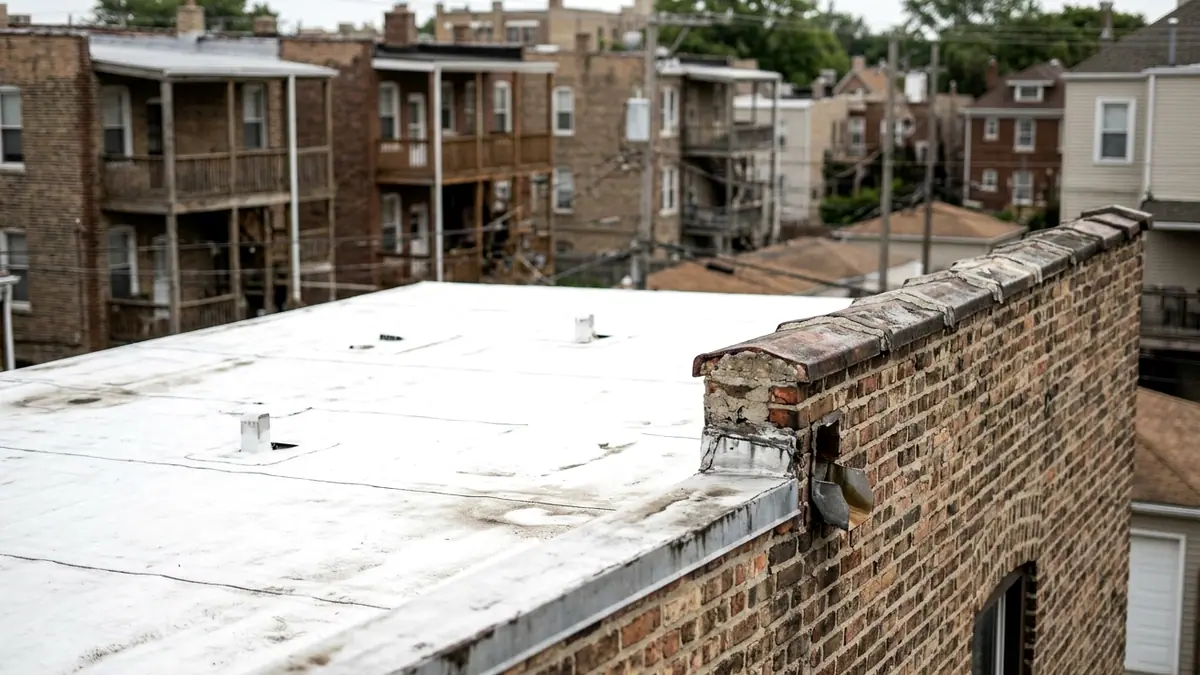
These roofs are mostly flat or nearly flat, so they live by drainage. Water that sits for more than a day or two finds seams, penetrations and the base of the parapet. Old built-up roofs, patched many times, often show alligatoring, blistering and open lap seams. The brick parapets above them add another factor: failing mortar joints and loose coping let water in beside the membrane, so the wall needs attention along with the roof.
Outside the old downtown, St. Charles looks like the rest of the county: suburban streets, asphalt shingles and homes from many decades. We handle both kinds of work and fit the approach to the building. Historic work calls for patience and care with old masonry, while a subdivision roof calls for speed and a clean installation. In both cases, you see what we find before any work begins.
Brick buildings downtown and subdivisions beyond
The old town core has two-story brick commercial buildings, narrow townhouses and early twentieth-century homes with a mix of gable and flat roofs. Roof coverings include rolled or built-up membranes on the flat sections, with older slate or metal on a few historic homes. Chimneys and parapets are built of soft historic brick, and the mortar has often been repointed more than once. Framing may be old timber, which makes it important to find soft decking early.
Beyond downtown, neighborhoods from the 1960s through the 2000s fill the city, with a growing share of newer builder-grade homes toward the west. Their roofs are laminated asphalt shingles on 6/12 to 8/12 slopes, and the typical concerns are age, ventilation and flashing at garages and porches. Along the river bottoms, humid air also speeds algae growth and attic condensation. The two halves of the city need different checklists, so we change our approach by building.
Why old brick buildings and flat roofs leak here
Ponding on low slope roofs
Settled framing and tired membranes create low spots where water stands for days. Standing water ages the surface faster, finds seams, and adds weight to old timber framing underneath.
Parapet coping and mortar failure
Brick parapets take rain from both sides. Cracked coping stones and open mortar joints let water into the wall, and it comes out as stains on the ceiling below.
Aged built-up membrane seams
Layers of tar and felt, patched across decades, shrink and split at laps. Blisters and alligatoring show where the surface has lost its flexibility and moisture is trapped.
Drain and scupper blockage
Internal drains and scuppers on flat roofs clog with leaves and grit. When they back up, water rises against the parapet and finds every weak seam at once.
Subdivision shingles reaching age
Newer neighborhoods have their own cycle, with roofs from the 1990s and 2000s showing granule loss and curling. These need replacement planning rather than the repairs older brick buildings need.
Seeing one of these in St. Charles, MO?
Call (314) 461-6440 any hour. We inspect in daylight and show you photos of what we find.
What our crew checks first on a St. Charles flat roof
- Low spots where water stands for more than a day
- Parapet coping, mortar joints and the wall-to-roof seam
- Drains, scuppers and downspouts for debris and slow flow
- Membrane seams, blisters and patched areas from past repairs
- Rooftop units and penetrations with their curb flashing
Services St. Charles, MO homes need most
Flat Roof Repair
Low-slope roof leaks fixed. Most St.
Modified Bitumen Roofing
Layered cap sheet roofing. Modified bitumen is a layered asphalt roof, reinforced with polyester and finished with a granulated cap sheet.
Commercial Roofing
Small commercial roof work. We handle roofs on small commercial buildings, corner storefronts and multi-unit apartment buildings across the St.
Roof Repair
Everyday roof repair. Most roof problems start small: a few lifted shingles, a cracked boot, a nail that backed out.
Slate Roof Repair
Careful repair on natural slate. Natural slate can outlast the house when it is repaired correctly.
Parapet Wall & Coping Repair
Seal the top of the wall. The short brick wall around a flat roof takes more weather than any other part of the building.
Nearby areas we also cover
Roofing questions from St. Charles, MO
Can you repair a flat roof on a historic St. Charles building?
Yes. We repair the membrane, drains and parapet flashing, and we take care not to damage old brick or interior finishes. We start by finding where water enters, because patches placed in the wrong spot only move the leak. You see photos of the roof before we recommend repair or replacement.
Why does my St. Charles flat roof leak after every rain?
Usually water is ponding or a seam has opened. Check for standing water a day after rain and for blisters or cracks in the surface. Clogged drains and gaps at the parapet are common causes. We trace the source, show you the photos, and explain whether repair is enough.
Does St. Charles need a permit for a new roof?
A full roof replacement generally needs a permit in the city, and historic downtown properties can have additional review. We pull the permit for a full replacement and will tell you what to expect when you call. Smaller repairs usually do not need one.
What roofing material works for low slope sections on a St. Charles home?
Rear additions, porches and garage tie-ins with low slopes need a membrane, not standard shingles. Modified bitumen, TPO and EPDM are common choices. The right one depends on the roof size, foot traffic and budget, and we walk you through the trade-offs for your roof.
Roof or siding trouble in St. Charles, MO?
Call any hour. We set up a daylight inspection and walk you through what we find.