Fiber cement siding in St. Louis for hail and humidity
Fiber cement board gives St. Louis homes a painted-wood look in a material that shrugs off heat, humidity and most hail. It also asks more of the crew, from cutting dust control to careful nailing.
- Answered 24/7
- Siding
- City, county and Metro East
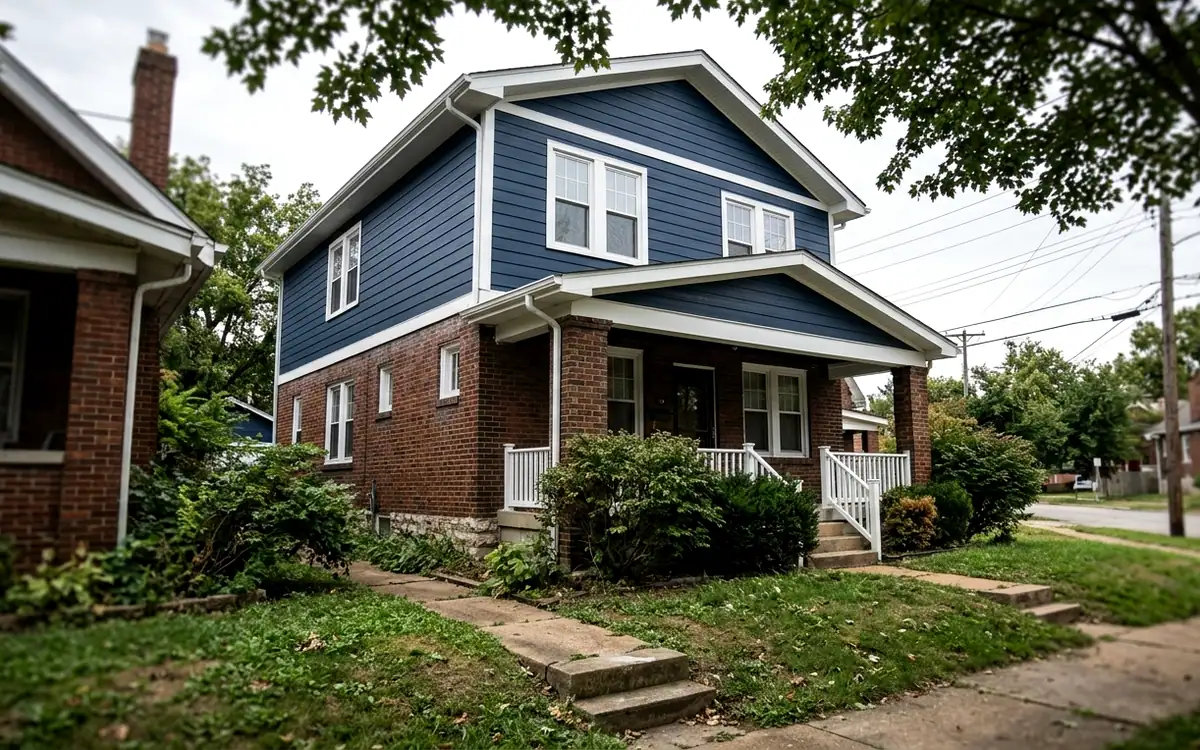
Fiber cement siding is a board made from cement, sand and cellulose fibers, sold as lap, shingle and panel styles such as James Hardie products. It is chosen for dense walls that resist hail dents, rot and fire. A visit covers wall condition, color and finish options, and how the heavy boards will be carried, cut and fastened.
How we handle fiber cement siding on St. Louis homes
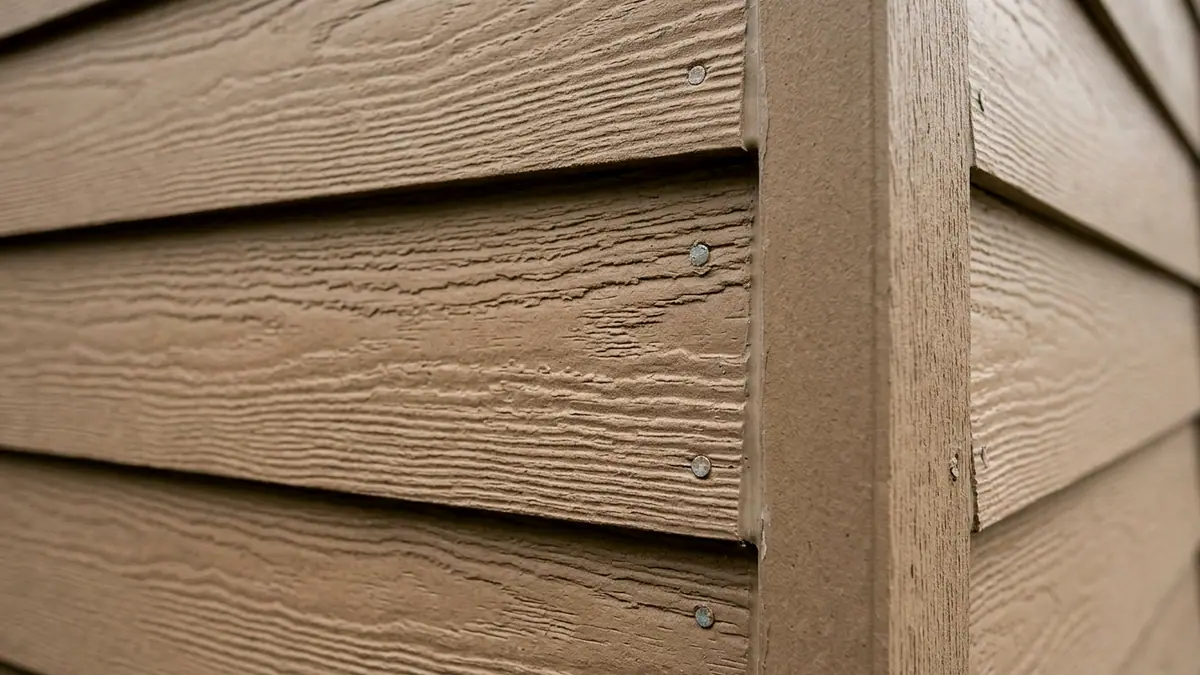
Fiber cement is a mix of Portland cement, sand and cellulose fiber pressed into boards and cured. Unlike vinyl, it is dense and mineral based, so it will not melt, blow away or sag in summer heat. It comes primed for paint or with a baked-on factory color, in smooth, cedar-grain and shingle textures. Many owners choose it because it looks like painted wood without the soft spots wood develops.
Handling is where fiber cement differs most from other siding. Boards weigh several times what vinyl does, so crews carry them on edge and use two people on long pieces. Cutting creates fine silica dust, so we cut outdoors with dust-reducing blades, shears or a vacuum shroud, away from your windows. Pieces are fastened into studs, never left floating, which keeps the wall straight through humid summers.
Finish decides how long the wall looks good. Factory-finished board holds color well and cuts down on field painting, but every cut edge and nail head needs touch-up paint. Field-painted primed board lets you pick any color, though it needs a repaint cycle later. Joints between boards are flashed or covered by trim rather than caulked shut, since sealant alone fails in St. Louis freeze-thaw cycles.
Fiber cement styles and finishes to choose from
Smooth or cedar-grain lap
Long horizontal boards in smooth or textured faces, in four to eight inch reveals. The standard pick for ranches, two-story colonials and craftsman style houses.
Shingle and shake panels
Staggered or straight-edge individual shingles that suit gables, dormers and bungalow fronts. They add real texture to brick houses in older city neighborhoods.
Vertical panel with battens
Wide panels with narrow strips over the joints give a board and batten look with fewer seams, and work well on modern additions and entry gables.
Factory finish or field paint
Baked-on color arrives ready and holds well, while primed board lets you paint any color on site. We explain the touch-up and repaint cycle of each before you decide.
How much does fiber cement siding cost in St. Louis?
Fiber cement costs more than vinyl because the board is heavier, the crew needs special cutting equipment, and every piece is nailed to the studs. Pre-finished board adds material cost but saves on field painting, while primed board is cheaper up front and adds a paint line. Tall walls, shingle patterns, extra corners and rot repair raise the total, and gables on older brick homes are priced per section.
Compare every roofing and siding price range or plan the order of your exterior work.
| Work | Typical range |
|---|---|
| Primed lap board, per square installed | $927 to $1,284 |
| Factory-finished lap board, per square installed | $1,146 to $1,568 |
| Shingle or panel accents, per square installed | $1,273 to $1,732 |
| Painting a primed install, per home | $3,286 to $7,940 |
These are typical ranges for planning only, not quotes, and the final price depends on wall height, detail and condition.
How a fiber cement siding job is handled
- 1
Check the wall and plan lifts
We measure walls and look at second-story access, since board is heavy to lift. Scaffold, lift points and a cutting station are planned before material is delivered.
- 2
Strip, repair and wrap
Old cladding comes off, rotted sheathing is replaced, and the wall is wrapped and flashed. Fiber cement is only as dry as the wall behind it.
- 3
Cut outdoors with dust control
Boards are cut at a station away from your windows and play areas, using dust-reducing blades or shears and a vacuum, and the dust is swept up at the end of each day.
- 4
Fasten to studs at the right spacing
Each board is fastened at the stud lines with corrosion-resistant nails, set flush without crushing the surface, with the gap at butt joints that the maker calls for.
- 5
Touch up paint and final check
Cut edges and nail heads get touch-up paint, trim is set, and we walk the house with you looking at joints, corners and flashing in raking light.
Is fiber cement the right fix for your walls?
Hail dents on metal or vinyl
If an earlier storm left dents, cracks or holes in your current panels and more hail is likely each spring, a dense board that sheds impacts is worth pricing.
Wood siding that rots at the bottom
Wood boards close to the ground or behind downspouts soften and flake. Fiber cement keeps its shape in damp spots and takes paint without peeling like rotted wood.
Vinyl that looks flat beside brick
On brick houses with siding on gables and bays, thin vinyl can look plain. Board with real wood grain and deep shadow lines sits better against masonry.
Tight lots and fire concerns
Dense mineral board does not burn like wood or melt like vinyl. On narrow city lots where houses sit a few feet apart, that difference matters.
Paint failing every few years
If you keep repainting wood siding and still see peeling, a primed or factory-finished mineral board can stretch the time between paint jobs a long way.
A whole-house resurface is planned
When you are already stripping walls, upgrading material is cheapest at that moment. Switching later means paying a second time for teardown, wrap and trim.
Fiber cement siding on St. Louis homes
Humidity is the main reason fiber cement fits this region. St. Louis summers keep walls damp for days after storms, and wood siding on shaded north sides stays green with mildew. Dense board handles that moisture, and hail season from March to June is easier on it than on thin vinyl. On older brick houses in neighborhoods like Tower Grove South and Lafayette Square, painted fiber cement dormers and gables look right beside original millwork.
In newer parts of St. Charles County and out in Chesterfield, owners pair board siding with stone or brick accents on front elevations. Those mixed-material fronts need careful flashing where board meets masonry and at deck ledgers. Freeze-thaw cycles also test caulk, so we favor trim details that shed water rather than relying on sealant. Painted boards need a fresh look every so often, so we help you plan the upkeep from day one.
Where we handle fiber cement siding
The city, the counties and the towns below cover most of the homes we work on. If yours is not listed, call and ask.
- City of St. Louis 63102
- St. Louis County, MO 63105
- St. Charles County, MO 63301
- Florissant, MO 63031
- Chesterfield, MO 63017
- Oakville, MO 63129
- St. Charles, MO 63301
- O'Fallon, MO 63366
- St. Peters, MO 63376
- Kirkwood, MO 63122
- Mehlville, MO 63125
- Belleville, IL 62220
- University City, MO 63130
- Ballwin, MO 63011
- Wentzville, MO 63385
- Hazelwood, MO 63042
- Webster Groves, MO 63119
- Edwardsville, IL 62025
- Collinsville, IL 62234
- Alton, IL 62002
- O'Fallon, IL 62269
- Arnold, MO 63010
- Affton, MO 63123
- Jefferson County, MO 63050
Shingle, siding and window lines we install and repair around St. Louis include GAF, Owens Corning, CertainTeed and James Hardie, plus the other brands below.
- GAF
- Owens Corning
- CertainTeed
- IKO
- Atlas
- Malarkey
- James Hardie
- LP SmartSide
- Alside
- Mastic
- DaVinci
- Velux
- Carlisle
- Firestone
Fiber Cement Siding questions
Does James Hardie style siding really resist hail better than vinyl?
Dense fiber cement does not dent like aluminum or crack like thin vinyl under ordinary hail, though very large stones can still chip an edge or surface. It is a strong choice in an area with spring storms, but it is not damage proof, and a severe storm can still call for repair.
Is the dust from cutting fiber cement dangerous?
Cutting releases fine silica-containing dust, which should not be breathed in over time. That is why we cut outdoors with dust-reducing blades or shears, use vacuums, and keep the work area away from open windows and play spaces. Once the board is on the wall and painted, it is a stable, inert surface.
How often does painted fiber cement need repainting?
Factory-finished board often goes many years before a touch-up is needed, while field-painted board generally needs a fresh coat on a longer cycle than wood. Sunny south and west walls show wear first. Caulk joints and nail heads are the places to watch, and a quick wash each spring helps.
Can fiber cement board sit directly against brick or stone?
Yes, but never sealed tight. Board is held off masonry with trim and flashing so water running down the brick can drain out instead of soaking into the edge of the board. A kickout and a gap at the bottom edge keep the cut end dry. We detail each transition on site.
Why does fiber cement take longer to install than other siding?
Boards are heavy, they must be cut with special blades, and each one is fastened into studs at set spacing. Two people carry long pieces, and touch-up painting adds steps. That extra handling slows the job compared with lightweight vinyl, but it gives a flatter, tougher wall once complete.
Related work we often pair with fiber cement siding
Siding Installation
Full siding installation. A new siding job is more than panels on a wall.
Engineered Wood Siding
LP SmartSide style siding. Engineered wood siding gives a painted-wood look with the workability of lumber and a factory-applied coating.
Hail Damage Siding Repair
Storm damaged siding. Spring hail leaves cracked vinyl, dented aluminum and bruised board on St.
Window Replacement
Vinyl and fiberglass windows. We replace tired windows on St.
Need fiber cement siding in St. Louis?
Call any hour. A roofer answers, asks a few questions and sets up a visit.