Roofing and exteriors in the City of St. Louis, MO (63102)
Our downtown office at 100 S 4th Street sends crews to every corner of the city, from brick rowhouses near the river to bungalow blocks on the south side. Call any hour, day or night.
- ZIP codes
- 63102, 63101, 63103, 63104
- County
- St. Louis City
- Phone
- (314) 461-6440, answered 24/7
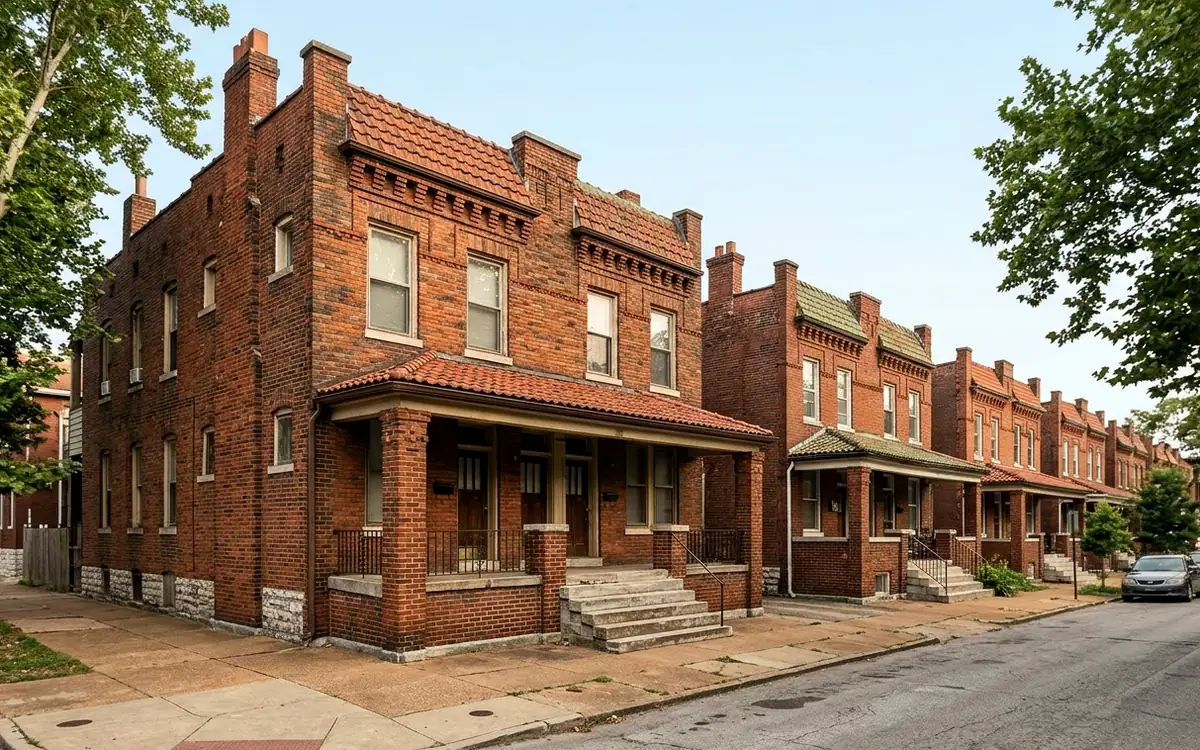
We repair and replace roofs, siding, gutters, windows and doors throughout the City of St. Louis. Our office is at 100 S 4th Street downtown, and the line at (314) 461-6440 is answered 24/7. A visit starts with a walk around the house, then the roof, then an explanation with photos so you see what we see.
What St. Louis homeowners call us about
St. Louis is a city of brick. Walk almost any block and you will find rowhouses, two-family flats, bungalows and Tudor-style homes built between the 1880s and the 1950s, most still lived in every day. That age is why roofs here need a crew that reads each house before touching it, because a roof on a south side bungalow fails differently than one on a Victorian rowhouse. Brick outlasts most of what gets built on top of it.
Our office sits at 100 S 4th Street, Suite 550, a short walk from the riverfront. From there our crews head out to the neighborhoods on this site: St. Louis Hills, Southampton, Princeton Heights, Holly Hills, Bevo Mill, Tower Grove South, Lindenwood Park, Boulevard Heights, Compton Heights, Lafayette Square, Soulard, The Hill, the Central West End and Carondelet. Each has its own housing and its own typical roof trouble. Whichever street you live on, the same careful inspection applies.
The city is also where weather hits old roofs hardest. Hail and severe storms arrive from roughly March to June, summers are hot and humid, and winter freeze-thaw cycles pry at every weak seam. When something goes wrong at night, a person answers the phone, and we talk through what you are seeing before anyone climbs a ladder. Call, describe what you see, and we help you decide whether the problem can wait until daylight.
What the city's housing stock means for your roof
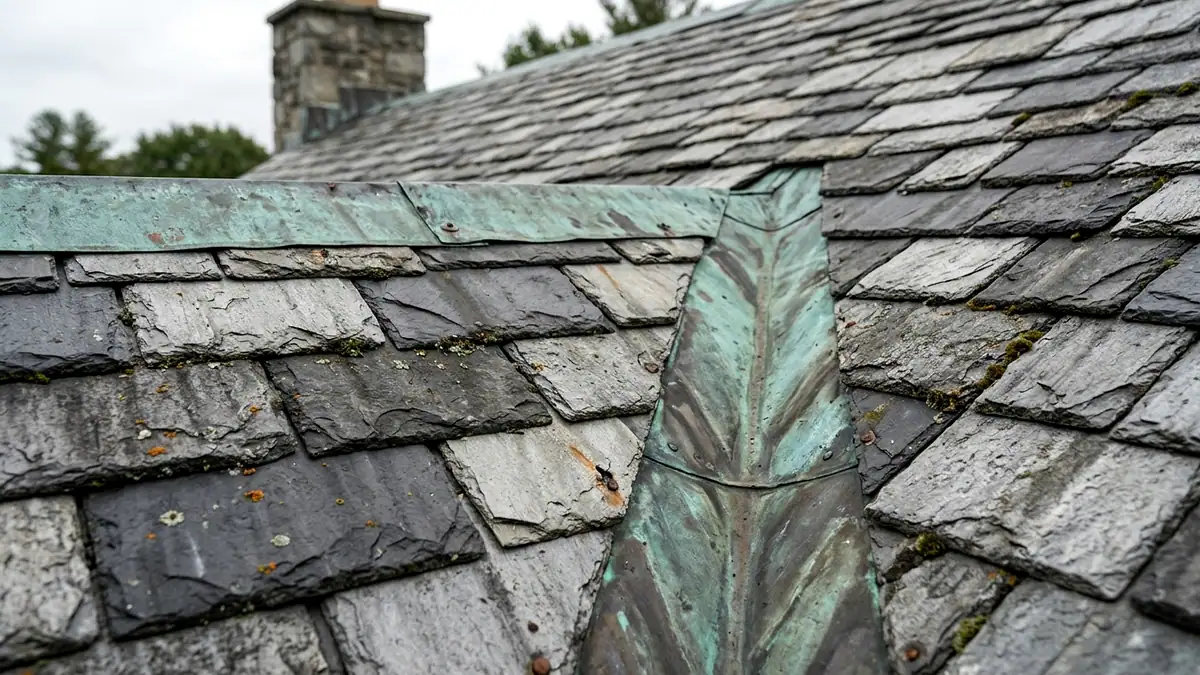
The old city handles water in unusual ways. Rowhouses and flats from the late 1800s often have a pitched front roof, a flat or low-slope rear roof, a brick parapet wall and a built-in box gutter hidden inside the cornice. Many south side homes still wear clay tile or slate. These roofs can last generations, yet they depend on small parts, like flashing, fasteners and gutter liners, that wear out long before the main surface does.
Later neighborhoods tell a different story. Bungalows and Cape Cods from the 1920s through the 1950s carry asphalt shingles over plank or plywood decking, with short eaves and a single chimney. Newer asphalt roofs on these houses mostly fail from sun, hail and poor attic airflow rather than age alone. We read the house first, then pick a repair that suits the roof you actually have instead of a one-size patch.
What goes wrong on roofs across the city
Box gutters hidden in the cornice
A built-in gutter lined with old metal or tar clogs with leaves, then overflows into the wall. The first sign is often a stain on a plaster ceiling below the roofline.
Slate and tile on tired fasteners
Slate and clay tile outlast the nails or hooks holding them. Individual pieces slip or crack, and the felt underneath keeps water out only until it gives up too.
Flat rear roofs that hold water
Low-slope rear roofs settle over time, and standing water finds every seam. Ponding that lingers after a storm is a clear warning that the membrane is working too hard.
Hail bruising on newer shingles
Spring hail knocks granules off asphalt shingles and bruises the mat beneath. The damage may not leak this year, but it quietly shortens the life of the roof.
Cracked flashing around tall chimneys
Tall brick chimneys shift slightly with freeze and thaw, and the flashing at their base pulls away from the mortar. That gap is a common source of leaks after heavy rain.
Seeing one of these in St. Louis?
Call (314) 461-6440 any hour. We inspect in daylight and show you photos of what we find.
What our crew checks first on a St. Louis city roof
- Cornice and box gutter lining, reached from the roof side
- Parapet coping, brick joints and wall-to-roof flashing
- Fasteners holding slate, tile or shingles on the main slope
- Chimney base, counterflashing and the mortar around it
- Attic ceiling for stains, daylight and damp insulation
Services St. Louis homes need most
Roof Repair
Everyday roof repair. Most roof problems start small: a few lifted shingles, a cracked boot, a nail that backed out.
Roof Replacement
Full tear-off, start to finish. A roof replacement strips the old covering down to the deck, repairs what is hiding underneath, and builds a new system on top.
Flat Roof Repair
Low-slope roof leaks fixed. Most St.
Slate Roof Repair
Careful repair on natural slate. Natural slate can outlast the house when it is repaired correctly.
Gutter Repair
Fix the gutter, not the symptom. A gutter that sags, drips at a seam or hangs by a few old spikes can often be saved.
Box Gutter Repair & Relining
Built-in gutters, done properly. Box gutters hide inside the cornice where nobody sees them fail.
St. Louis neighborhoods with their own pages
Each page covers the roofs, failure points and questions we see most in that part of the city.
- St. Louis Hills 63109
- Southampton 63109
- Princeton Heights 63109
- Holly Hills 63111
- Bevo Mill 63116
- Tower Grove South 63116
- Lindenwood Park 63139
- Boulevard Heights 63111
- Compton Heights 63104
- Lafayette Square 63104
- Soulard 63104
- The Hill 63110
- Central West End 63108
- Carondelet 63111
- Shaw 63110
- Dogtown 63139
- Benton Park 63118
- Skinker-DeBaliviere 63112
- North Hampton 63109
- Ellendale 63139
Nearby areas we also cover
Roofing questions from St. Louis
Do I need a permit for a roof replacement in the City of St. Louis?
A full roof replacement generally needs a permit in the city, and our crew handles that paperwork. Smaller repairs often do not need one, though it depends on the scope. Tell us what you are planning when you call and we explain what applies to your address and your house.
When is the best time of year for roofing in St. Louis?
Spring and fall give the steadiest working weather, but roofs fail on their own schedule. Hail season runs roughly March to June, so many owners inspect in late winter. Emergency repairs happen in any season, and we answer the phone around the clock to deal with them.
Why do older St. Louis brick homes leak at the back of the house?
The rear is often a flat or low-slope roof behind a parapet wall, and it drains slowly through a single outlet or box gutter. Leaves and settled seams hold water there. We trace the stain upward, check the drain path and repair the actual entry point.
Can I call about a St. Louis roof leak in the middle of the night?
Yes. The line at (314) 461-6440 is answered 24/7. Move valuables away from the drip, set out a bucket and take photos if it is safe. Stay off a wet roof. We talk you through the next steps and plan a tarp or repair.
Roof or siding trouble in St. Louis?
Call any hour. We set up a daylight inspection and walk you through what we find.