Cedar shake roof repair in St. Louis and the county
Cedar shake roofs are uncommon in the region, which makes careful repair matter even more. We replace split and rotted shakes, clean moss, and tell you honestly whether the roof can keep going.
- Answered 24/7
- Roof Replacement
- City, county and Metro East
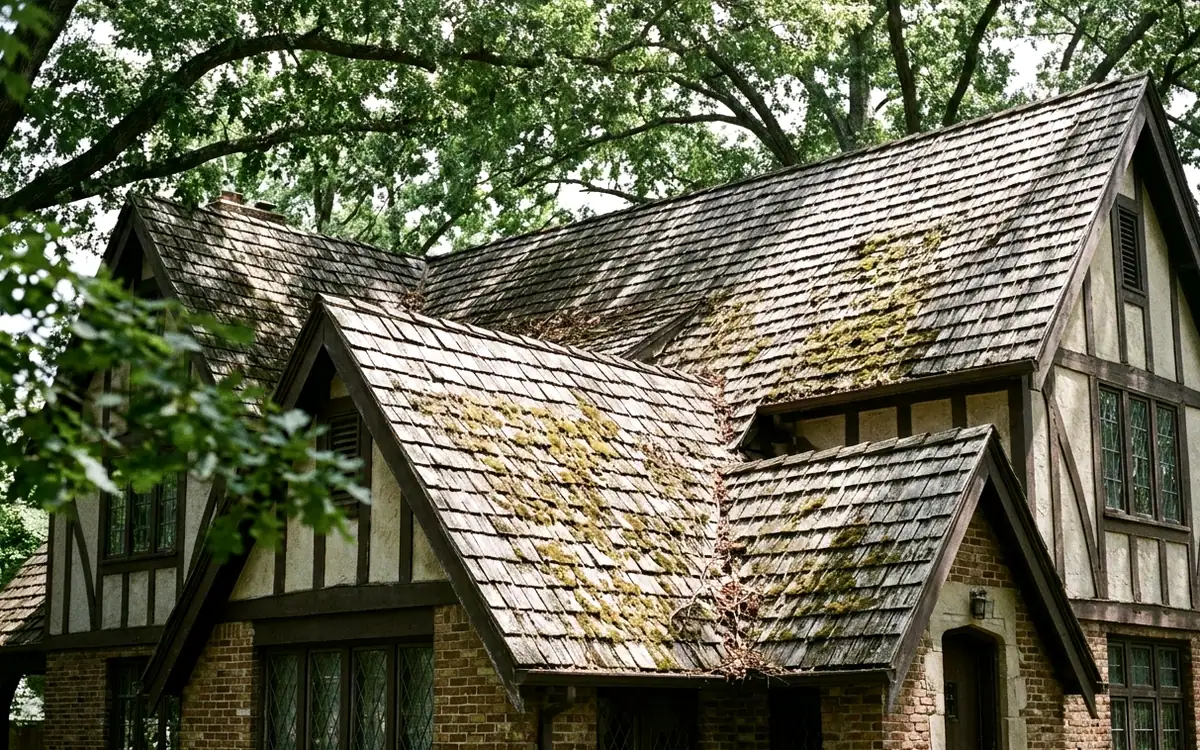
Cedar shake roof repair means replacing split, cupped, or rotted shakes, fixing flashing, clearing moss and debris, and checking the spaced boards below. You need it when shakes curl, crack, or go missing, or when leaks appear. A visit covers a ground inspection, an attic check for dampness, and a plain answer on whether to repair or replace.
How we handle cedar shake roof repair on St. Louis homes
Cedar shakes are split wood, thicker and rougher than the sawn cedar shingles sold for siding and some roofs. In St. Louis County they show up on older Tudor revival homes, some ranch houses from the 1950s and 1960s, and a few custom builds. They look warm and weathered, but wood in a humid climate takes work. Shakes dry out in sun, soak in rain, and shed bits as they age.
Most failures start small. A shake splits along the grain, a corner cups, or a nail lets go, and water gets behind the course. Individual shakes can be pulled and replaced one at a time, using stainless steel nails driven so the head does not crack the wood. We slip a new shake under the course above, then trim and nail it so it sits flush and sheds water like its neighbors.
The harder question is what lies underneath. Cedar roofs are often laid on spaced boards with gaps so the wood can breathe. Moisture trapped under moss or tar-paper layers rots the shakes from below. Before we replace anything, we check the underside, the boards, and the flashing, because one bad stretch of valley or wall joint can soak the wood across a whole slope.
What are your options for an aging cedar roof?
Repair individual shakes
The right choice when damage is scattered and the roof is mostly sound. Replacing split shakes and rotted nails buys real years and keeps the original look intact.
Clean and treat the roof
Hand cleaning and a preservative or moss treatment can slow decline on a roof that is still structurally sound, especially under heavy tree cover.
Replace a worn slope
If one side is failing from shade or exposure while the rest holds, we replace just that slope with new shakes and tie it into the older sections.
Switch to a cedar-look roof
When the whole roof is worn out, synthetic shake, impact-rated architectural shingle, or metal shake offers a similar style with less maintenance and a lower fire risk.
What does cedar shake repair cost in St. Louis?
Cedar is costly to work with because quality shakes are expensive and each one is fitted by hand. Damage spread across many spots takes more time than one concentrated patch, and steep or shaded roofs slow things further. Underlying board rot, flashing work, and the choice between treated and untreated cedar all adjust the price. A modest repair is far cheaper than a full replacement.
Compare every roofing and siding price range or plan the order of your exterior work.
| Work | Typical range |
|---|---|
| Replace a handful of split shakes, per visit | $364 to $892 |
| Hand moss cleaning and treatment, whole roof | $578 to $1,246 |
| Replace one worn slope of cedar shakes | $3,860 to $8,540 |
| Full cedar shake roof replacement | $21,480 to $42,670 |
Shake work is priced by condition, so these typical 2026 St. Louis ranges are not quotes and the state of your roof decides the figure.
How we repair a cedar shake roof
- 1
Inspect shakes and underside
We check each slope from a ladder, probe suspicious shakes, and look at the underside from the attic to find rot and daylight that cannot be seen from above.
- 2
Clean moss and debris
We remove leaves and moss by hand with soft brushes, avoiding pressure washing, which drives water behind the shakes and erodes the wood face.
- 3
Split out damaged shakes
A slate ripper or shake knife cuts the old nails. Split and rotted shakes are lifted out in small groups without disturbing sound neighboring courses.
- 4
Install matching new shakes
New cedar shakes are cut to fit, tucked under the course above, and nailed with stainless steel nails so the heads stay clear of the wood grain and do not rust through.
- 5
Rework flashing and treat wood
Valleys, walls, and chimney flashing get repaired or replaced, and we discuss preservatives or moss control to slow rot. Then we show you photos of every repair.
Which cedar shake problems mean it is time to call?
Split or cupped shakes
Wood that cracks lengthwise or curls at the edges can no longer shed water. A few are normal with age, but clusters of cupped shakes on one slope signal a larger moisture problem.
Moss and dark green growth
Moss holds water against cedar and speeds rot, especially on shaded north slopes under trees. A thin film is cosmetic, but thick mats usually mean the wood beneath is soaked.
Missing shakes and gaps
Bare spots show the felt or boards below. Wind and falling limbs knock shakes loose, and open gaps in spring storm season can turn into interior leaks within days.
Soft, spongy, or crumbling wood
If a screwdriver sinks into a shake or it breaks off in your hand, the cedar has rotted. Soft patches rarely fix themselves and tend to spread along the course.
Rusted or backed-out nails
Steel nails rust in damp wood and work loose, letting shakes lift. Staining below nail heads or tiny holes where nails once sat points to fastener failure.
Daylight or stains in the attic
Spaced boards let you see light through shakes in the attic. Dark staining on those boards means water has been getting in for a while.
Cedar shakes in older St. Louis County neighborhoods
Shake roofs in the St. Louis area cluster on older homes in places like Kirkwood, Webster Groves, and parts of Chesterfield, where Tudor and storybook styles invited a rustic look. Many were installed decades ago, long before synthetic alternatives, and have since been patched with mismatched shakes or tar. Large trees sit close to these houses, which means shade, leaf litter, and moss are constant companions.
Our climate tests cedar hard. Humid summers breed moss and rot, freeze-thaw cycles split wet shakes, and spring storms drive rain sideways under loose courses. Some communities and insurers also restrict wood roofs because of fire risk, so you should check before committing to a full cedar replacement. We cover the options openly, including cedar-look alternatives that are easier to maintain and gentler on your budget year after year.
Where we handle cedar shake roof repair
The city, the counties and the towns below cover most of the homes we work on. If yours is not listed, call and ask.
- City of St. Louis 63102
- St. Louis County, MO 63105
- St. Charles County, MO 63301
- Florissant, MO 63031
- Chesterfield, MO 63017
- Oakville, MO 63129
- St. Charles, MO 63301
- O'Fallon, MO 63366
- St. Peters, MO 63376
- Kirkwood, MO 63122
- Mehlville, MO 63125
- Belleville, IL 62220
- University City, MO 63130
- Ballwin, MO 63011
- Wentzville, MO 63385
- Hazelwood, MO 63042
- Webster Groves, MO 63119
- Edwardsville, IL 62025
- Collinsville, IL 62234
- Alton, IL 62002
- O'Fallon, IL 62269
- Arnold, MO 63010
- Affton, MO 63123
- Jefferson County, MO 63050
Shingle, siding and window lines we install and repair around St. Louis include GAF, Owens Corning, CertainTeed and James Hardie, plus the other brands below.
- GAF
- Owens Corning
- CertainTeed
- IKO
- Atlas
- Malarkey
- James Hardie
- LP SmartSide
- Alside
- Mastic
- DaVinci
- Velux
- Carlisle
- Firestone
Cedar Shake Roof Repair questions
How long can a cedar shake roof last in St. Louis County?
A well-kept cedar shake roof in our humid, freeze-thaw climate often lasts around 20 to 30 years, sometimes longer on sunny slopes. Shade, trapped leaves, and moss shorten that. Regular cleaning and quick replacement of split shakes keep the roof going, but each year the odds of widespread rot rise.
Is it worth repairing an old cedar shake roof instead of replacing it?
It depends on how much sound wood is left. If damage is scattered and the boards below are solid, repair makes sense and is far cheaper. If rot spreads across slopes or most shakes are cupped, a replacement saves money over repeated patching. We show you photos and give you our honest read.
Why do cedar shakes need spaced boards underneath?
Wood shakes need air to dry from below after rain. Traditional installs use spaced boards or battens so air can move under each shake instead of trapping moisture against solid sheathing. When a roof is rebuilt, venting that airspace correctly matters, and we explain how it works before choosing a new material.
Should I pressure wash a cedar shake roof to remove moss?
No, we recommend against it. High-pressure water erodes the face of the shake and can force water up under the courses and into the boards. Hand brushing with a soft brush, followed by a mild treatment where appropriate, removes moss without causing damage to the wood.
Are wood shake roofs allowed in my St. Louis County town?
Rules vary by municipality and by insurer, and some areas limit wood roofs because of fire risk. Before choosing new cedar, check with your local building office and your insurance agent. If cedar is restricted or costly to insure, a synthetic shake or metal shake panel offers the same style.
Related work we often pair with cedar shake roof repair
Synthetic Slate Roofing
Composite slate look. Synthetic slate gives you the deep, textured look of natural stone in molded polymer or composite tiles that weigh far less.
Roof Replacement
Full tear-off, start to finish. A roof replacement strips the old covering down to the deck, repairs what is hiding underneath, and builds a new system on top.
Roof Decking Replacement
The layer under your roof. Decking is the wood your whole roof is nailed to, and it often hides rot, gaps, or old plank spacing.
Roof Inspection
Roof inspection, top to bottom. A roof inspection shows you what the shingles, flashing and vents are doing before water finds the weak spot.
Need cedar shake roof repair in St. Louis?
Call any hour. A roofer answers, asks a few questions and sets up a visit.