Wind damage roof repair in St. Louis, MO: creased and lifted shingles
Wind often damages a roof without removing a single shingle. It creases tabs, breaks the seal strips that hold them down, and leaves the roof ready to peel at the next gust.
- Answered 24/7
- Roof Repair
- City, county and Metro East
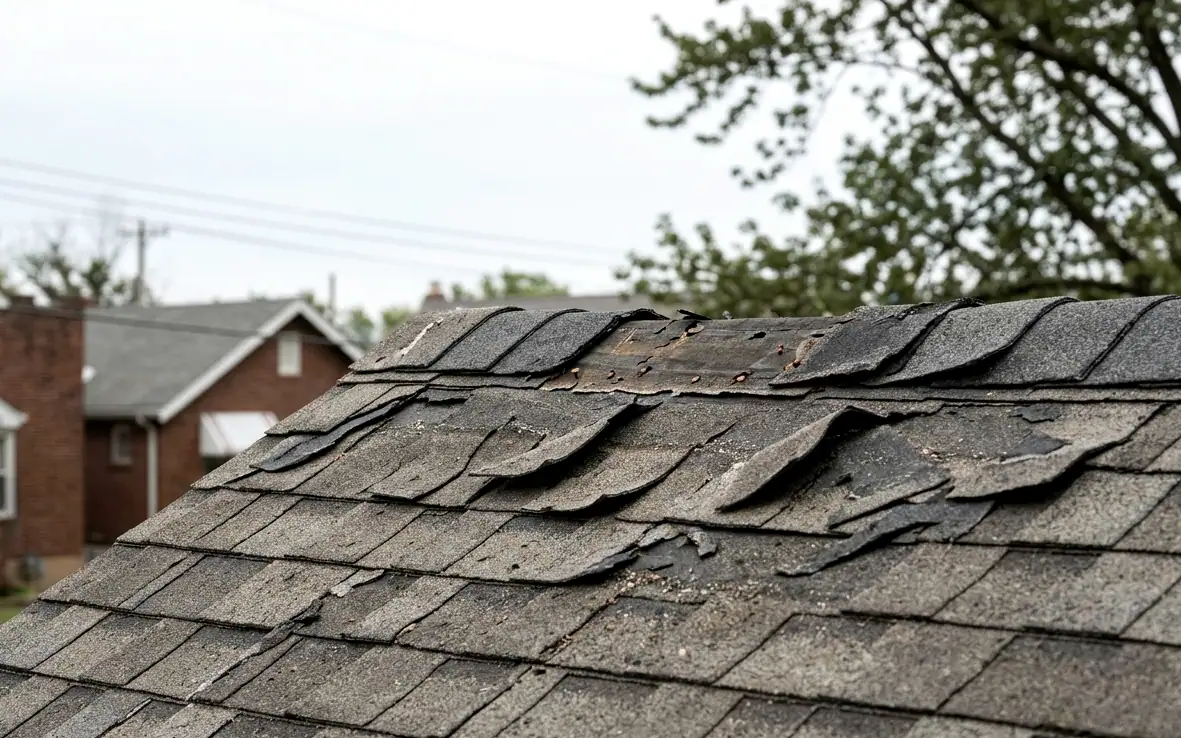
Wind damage roof repair fixes creased tabs, broken seal strips, torn ridge caps, and loosened edges after high winds. You need it after a storm when shingles are missing or rows look wavy. We check seals across each slope, replace creased shingles, re-secure loose ones, and rebuild ridges and edges.
What does wind damage look like before shingles blow off?
Creased lines across tabs
A horizontal fold line across a shingle tab means wind lifted it and bent it past its limit. The crease is permanent, and the tab usually tears at the line next time.
Tabs lifting at the corners
Corners that stand up from the course below, or flap when touched, have lost their sealant bond. Check the edges of slopes and the areas near the ridge first.
Missing ridge cap pieces
Ridge caps take the full force of wind over the roof peak. Gaps in the cap line, or caps hanging by one nail, leave the ridge open to rain.
Clean, dust-free sealant
Exposed sealant that is shiny and clean, instead of dull and dusty, shows the bond broke recently. It is one of the best clues that a recent storm lifted the shingle.
Wavy or rippled shingle rows
Rows that no longer run straight, or that ripple in the middle of a slope, show shingles that have shifted under wind pressure and may be loose beneath.
Torn rake and eave edges
The outer edges of a roof catch wind first. Bent drip edge, curled starter strips, and torn corners are early damage, and water follows the gaps.
How we repair wind-lifted and creased shingles
- 1
Lift test across each slope
We gently lift tabs across every slope, starting at edges and ridges, to find broken seals. A shingle that rises without resistance has lost its bond and needs attention.
- 2
Mark creased and unsealed tabs
Creased shingles get marked for replacement, and loose but intact ones are marked for resealing. Each is photographed, so the scope is clear before we begin.
- 3
Replace creased shingles
Creased tabs are removed and new shingles nailed into the proper nail zone, so they hold against wind. We match the shingle type as closely as the product line allows.
- 4
Re-secure and hand-seal
Loose but sound shingles get fresh sealant under each tab and extra fasteners where needed. This restores the bond that wind broke on slopes not worth replacing.
- 5
Rebuild ridge and edge
Torn ridge caps and bent drip edge are replaced, and the starter strip is reset. We finish by checking that every edge lies flat and fully fastened.
How we handle wind damage roof repair on St. Louis homes
An asphalt shingle stays on a roof because of two things: nails and a strip of factory sealant that glues each tab to the course below. Strong wind gets under a tab and lifts it. When the tab folds, it creases across its width, and the bond breaks. The shingle may look fine from the yard, but the crease is a permanent weak line that tears at the next gust.
We check for wind by lifting tabs gently and looking for clean, dust-free sealant, which means the bond broke recently, or a crease line across the shingle. We also look for patterns: damage clustered along rakes, ridges, and corners, where wind pressure is highest. Wind damage tends to start at those edges and work inward, so the edge zones get the closest look.
Repair depends on how far the damage reaches. A few creased shingles are replaced one by one. Slopes where seals have failed across many tabs may need hand-sealing with fresh adhesive. Torn ridge caps are replaced with matching caps nailed correctly. Where nails were driven too high from the start, we correct the fastening, because a shingle nailed high holds poorly in wind.
How St. Louis winds find weak spots on your roof
Straight-line winds from spring thunderstorms are common in the St. Louis area, and they hit roofs differently from tornado-style gusts. Long gable ends on 1950s to 1970s ranch homes catch wind along the rake, where the roof edge sits proud of the wall. Hip roofs on many brick homes shed wind better. Either way, the edges and ridges take the beating first, so that is where our inspection begins.
Exposure matters as well. Homes on open ridges, along river bluffs in Alton and other Metro East towns, and on the edges of new subdivisions with few mature trees see higher gusts. Tight rows of newer homes in St. Charles County can funnel wind between buildings. We read where your house sits and which way the storm came through, so we know which slope to check first and which to check last.
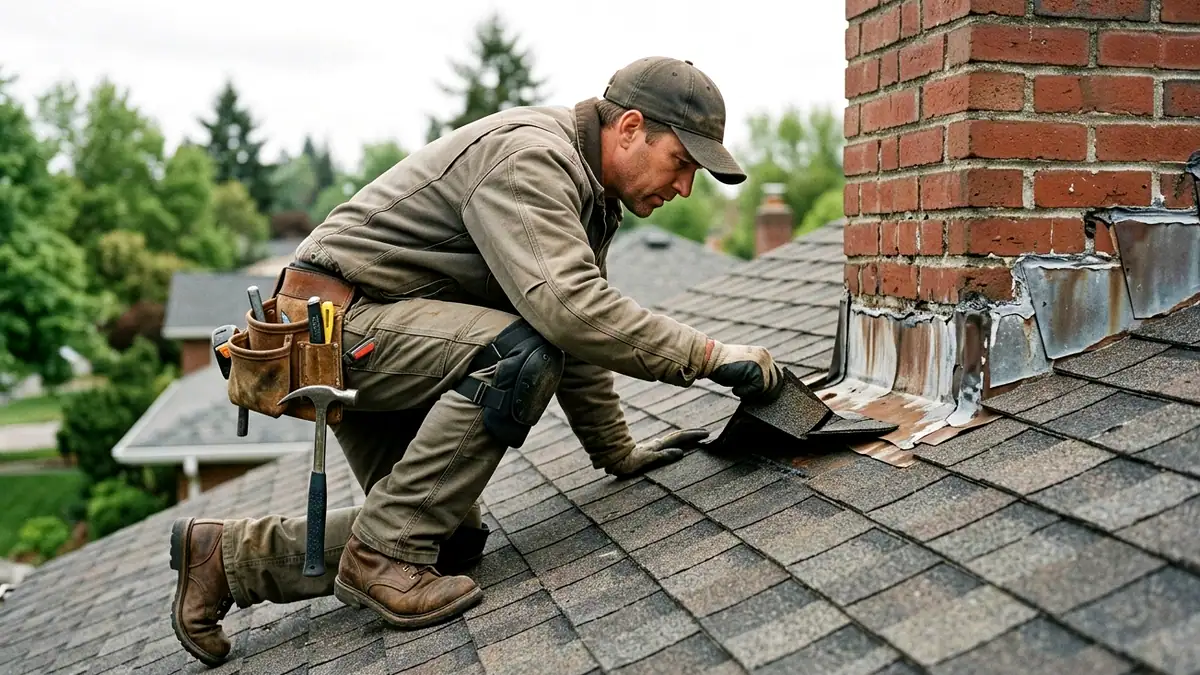
Ways to fix wind-lifted shingles
Hand-seal loose tabs
On shingles that lifted but did not crease, we apply fresh adhesive under each tab and press it down. It is a quick, economical fix that restores wind resistance.
Replace creased shingles
Where tabs are folded or torn, replacement is the only reliable repair. A creased shingle will tear at the same line during the next storm.
New ridge cap run
A damaged ridge is rebuilt with new cap shingles, nailed along the correct line and overlapped away from the prevailing wind, so the peak sheds water again.
Edge metal and starter reset
We straighten or replace bent drip edge and reset the starter strip, then re-nail the first shingle course, since wind attacks the roof edge first.
What does wind damage roof repair cost in St. Louis?
Wind repairs range from a quick resealing visit to the replacement of whole sections. Cost depends on how many shingles are creased, how many seals failed, and how much of the damage sits at ridges and edges, which take longer to repair. Steep or tall homes need extra safety setup. A roof where nails were driven too high may need more fastening work as well.
Compare every roofing and siding price range or plan the order of your exterior work.
| Work | Typical range |
|---|---|
| Hand-seal a loose slope | $245 to $585 |
| Replace creased shingles in one area | $365 to $915 |
| Ridge cap replacement, one run | $430 to $1,120 |
| Edge metal and starter reset | $510 to $1,345 |
These are typical St. Louis ranges for wind repairs, not a quote, and torn sections that expose decking add to them.
Where we handle wind damage roof repair
The city, the counties and the towns below cover most of the homes we work on. If yours is not listed, call and ask.
- City of St. Louis 63102
- St. Louis County, MO 63105
- St. Charles County, MO 63301
- Florissant, MO 63031
- Chesterfield, MO 63017
- Oakville, MO 63129
- St. Charles, MO 63301
- O'Fallon, MO 63366
- St. Peters, MO 63376
- Kirkwood, MO 63122
- Mehlville, MO 63125
- Belleville, IL 62220
- University City, MO 63130
- Ballwin, MO 63011
- Wentzville, MO 63385
- Hazelwood, MO 63042
- Webster Groves, MO 63119
- Edwardsville, IL 62025
- Collinsville, IL 62234
- Alton, IL 62002
- O'Fallon, IL 62269
- Arnold, MO 63010
- Affton, MO 63123
- Jefferson County, MO 63050
Shingle, siding and window lines we install and repair around St. Louis include GAF, Owens Corning, CertainTeed and James Hardie, plus the other brands below.
- GAF
- Owens Corning
- CertainTeed
- IKO
- Atlas
- Malarkey
- James Hardie
- LP SmartSide
- Alside
- Mastic
- DaVinci
- Velux
- Carlisle
- Firestone
Wind Damage Roof Repair questions
How can I tell if wind creased my shingles without climbing up?
Look from the ground or with binoculars for horizontal lines across tabs, lifted corners, or rows that no longer run straight. Shingles missing from one slope also point to wind. Because many creases are subtle, a walk across the roof is the reliable way to confirm.
Do shingles with broken seal strips need replacing right away?
Not always. If the shingle is not creased or torn, hand-sealing under the tab can restore it. But an unsealed roof can lose shingles in the next storm, so we recommend dealing with it soon after the wind event.
Why did wind take shingles from my roof edges first?
Wind pressure is highest at corners, rakes, and ridges, where air piles up and then lifts off the surface. Those spots have the least support from neighboring shingles. Damage typically starts there and works inward, which is why we check those zones first.
Are architectural shingles better against wind than 3-tab shingles?
Generally yes. Architectural shingles are thicker, heavier, and often carry higher wind ratings when installed with the full nail pattern. Older 3-tab roofs, being thinner, tend to crease sooner. Installation quality matters as much as the product, because a shingle with the wrong nailing fails in any wind.
What does a wind uplift repair do about nails driven too high?
Nails driven above the nail line miss the double layer of shingle and hold poorly. We replace the affected shingles and fasten the new ones in the correct zone, so the nails grip both layers. That correction is part of making the repair last through the next windstorm.
Related work we often pair with wind damage roof repair
Storm Damage Roof Repair
After the storm passes. A severe storm seldom hurts a roof in just one way.
Roof Repair
Everyday roof repair. Most roof problems start small: a few lifted shingles, a cracked boot, a nail that backed out.
Asphalt Shingle Roofing
Shingles done properly. Asphalt shingles cover most St.
Roof Inspection
Roof inspection, top to bottom. A roof inspection shows you what the shingles, flashing and vents are doing before water finds the weak spot.
Need wind damage roof repair in St. Louis?
Call any hour. A roofer answers, asks a few questions and sets up a visit.