Roofing and exteriors in Chesterfield, MO (63017)
Chesterfield homes tend to be larger, taller and more complicated overhead than most of St. Louis County. We handle valleys, dormers, tall walls and hail damage, and we answer the phone around the clock.
- ZIP codes
- 63017, 63005, 63006
- County
- St. Louis County
- Phone
- (314) 461-6440, answered 24/7
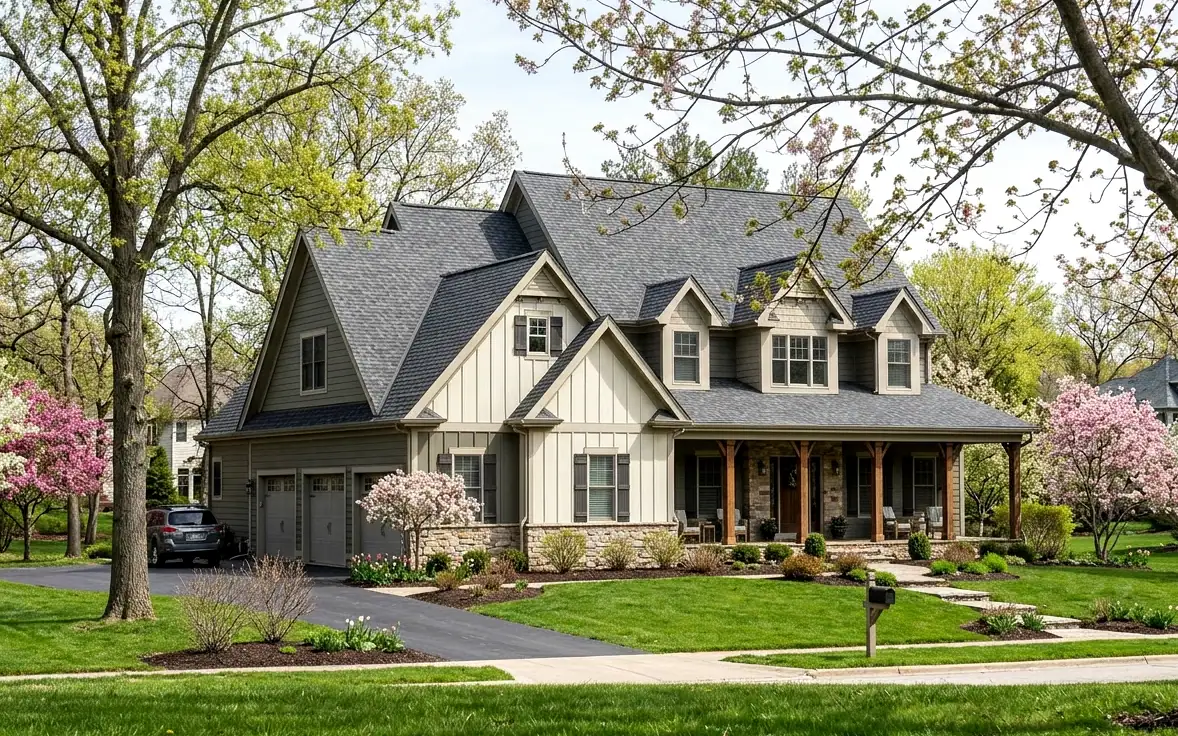
Chesterfield roofs usually mean steep pitches, many valleys, dormers and big attics, so the work is about careful flashing, proper ventilation and storm damage that hides on upper slopes. We inspect from the ground and the roof, show you the photos, and lay out repair or replacement options with price ranges.
What Chesterfield, MO homeowners call us about
Chesterfield is mostly newer than the rest of St. Louis County, and its houses reflect that. Large two story homes with steep, cut up roofs fill the subdivisions west of Interstate 270, and many were built in a rush of growth in the 1990s and 2000s. Roofs from that wave are now old enough that the first full replacements are coming due, and the details matter on a roof this complicated. Details that look fine from the street often hide trouble.
A Chesterfield roof rarely has just two slopes. Gables cross gables, dormers pop out of the upper level, bay windows have their own small roofs and entry porches add another plane. Each intersection is a place where water changes direction, and each one needs correct flashing. Three tab shortcuts that work on a simple ranch fall apart quickly on these roofs. A crew that rushes through them leaves leaks that only appear two winters later, so we slow down at every intersection and photograph what we find.
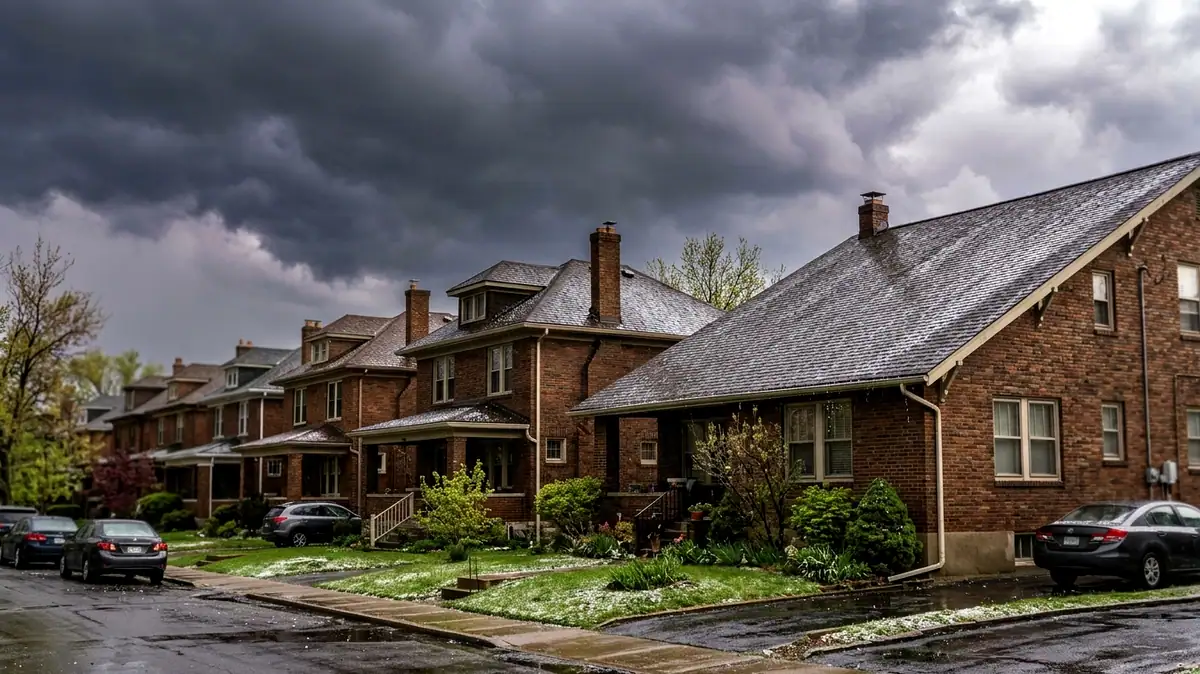
Then there is exposure. Spring storms track across West County every year, and tall houses on open lots catch wind and hail on their upper slopes where nobody looks. Chesterfield Valley, the flat commercial bottomland along the Missouri River, adds its own flat roofs to the mix. We cover both sides and tell you which problem you actually have. A short visit tells you whether the trouble sits in the roof surface, in the flashing at the walls, or in the vents on the ridge.
Why Chesterfield's larger, newer homes need careful roof work
Most Chesterfield houses were built from the late 1980s forward, with a heavy concentration from the 1990s. Typical features are architectural shingles on steep pitches, vinyl or brick and stone fronts, tall two story walls and attics big enough to heat up badly in July. Many subdivisions also have architectural standards, so color and material choices should be checked with your association before the crew orders anything. Larger homes also give the crew more edge and ridge length to seal correctly.
The failure points on these homes are predictable. Valleys wear first because they carry the most water. Step flashing along dormer walls and chimney chases dries out, ridge caps and ridge vents take wind, and vinyl siding on tall gables fades and cracks. A roof at twenty years can look fine from the street while the valleys underneath are already shedding granules and letting water through. We check these spots in order, starting with the valleys, because they predict the rest of the roof.
How Chesterfield roofs and walls fail
Valley wear on cut up roofs
Valleys funnel runoff from two slopes into one narrow channel. On Chesterfield houses with cross gables, that channel erodes the shingle surface and exposes the underlayment years before the field shingles fail.
Hail damage on upper slopes
Tall houses on open lots take hail at full force on steep upper planes. Bruises and cracked mats hide above the second floor, where homeowners and even neighbors never see them.
Dormer and wall flashing failure
Step flashing at dormer cheeks and sidewalls was often thinly sealed during fast construction. Caulk dries, metal pulls loose and water enters behind the siding rather than at the roof surface.
Attic heat in big roof volumes
Large attics under dark shingles bake in summer. Without balanced intake and exhaust, the decking cooks, shingles age faster and the upstairs bedrooms never cool down properly.
Wind lifting ridge and edge shingles
Exposed ridge lines and rake edges on tall houses take the first gusts. Unsealed tabs lift, crease and tear, and then storm after storm finds the same weak line.
Seeing one of these in Chesterfield, MO?
Call (314) 461-6440 any hour. We inspect in daylight and show you photos of what we find.
What our crew checks first on a Chesterfield roof
- Every valley, looking for exposed underlayment or worn shingle faces
- Step flashing along dormer cheeks and second floor sidewalls
- Ridge caps and rake edges for lifted or creased tabs
- Intake and exhaust vent balance in the attic
- Skylight curbs, bay roofs and porch tie-ins for drips
Services Chesterfield, MO homes need most
Roof Replacement
Full tear-off, start to finish. A roof replacement strips the old covering down to the deck, repairs what is hiding underneath, and builds a new system on top.
Wind Damage Roof Repair
Windstorm roof repair. Wind often damages a roof without removing a single shingle.
Roof Flashing Repair
Flashing joint repair. Flashing is the thin metal and rubber that turns water away at every joint in a roof.
Skylight Repair & Installation
Skylights that stay dry. Most skylight leaks come from the flashing around the unit, not the glass.
Vinyl Siding
Vinyl siding options. Vinyl remains the most common siding on St.
Seamless Gutters
New gutters, cut to fit. Seamless gutters are rolled from a coil of aluminum at your house, one continuous piece per run.
Nearby areas we also cover
Roofing questions from Chesterfield, MO
Why is roof replacement in Chesterfield priced higher than on a simple house?
Cut up roofs have more valleys, more flashing, more waste and steeper pitches that slow the crew down. Ranges widen with every extra dormer or skylight. We walk the roof, count the intersections and give you a range that reflects the actual layout. Fewer straight runs also means more cutting and more hand work.
Do I need approval from my subdivision before changing roof color in Chesterfield?
Many Chesterfield subdivisions have architectural standards that cover shingle style and color. Check your association rules first and have the approval in hand. We can explain the material options and describe samples, but the final approval comes from the association. If the association wants a sample or a written description, we help with that part.
Can hail damage be missed on a two story Chesterfield house?
Easily. The steep upper slopes are hard to see from the yard, and bruising is subtle. We photograph slopes close up and show you what we found, so you can decide whether it is cosmetic or a repair worth making. Close-up photos of each slope make the difference clear.
Do you work on the commercial roofs in Chesterfield Valley?
Yes. Flat roofs on retail and light commercial buildings get a separate inspection focused on seams, drains and ponding. We describe the repair or recoat options and the price range before any work is scheduled. We also note any drain trouble or roof edge wear while we are up there, so one visit covers the whole building.
Roof or siding trouble in Chesterfield, MO?
Call any hour. We set up a daylight inspection and walk you through what we find.