Roof maintenance in St. Louis that keeps small problems small
Roofs rarely fail all at once. Maintenance is the routine hands-on work, resealing, clearing, tightening and replacing worn parts, that stops small issues from turning into ceiling damage. We schedule it around St. Louis weather.
- Answered 24/7
- Roof Care & Claims
- City, county and Metro East
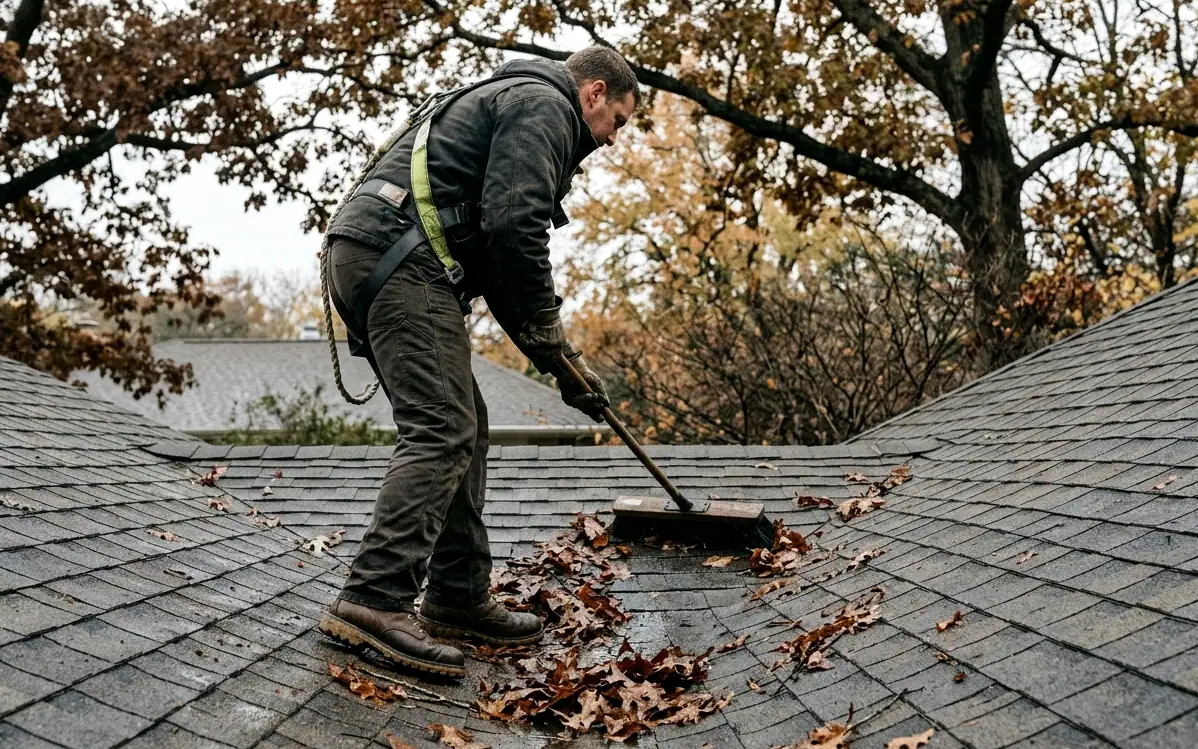
Roof maintenance is scheduled, hands-on care: resealing vent boots and exposed nails, replacing damaged shingles, clearing valleys and debris, and re-securing loose edges and ridge caps. Any roof past its first few years benefits, especially after storm season. A visit is shorter than an inspection and leaves the small repairs already finished.
How we handle roof maintenance on St. Louis homes
Maintenance is the plain work that helps a roof last. A roof is a system of shingles, underlayment, metal and sealant, and every part ages at its own rate. Sealant dries out after a few hot summers, nails creep upward through freeze and thaw, and one stray branch can scour granules off a patch the size of a dinner plate.
A maintenance visit is hands-on. We replace cracked pipe boots, dab sealant over exposed nail heads, re-bed lifted ridge caps, sweep valleys clear of leaves and seed pods, and secure any metal edge that has started to peel up. None of this is glamorous, but each item closes a path that water would otherwise follow into the attic.
Done on a regular schedule, this work can push a full replacement back by several years, though the exact gain depends on the roof's age and materials. It also builds a running record of what was done and when, which comes in handy when you sell the house or need to work out what caused a leak.
What does a roof need before it needs repairs?
Dried or cracked sealant
Sealant around vent pipes, chimneys and skylights shrinks and splits in the sun. Hairline gaps are enough to let wind-driven rain reach the decking, and renewing the bead is inexpensive.
Dark algae streaks or moss
Streaks on shaded slopes mean moisture is lingering on the shingles. Left alone, moss lifts the tabs and holds water against them, so it is cleaned off and the cause addressed.
Leaves packed in valleys
Valleys carry the water from two slopes at once. When wet leaves and seed pods pile up, water backs under the shingles and rots the underlayment beneath the metal.
Nail heads showing through
Nails that have backed out push up the shingle above them and poke through the surface. Resetting and sealing them takes minutes now and avoids a leak at that exact spot later.
Loose ridge caps and edges
Wind works on the high points first. A ridge cap or drip edge that rattles in a storm is already loose, and the next gust can peel back the course below it.
Branches rubbing the surface
Limbs that touch the roof scrape granules away every windy day and drop debris constantly. Trimming them back and repairing the scuffed spots stops the wear from spreading.
Maintenance that fits St. Louis trees, heat and freeze-thaw
St. Louis is a tree city, and the roofs underneath those oaks, maples and sweetgums collect a steady load of leaves, acorns and spiky seed balls. Wet debris holds moisture against shingles, and shaded north slopes grow algae through our humid summers. A yearly clean-off and a quick look at the valleys goes a long way toward keeping the surface in good shape for the next storm season.
Winter is hard on small defects. Water finds a hairline gap, freezes overnight, and pries it wider by morning, a cycle that repeats dozens of times a season. Flat rear roofs on south city brick homes also pond water when a drain clogs. That is why we like to finish maintenance in fall, before the first hard freeze, and not after it, when ice has already done its work.
What happens during a roof maintenance visit
- 1
Clear the surface and valleys
We remove leaves, seed pods, moss and loose debris from the field, valleys and around penetrations, so we can see the shingles and metal underneath and water can drain freely.
- 2
Reseal boots and exposed fasteners
Pipe boots, vent collars and exposed nail heads are renewed with fresh sealant or replaced outright when the rubber has cracked. These are the cheapest leaks to prevent on any roof.
- 3
Re-secure edges and ridge caps
We check drip edge, rake metal and ridge caps for lift, then refasten or re-bed whatever has moved, so the next windstorm has nothing to catch and pull loose.
- 4
Replace worn or damaged shingles
Cracked, curled or missing shingles are swapped for matching material, with nails placed correctly and sealed down, so a single bad spot does not become a bigger repair.
- 5
Photograph the work and note next steps
You see before and after photos, plus a short note on anything beyond maintenance that we noticed, so there are no surprises when you decide what to do with the roof next.
Maintenance schedules we set up for St. Louis homes
Annual maintenance visit
One visit a year covering the whole roof, usually in fall. It suits asphalt roofs past their early years and homes surrounded by mature trees.
Fall pre-winter tune-up
A focused pass on sealant, edges, valleys and gutters before freeze-thaw begins. It is a good fit for roofs that were fine last spring and that you simply want ready.
Spring post-storm fix visit
Timed after the heaviest hail and wind weeks, to catch and repair displaced shingles and loosened metal while the damage is still small and clearly dated.
Flat roof drain and seam care
For rear flat roofs and porch roofs: clearing drains and scuppers, checking seams and the edges where membrane meets brick, and patching small punctures.
What does roof maintenance cost in St. Louis?
Maintenance pricing follows the amount of hands-on work and how hard the roof is to reach. A one-story ranch with a few boots to renew costs less than a steep two-story with a long valley and tall chimney. Material is rarely the big number, since sealant and a handful of shingles are inexpensive, so most of the price is labor and safe access. Bundling several small fixes into one visit usually works out better than coming back repeatedly.
Compare every roofing and siding price range or plan the order of your exterior work.
| Work | Typical range |
|---|---|
| Single maintenance visit, small roof | $235 to $415 |
| Full-roof tune-up with boot replacement | $385 to $765 |
| Debris removal and valley cleaning | $165 to $335 |
| Flat roof drain and seam care | $215 to $480 |
These are typical ranges for planning, not a quote, and roof height, pitch and the number of repairs will change the number.
Where we handle roof maintenance
The city, the counties and the towns below cover most of the homes we work on. If yours is not listed, call and ask.
- City of St. Louis 63102
- St. Louis County, MO 63105
- St. Charles County, MO 63301
- Florissant, MO 63031
- Chesterfield, MO 63017
- Oakville, MO 63129
- St. Charles, MO 63301
- O'Fallon, MO 63366
- St. Peters, MO 63376
- Kirkwood, MO 63122
- Mehlville, MO 63125
- Belleville, IL 62220
- University City, MO 63130
- Ballwin, MO 63011
- Wentzville, MO 63385
- Hazelwood, MO 63042
- Webster Groves, MO 63119
- Edwardsville, IL 62025
- Collinsville, IL 62234
- Alton, IL 62002
- O'Fallon, IL 62269
- Arnold, MO 63010
- Affton, MO 63123
- Jefferson County, MO 63050
Shingle, siding and window lines we install and repair around St. Louis include GAF, Owens Corning, CertainTeed and James Hardie, plus the other brands below.
- GAF
- Owens Corning
- CertainTeed
- IKO
- Atlas
- Malarkey
- James Hardie
- LP SmartSide
- Alside
- Mastic
- DaVinci
- Velux
- Carlisle
- Firestone
Roof Maintenance questions
Is roof maintenance different from a roof inspection?
Yes. An inspection is about diagnosing the roof and reporting what we find. Maintenance is the actual work: resealing boots, replacing a few shingles, clearing valleys and refastening loose metal. Many homeowners start with an inspection and move into a maintenance plan once they know what the roof needs.
How often does a St. Louis asphalt roof need maintenance?
Once a year is a good rhythm for most asphalt roofs after the first five or so years, ideally in fall. Homes under big oaks or sweetgums may want a second pass in late spring. A newer roof in an open yard can often go longer between visits.
Can maintenance stop a roof that is already near the end of its life?
It can slow things down and keep leaks out for a while, but it cannot restore brittle shingles. If most of the surface is cracking or shedding granules, we will tell you that replacement is the better use of money instead of piling on patches.
Do you remove moss and algae as part of a visit?
We scrape or treat moss and algae on shaded slopes where they are holding moisture, and we avoid harsh pressure washing that strips granules. We also point out what is feeding the growth, whether that is overhanging limbs, a clogged gutter or poor airflow.
What do you do if you find a bigger problem during maintenance?
We stop, photograph it, and explain it before doing anything beyond what we came for. If it is flashing, decking or a failed section, you get options and a clear sense of urgency, and you choose whether to fix it now or later.
Related work we often pair with roof maintenance
Roof Inspection
Roof inspection, top to bottom. A roof inspection shows you what the shingles, flashing and vents are doing before water finds the weak spot.
Roof Repair
Everyday roof repair. Most roof problems start small: a few lifted shingles, a cracked boot, a nail that backed out.
Roof Flashing Repair
Flashing joint repair. Flashing is the thin metal and rubber that turns water away at every joint in a roof.
Gutter Cleaning
Clear gutters, every season. St.
Need roof maintenance in St. Louis?
Call any hour. A roofer answers, asks a few questions and sets up a visit.