Clay tile roof repair in St. Louis for south city homes
Clay tile roofs on south city homes outlast most coverings, but the felt beneath them and the flashing around them wear out sooner. We repair broken tiles and the layers that keep water out.
- Answered 24/7
- Roof Replacement
- City, county and Metro East
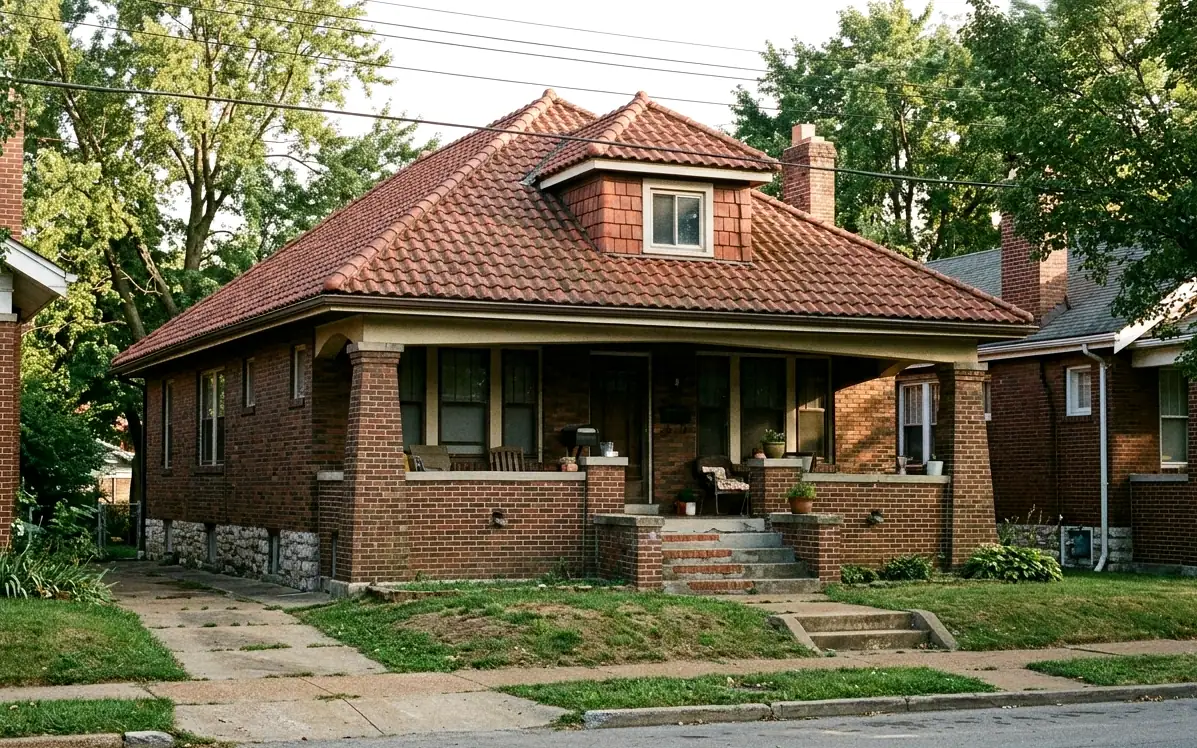
Clay tile roof repair means replacing cracked or missing tiles, resetting slipped ones, renewing the underlayment beneath, and fixing flashing and ridge caps. You need it when tiles break after a storm or foot traffic, or when leaks appear on a tile roof. A visit starts with a ground check and a careful look from a ladder.
How we handle clay tile roof repair on St. Louis homes
Many south city homes carry interlocking clay tile in the Ludowici style, often a deep red, brown, or green glaze on hip roofs over brick. The tile itself is fired clay and can last well beyond a century. What gives out first is usually hidden: the felt or underlayment beneath the tile, the nails or wire holding it, and the flashing at walls and chimneys. Fixing those parts keeps the tile roof working.
Broken tiles are the visible problem and come from hail, falling limbs, and, most often, people stepping where they should not. Clay tile is strong in compression but cracks under a boot heel. When we repair one, we lift the surrounding tiles carefully, pull the broken pieces, and set a matching replacement with a proper fastener, taking care not to crack the neighbors.
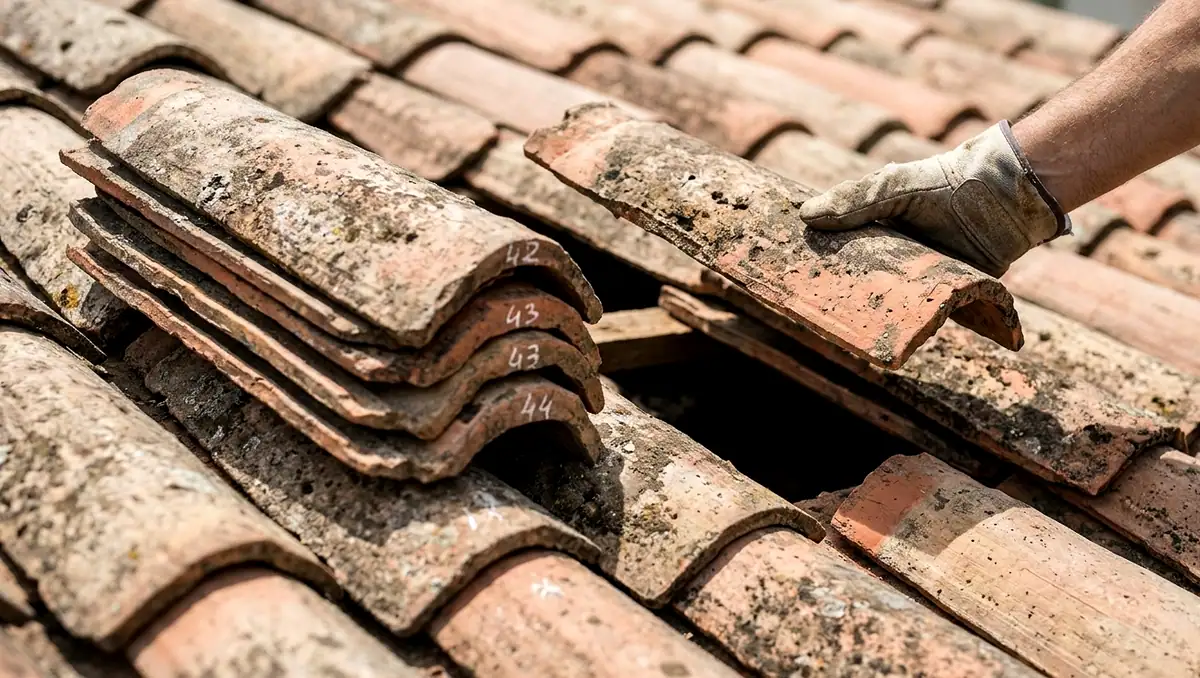
Underlayment is the second line of defense. On an old tile roof, the felt beneath may be brittle and torn, and the tile only sheds most of the water. When leaks appear but the tile looks fine, we often lift an area, inspect the layer below, and replace it with modern membrane before putting the same tiles back, numbered and stacked in order so every piece returns to its place.
What repair choices exist for a clay tile roof?
Replace broken tiles only
For storm or foot-traffic damage on an otherwise sound roof, matching tiles are set in place of cracked ones. This is the quickest fix and preserves the original look.
Underlayment renewal
When leaks come from beneath, tiles are lifted by section, new membrane goes down, and the same tiles go back. Costs more, but it restores the roof's waterproofing.
Ridge and hip rebedding
Cracked ridge mortar is chipped out and capped again with fresh mortar or mechanical fasteners, stopping the rain that runs in along the roof peaks.
Flashing and chimney work
New copper or stainless flashing replaces failed metal and dried sealant at chimneys, walls, and valleys, which are the leading leak points on tile roofs.
What does clay tile roof repair cost in St. Louis?
Tile repair prices reflect careful hand work, hard-to-find matching tiles, and slower progress than shingle repair. A few broken tiles cost far less than lifting a slope to renew the underlayment. Roof height, pitch, access, and the number of valleys and chimneys all move the price. Reclaimed tile costs more than new tile but blends in better, and that choice is worth discussing before work starts.
Compare every roofing and siding price range or plan the order of your exterior work.
| Work | Typical range |
|---|---|
| Replace a few broken tiles, per visit | $398 to $976 |
| Ridge and hip cap rebedding, per linear foot | $31 to $64 |
| Underlayment renewal under tile, per square | $742 to $1,486 |
| Chimney or wall flashing rebuild at tile | $692 to $1,684 |
Tile prices here are typical 2026 St. Louis ranges, not quotes, and an on-site inspection decides the actual price.
How we repair a clay tile roof
- 1
Inspect tiles and flashing
We check each slope for cracked, chipped, and slipped tiles, look at ridge caps and mortar, and study the flashing at chimneys and walls where tile roofs usually leak.
- 2
Source matching tile
We look for reclaimed Ludowici-style tiles that match your roof in profile, color, and age, since new clay rarely matches a weathered glaze. Spare tiles stored in a basement are a bonus.
- 3
Lift and number the tiles
Tiles around the repair are lifted by hand, labeled, and stacked on the roof or in a bin so they return to the same spot. Broken ones are taken out and discarded.
- 4
Renew underlayment and battens
Brittle felt is replaced with new membrane, rotted battens are swapped, and flashing is rebuilt. Where code and design allow, we use copper or stainless fasteners to hold the tile.
- 5
Reset tile and bed the ridge
Tiles go back in order with matching replacements, ridge and hip caps are rebedded in fresh mortar or secured with clips, and we show you photos of the finished repair.
How can you tell your clay tile roof needs attention?
Cracked or chipped tiles
Hairline cracks and chipped corners let water seep under the tile and reach the felt. Look for pieces in gutters or on porch roofs below after storms.
Tiles sliding out of line
A tile that has shifted leaves a gap or a crooked course. The fastener holding it has usually rusted away or the batten behind it has rotted.
Missing or cracked ridge caps
Ridge and hip caps are bedded in mortar that cracks with freeze-thaw cycles. Gaps along the ridge let rain run straight into the attic.
Leaks with tile that looks fine
When the ceiling stains but no tile is broken, the felt underneath has failed or flashing at a wall has opened up. The cause is hidden under good-looking tile.
Efflorescence and green growth
White salt crust or heavy moss on tile signals trapped moisture. Light growth is cosmetic, but heavy buildup holds water against the clay and the felt below.
Chimney and wall joints leaking
Flashing where tile meets brick is the most common leak point on a tile roof. Sealant dries and cracks, and metal pulls away from mortar joints over time.
Clay tile on south city homes: what makes St. Louis different
St. Louis has a huge stock of historic brick homes, and many of those built from the 1910s through the 1930s on the south side wear clay tile. You will see it on bungalows, Tudor revival houses, and hip-roofed foursquares across south city. Because tile roofs are rare in much of the Midwest, few crews have the tools or patience to repair them well.
The weather is hard on old tile. Freeze-thaw cycles crack tiles that have absorbed moisture, spring hail can chip glazed surfaces, and summer heat dries out the felt beneath until it tears. Tile is also heavy, so repairs must be made without overloading rafters or shifting more courses than needed. We lift in small sections, keep the tiles in order, and replace what is wrong before closing the area.
Where we handle clay tile roof repair
The city, the counties and the towns below cover most of the homes we work on. If yours is not listed, call and ask.
- City of St. Louis 63102
- St. Louis County, MO 63105
- St. Charles County, MO 63301
- Florissant, MO 63031
- Chesterfield, MO 63017
- Oakville, MO 63129
- St. Charles, MO 63301
- O'Fallon, MO 63366
- St. Peters, MO 63376
- Kirkwood, MO 63122
- Mehlville, MO 63125
- Belleville, IL 62220
- University City, MO 63130
- Ballwin, MO 63011
- Wentzville, MO 63385
- Hazelwood, MO 63042
- Webster Groves, MO 63119
- Edwardsville, IL 62025
- Collinsville, IL 62234
- Alton, IL 62002
- O'Fallon, IL 62269
- Arnold, MO 63010
- Affton, MO 63123
- Jefferson County, MO 63050
Shingle, siding and window lines we install and repair around St. Louis include GAF, Owens Corning, CertainTeed and James Hardie, plus the other brands below.
- GAF
- Owens Corning
- CertainTeed
- IKO
- Atlas
- Malarkey
- James Hardie
- LP SmartSide
- Alside
- Mastic
- DaVinci
- Velux
- Carlisle
- Firestone
Clay Tile Roof Repair questions
Is Ludowici-style clay tile still repairable on a St. Louis home?
Yes, in most cases. The tiles are durable fired clay, and reclaimed or newly made tiles in the same profile are available. The usual problems are broken pieces, rotted felt, and failed flashing, all of which can be repaired without replacing the whole roof. We start by finding tiles that match your color.
What is underlayment under clay tile and why does it fail?
Underlayment is the waterproof layer, traditionally felt, laid on the deck under the tile. The tile sheds most water, but the underlayment catches what gets through. On roofs 60 to 100 years old, that felt dries out, tears, and stops working, which is why leaks appear even when the tile looks perfect.
Can clay roof tiles be walked on without breaking?
They can, but only with care. Stepping on the lower third of the tile, where it rests on the course below, is safest. Stepping on the exposed middle or edge cracks tiles easily. Our crews use padded boards or lifts, and we ask that anyone else, including chimney sweeps, stay off a tile roof.
How do you match old clay tile for a south city bungalow roof?
We compare profile, size, color, and glaze against the tiles on your roof, then look for reclaimed stock from salvage or from the less visible slope of the same house. A tile from the back slope can be swapped to the front, with a new matching tile hidden at the rear.
Are broken ridge tiles on my clay roof an emergency?
Not an emergency in the sense of a fire, but they let water into the attic quickly in rain. If you see missing or shifted ridge caps, call the same day and we can tarp or reset them. Ridge repair is usually fast and costs far less than fixing the water damage later.
Related work we often pair with clay tile roof repair
Slate Roof Repair
Careful repair on natural slate. Natural slate can outlast the house when it is repaired correctly.
Roof Flashing Repair
Flashing joint repair. Flashing is the thin metal and rubber that turns water away at every joint in a roof.
Chimney Flashing Repair
Brick chimney flashing. Where a brick chimney meets the roof, water has four sides to get in from.
Roof Inspection
Roof inspection, top to bottom. A roof inspection shows you what the shingles, flashing and vents are doing before water finds the weak spot.
Need clay tile roof repair in St. Louis?
Call any hour. A roofer answers, asks a few questions and sets up a visit.