Apartment and house roof care in Skinker-DeBaliviere (63112)
Skinker-DeBaliviere sits beside Forest Park and near Washington University, with early 1900s brick homes and apartment buildings. We maintain and repair their roofs and gutters, and answer the phone 24/7.
- ZIP codes
- 63112
- County
- St. Louis City
- Phone
- (314) 461-6440, answered 24/7
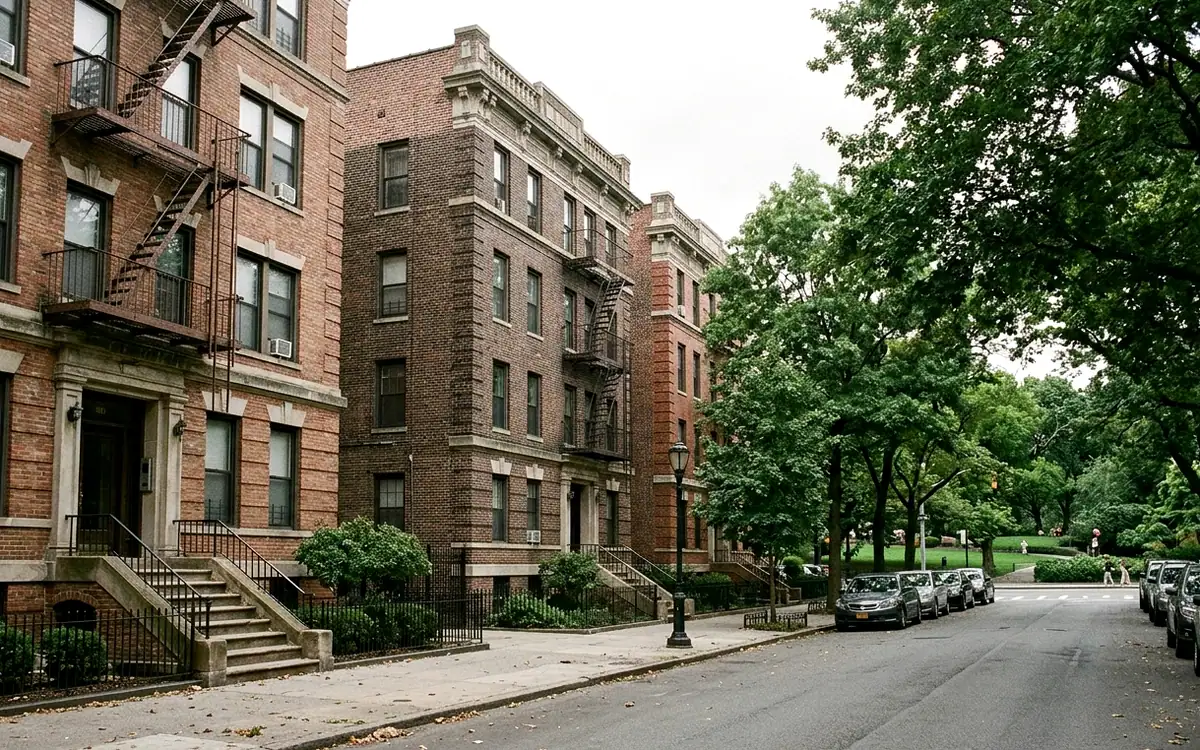
Stars and Stripes maintains and repairs roofs, gutters and parapets on Skinker-DeBaliviere's early 1900s brick apartment buildings and houses near Forest Park. A leak in a multi-unit building touches several households, so we trace the source on the roof and explain it plainly. Call (314) 461-6440 any hour, and describe where water is showing up.
What Skinker-DeBaliviere, St. Louis homeowners call us about
Skinker-DeBaliviere runs along the northern edge of Forest Park, and it is one of the few St. Louis neighborhoods where large brick apartment buildings and single-family houses stand on the same streets. Washington University lies just to the west, and a MetroLink station on DeBaliviere keeps the area connected. Many buildings date from the early 1900s, with generous windows, tall ceilings and front entries framed in stone.
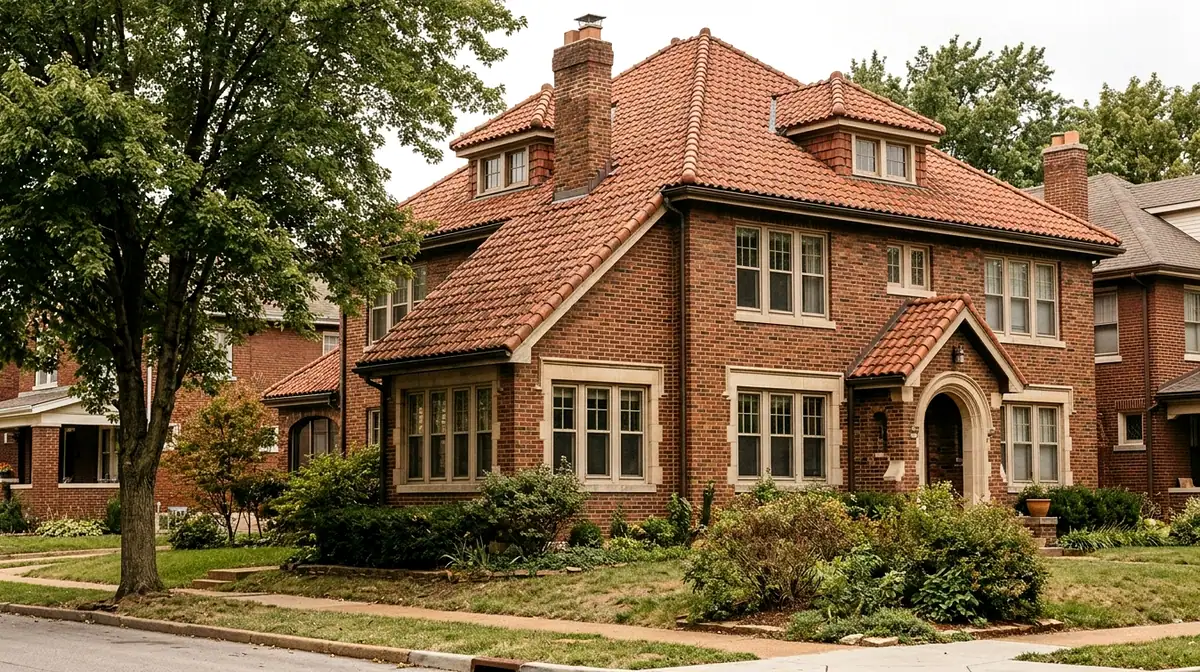
The mix means roofs are not all alike. A three-story apartment building usually has a wide, nearly flat roof with a parapet, several drains and sometimes rooftop vents and pipes. A neighboring house may carry a hipped roof of clay tile or asphalt shingle. Our work here covers both kinds, and the first question is always which roof is actually leaking, and which unit it affects.
Landlords, building managers and owners of larger homes all call us, and each has a different need. Managers want a short, clear report on what happened and what it will take to fix. Residents want to know who is on the roof and when. We give photos, a plain explanation and a plan that works around tenants and building routines, and we keep the manager informed from the first visit through the final cleanup.
Apartment buildings and brick houses beside the park
The apartment buildings here are often brick, three or four stories, with low-slope roofs behind a short parapet and a few interior drains. Original roofs were tar and gravel, and many have been replaced with rubber, modified bitumen or a coating. Smaller multi-unit buildings and doubles have the same kind of roof on a smaller scale, often with a rear section lower than the front.
Single-family houses on the quieter streets tend toward hipped or gabled roofs with wide eaves, and some still carry clay tile. The common risk is neglect over time rather than a single failure. A building with six households may have six people noticing a stain and assuming someone else called. A regular roof check catches small problems before they spread through several ceilings. We also note which sections of the roof have been repaired before, since patched areas deserve a closer look each time.
Where large roofs behind parapets start to fail
Roof drains choked with debris
Leaves from the park trees and grit from old membrane fill the drain strainers. Water ponds across a wide flat roof and creeps under seams that would stay dry if the roof drained.
Penetrations for vents and pipes
Plumbing stacks, exhaust vents and old antenna mounts all cut through the membrane. Their rubber boots and sealant crack in the sun and let water run along the pipe into a top floor unit.
Cracked coping on long parapets
Long parapet walls shed water over their caps. When joints in the caps open, rain enters the brick and tracks down inside the wall, appearing in an apartment far from the roof edge.
Worn membrane at high traffic spots
Maintenance visits to roof hatches and equipment wear the surface in the same paths. Scuffed membrane near the hatch thins and splits long before the rest of the roof.
Gutters overwhelmed on larger houses
Single-family roofs here have long runs and deep eaves. A gutter that is sized small or hung with a slight pitch backward sends water over the edge and onto the siding below.
Seeing one of these in Skinker-DeBaliviere, St. Louis?
Call (314) 461-6440 any hour. We inspect in daylight and show you photos of what we find.
What our crew checks first on a Skinker-DeBaliviere building
- Every roof drain, scupper and the ponding marks around them
- Boots and sealant around vent pipes and rooftop equipment
- Parapet caps, wall joints and the flashing at each edge
- Paths worn near the roof hatch or stair access
- Top floor ceilings in each unit, matched to roof sections
Services Skinker-DeBaliviere, St. Louis homes need most
Roof Maintenance
Small fixes, longer roof life. Roofs rarely fail all at once.
Flat Roof Repair
Low-slope roof leaks fixed. Most St.
TPO Roofing
Welded white flat roofing. TPO is a single-ply white membrane whose seams are welded with hot air into one continuous sheet.
Parapet Wall & Coping Repair
Seal the top of the wall. The short brick wall around a flat roof takes more weather than any other part of the building.
Roof Inspection
Roof inspection, top to bottom. A roof inspection shows you what the shingles, flashing and vents are doing before water finds the weak spot.
Gutter Cleaning
Clear gutters, every season. St.
Nearby areas we also cover
Roofing questions from Skinker-DeBaliviere, St. Louis
How often should a Skinker-DeBaliviere apartment building roof be checked?
Twice a year is a good rule, once after the winter freeze and once after storm season, plus a visit after any severe wind or hail. Regular checks keep drains clear and catch small splits in the membrane before they reach tenants.
Can you work around tenants in a multi-unit building near Forest Park?
Yes. We schedule roof work for daytime hours, tell the manager which stairs or hatches we will use, and keep access clear. For repairs that need an apartment entry, we coordinate the visit with the manager and explain what we need to see.
What kind of roof works on a flat apartment building roof here?
TPO, rubber and modified bitumen all work on these brick buildings. The right choice depends on the condition of the deck, the number of penetrations and the budget. We compare the options and show how each one handles the parapet edges.
Who should we call about a leak that appears in several Skinker-DeBaliviere units?
Call us at (314) 461-6440 and give us the units and walls affected. Stains in different apartments often trace back to one drain or one parapet joint. We climb up, find the path of the water and tell you what to repair.
Roof or siding trouble in Skinker-DeBaliviere, St. Louis?
Call any hour. We set up a daylight inspection and walk you through what we find.