Slate roof repair in St. Louis for city brick homes
Natural slate can outlast the house when it is repaired correctly. We replace broken slates, fix failing nails and flashing, and tell you plainly when a slate roof is past saving.
- Answered 24/7
- Roof Replacement
- City, county and Metro East
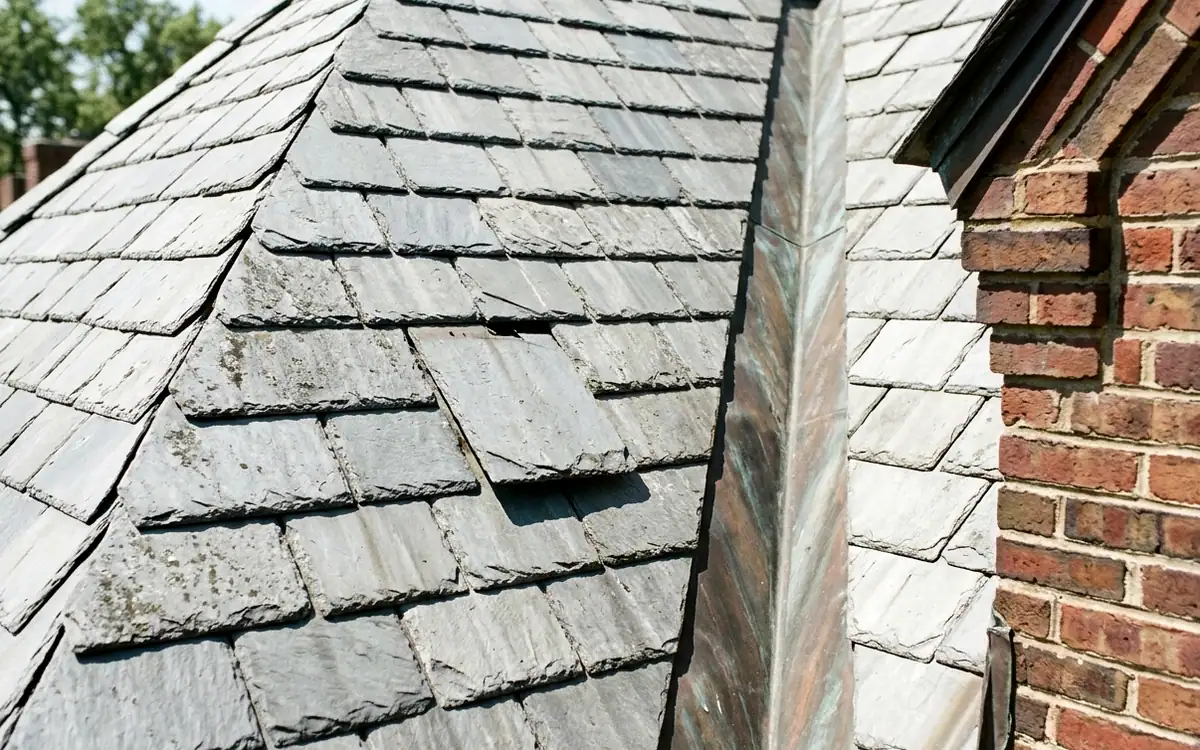
Slate roof repair means replacing cracked, slipped, or missing slates, fixing copper flashing, and securing loose slates with hooks or new nails. You need it when slates slide, leaks appear under a slate roof, or pieces are found in the yard. A visit begins with a ground check and a careful inspection from a ladder or a safe lift.
How we handle slate roof repair on St. Louis homes
Slate is the toughest roofing material in St. Louis, and many of the best examples cover brick homes built in the early 1900s. The stone itself rarely fails first. The weak point is almost always the fastener. Original roofs used iron or steel nails that rust out over decades, and when the nail goes, the slate slips. Repairs that use proper copper or stainless fasteners stop that cycle instead of covering it up.
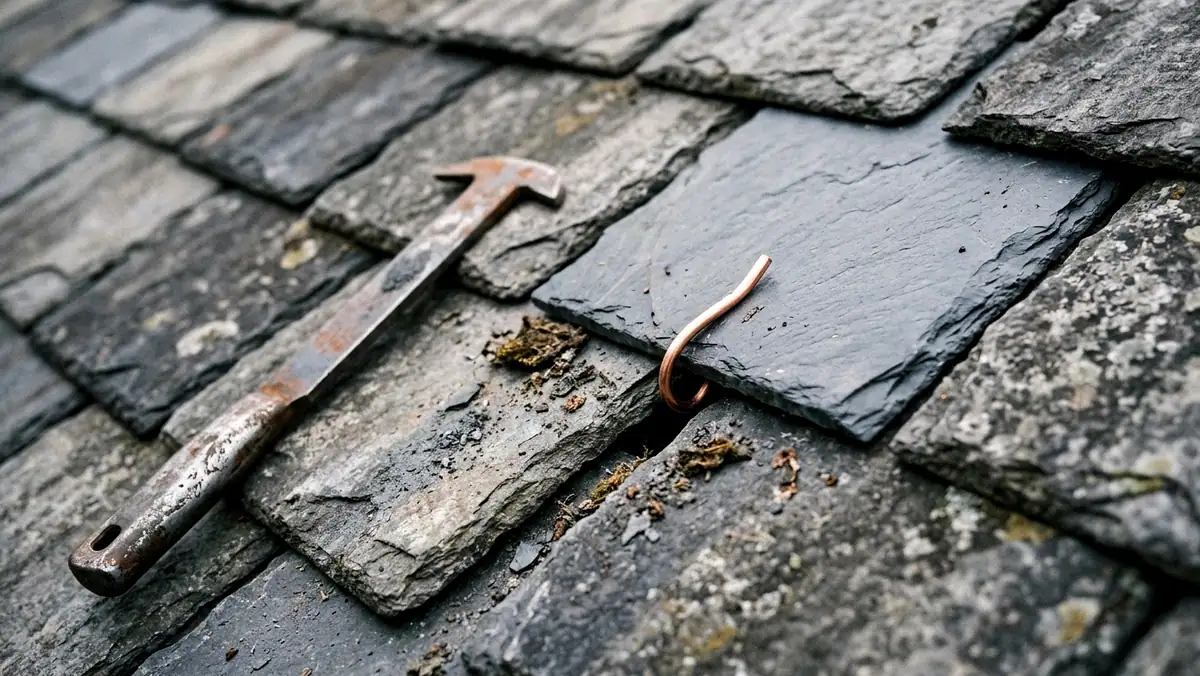
Replacing a single broken slate sounds simple, but it is delicate work. The crew uses a slate ripper to cut the old nails without lifting the courses above, then slides in a new slate and secures it with a metal hook, sometimes called a slate hook or ribbon, since a nail cannot be driven through a lapped course. A hook holds the new slate tight and invisible, with no new holes in the surrounding stone.
Slate also needs respect on the surface. Walking on it breaks slates, so we use roof ladders, roof jacks, or lifts to spread weight and avoid cracking tiles we are not repairing. The same care applies to copper flashing at valleys, chimneys, and dormers, which often fails before the slate does. A good slate repair finds the cause of a leak, not just the broken piece.
What repair options exist for a slate roof?
Spot slate replacement
Best for roofs with a handful of broken or slipped slates and sound nails elsewhere. Quick and economical, and the roof keeps its historic look and its useful life.
Hook and nail refastening
When rusted nails are the cause, we reset loose slates with copper nails or hooks across a whole slope, giving an aging roof many more years without a full replacement.
Copper flashing rebuild
Valleys, chimneys, and dormers get new copper flashing and soldered seams. This is often the real cure for leaks that keep coming back below a slate roof.
Re-lay or replace the roof
When slates are delaminating broadly or the deck is failing, the slates are removed, the deck repaired, and good slates reinstalled, or the roof is replaced with a new material.
What does slate repair cost in St. Louis?
Slate repair costs more per square foot than other roofs because the work is slow, the materials are specialized, and crews cannot walk the surface freely. Access, roof height, and pitch add to the price, as does the cost of matching old slate. Copper flashing is a separate line item. A small repair visit may cover a few slates, while refastening a whole slope takes days and runs far higher.
Compare every roofing and siding price range or plan the order of your exterior work.
| Work | Typical range |
|---|---|
| Replace a few broken slates, per visit | $385 to $940 |
| Hook or copper nail refastening, per square | $586 to $1,264 |
| Copper valley or chimney flashing repair | $648 to $1,538 |
| Slate re-lay on a small section, per square | $1,285 to $2,764 |
Slate work varies widely, so these 2026 St. Louis ranges are typical figures, not quotes, until we inspect the roof in person.
How we repair a slate roof
- 1
Inspect from ladder or lift
We look over every slope for slipped, cracked, and missing slates, check copper valleys and flashing, and tap suspect slates to hear if they ring or sound dull from delamination.
- 2
Choose matching slates
Replacement slates are matched by color, thickness, size, and age. We use reclaimed stock where possible so repairs blend in rather than showing up as new gray patches.
- 3
Rip out the broken slate
A slate ripper cuts the old nails without lifting neighboring courses. The broken pieces come out cleanly and the exposed deck and felt get checked for dampness or damage.
- 4
Slide in and hook new slate
The new slate slides into place and is held by a copper or stainless hook set into the course below, so no nail has to pierce a lapped slate and no hole shows.
- 5
Repair flashing and seal up
Failed copper at chimneys, valleys, and walls is repaired or replaced, and we clear debris from valleys. Then we walk you through photos of every repaired spot.
What do slate roof problems look like from the ground?
Slipped slates hanging low
A slate that has dropped below its neighbors, leaving a visible gap or a crooked line, has usually lost its nail. The hole above it is now an open path for water.
Broken pieces in the yard
Fragments of gray or green stone in flower beds or on the driveway after a storm point to cracked slates above. Check after wind, hail, or a fallen limb.
Rust streaks on slate faces
Orange stains running down slates mean steel nails or old flashing are corroding. The slate looks fine, but the fasteners holding it are on their way out.
Flaking or soft slate surfaces
Slate that peels in layers or crumbles at the edges has begun to delaminate. A few can be replaced, but widespread flaking signals the stone itself is aging out.
Attic stains under a slate roof
Dark spots on rafters or sheathing below slate often trace to failed copper flashing, a valley problem, or a few missing slates rather than the whole roof.
Moss and debris in valleys
Leaves and moss packed into valleys hold water against copper and slate. Over time that moisture eats the metal and backs water up under the courses.
Why St. Louis slate roofs need specialized repair
Slate roofs are concentrated on south city brick homes and some of the older streets in St. Louis County, built when slate was a premium material. Many sit over hip roofs and dormers with copper valleys and gutters. These roofs have now stood through a century of freeze-thaw cycles and summer storms. That longevity is the good news, and it also means original fasteners and flashing are often at or near the end of their life.
Hail and falling limbs break more slates here than age does, especially in spring storm season and after ice events in winter. A single storm can crack a dozen slates at once, and a competent repair finds all of them before the next rain. Matching matters: St. Louis slate comes from different quarries and weathers to different shades, so we look for reclaimed slates of the same color and thickness.
Where we handle slate roof repair
The city, the counties and the towns below cover most of the homes we work on. If yours is not listed, call and ask.
- City of St. Louis 63102
- St. Louis County, MO 63105
- St. Charles County, MO 63301
- Florissant, MO 63031
- Chesterfield, MO 63017
- Oakville, MO 63129
- St. Charles, MO 63301
- O'Fallon, MO 63366
- St. Peters, MO 63376
- Kirkwood, MO 63122
- Mehlville, MO 63125
- Belleville, IL 62220
- University City, MO 63130
- Ballwin, MO 63011
- Wentzville, MO 63385
- Hazelwood, MO 63042
- Webster Groves, MO 63119
- Edwardsville, IL 62025
- Collinsville, IL 62234
- Alton, IL 62002
- O'Fallon, IL 62269
- Arnold, MO 63010
- Affton, MO 63123
- Jefferson County, MO 63050
Shingle, siding and window lines we install and repair around St. Louis include GAF, Owens Corning, CertainTeed and James Hardie, plus the other brands below.
- GAF
- Owens Corning
- CertainTeed
- IKO
- Atlas
- Malarkey
- James Hardie
- LP SmartSide
- Alside
- Mastic
- DaVinci
- Velux
- Carlisle
- Firestone
Slate Roof Repair questions
Why do slate roofs need copper nails instead of steel?
Steel nails rust within a few decades, and a rusted nail lets the slate slide out of place. Copper and stainless fasteners resist corrosion and last as long as the stone, so a repaired slate stays put. Mixing metals can also cause galvanic corrosion, which is why we match fasteners to the flashing.
What is a slate hook and when is it used on a slate roof?
A slate hook, often called a ribbon or slate repair clip, is a strip of copper or stainless steel nailed to the deck and bent over the bottom edge of the replacement slate. It holds the slate in place without piercing the stone above it. We use hooks wherever the original nail cannot be reached.
How do you know when a St. Louis slate roof is past saving?
Several signs point that way: widespread delamination or flaking, rusted nails across many slopes, a sagging or rotted deck, and repair bills climbing every year. If more than roughly a third of the slates need work, a re-lay or replacement is often the better move. We show you photos before suggesting it.
Can a slate roof be walked on safely during repair?
Slate cracks easily underfoot, so we avoid walking on it wherever possible. Crews use roof ladders, padded boards, and sometimes a lift or boom to spread weight and reach the work. That care is why slate repair takes longer and why untrained roofers do more harm than good.
Is it worth repairing an old slate roof on a south city home?
Usually yes, when the slates are mostly sound. A well-repaired slate roof can give many more decades of service and adds real value to a brick home. If the slate is largely good and the fasteners and flashing are the problem, repair is far cheaper than replacement with any other material.
Related work we often pair with slate roof repair
Clay Tile Roof Repair
Ludowici-style tile specialists. Clay tile roofs on south city homes outlast most coverings, but the felt beneath them and the flashing around them wear out sooner.
Roof Flashing Repair
Flashing joint repair. Flashing is the thin metal and rubber that turns water away at every joint in a roof.
Synthetic Slate Roofing
Composite slate look. Synthetic slate gives you the deep, textured look of natural stone in molded polymer or composite tiles that weigh far less.
Mansard Roof Repair
Steep faces and hidden decks. A mansard puts two roofs on one house: a steep face you see from the street and a low deck you never do.
Need slate roof repair in St. Louis?
Call any hour. A roofer answers, asks a few questions and sets up a visit.