Emergency roof tarping in St. Louis, MO: temporary dry-in
A tarp is not a repair. It is a fast, temporary dry-in that keeps rain out while the roof waits for permanent work. Done correctly, it holds through wind and several weeks of weather.
- Answered 24/7
- Roof Repair
- City, county and Metro East
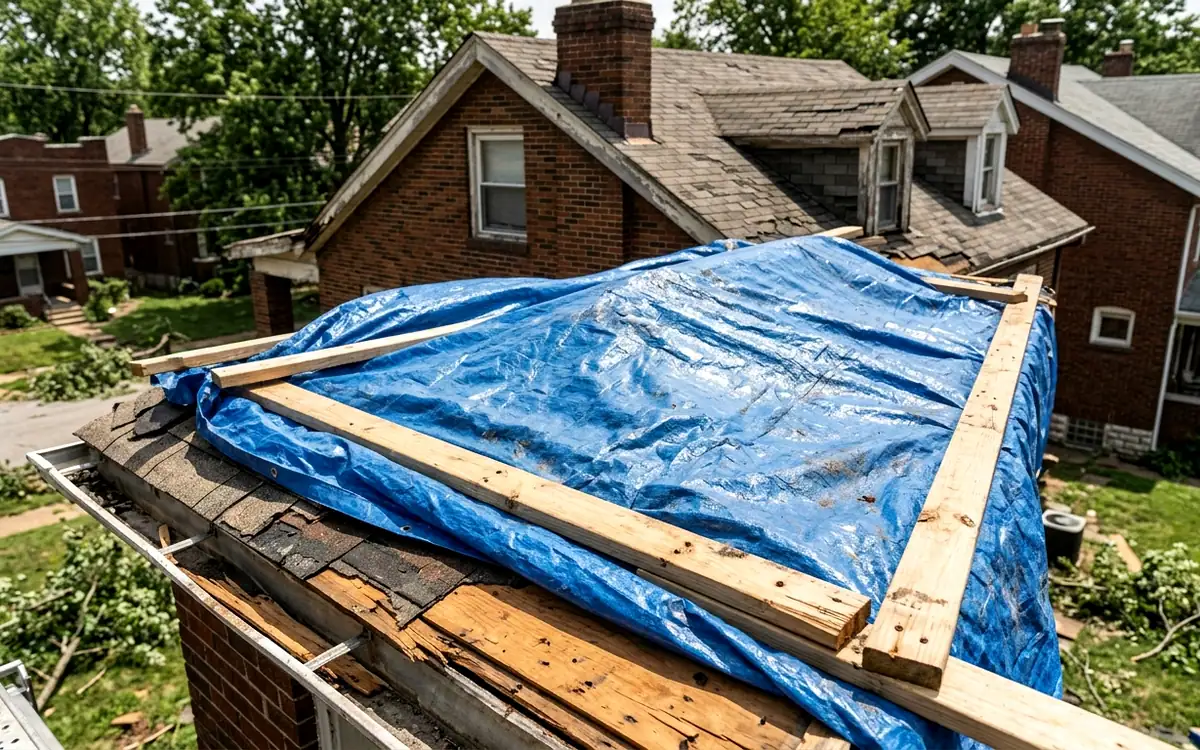
Emergency roof tarping is a temporary dry-in that covers storm-damaged or punctured areas so rain stays out until repairs begin. You need it when damage is too large, or the weather too wet, for a permanent fix. We lay heavy tarp over the opening, secure it with wood battens, and tell you how long to expect it to hold.
When does a damaged roof need a tarp right now?
A hole you can see
Any visible opening through the shingles and decking needs covering before the next rain. Even a small puncture can admit a surprising amount of water in a storm.
Bare decking after wind
When wind strips shingles and underlayment down to plywood or boards, the decking is soaking up water with every shower. A tarp protects it until new roofing can go on.
Rain in the forecast
If a repair cannot happen before the next system arrives, a tarp bridges the gap. It is often the right move when supplies or crews are stretched after a big storm.
Soft decking underfoot
Spongy or sagging spots mean the roof is not safe to stand on. We tarp from the edges and ladder, rather than put weight on weakened boards.
A large missing area
When a slope has lost many shingles at once, the quickest way to protect the home is a single large tarp over the whole area, not a series of small patches.
A leak you cannot stop inside
If buckets and plastic sheeting are only slowing the water, stopping it outside is the real fix. A tarp covers the entry point while the cause is repaired.
How we tarp a roof so it actually stays put
- 1
Assess the damage footprint
We measure the damaged area and look at nearby shingles, so the tarp extends well past the damage on every side. A tarp that is too small only moves the leak.
- 2
Clear debris and sharp edges
Broken shingles, nails, and splintered wood are cleared so they cannot tear the tarp. Where decking is open, we bridge it so nothing falls through.
- 3
Size and unroll the tarp
The tarp goes on from the high side down, overlapping like shingles so water runs off it. Wind direction decides which edge we anchor first.
- 4
Batten along every edge
Wood strips are fastened through folded tarp edges at close spacing. This holds the cover flat and stops wind from getting under any side.
- 5
Inspect inside and plan removal
We check the attic for remaining drips, photograph the covered area, and explain when permanent work should happen so the tarp is not left in place longer than needed.
How we handle emergency roof tarping on St. Louis homes
Tarping has a reputation for being sloppy, and a badly done tarp deserves it. A sheet stapled at the corners flaps in the first gust, tears at its fasteners, and funnels water under itself. A proper dry-in is closer to a temporary roof: the tarp is sized to extend well beyond the damage, and every edge is held down along its length instead of at a few points.
We run the tarp from above the opening, over the ridge when the damage sits near it, and down past the lower edge of the damage. Wood furring strips are fastened through the tarp at close intervals so wind cannot get underneath, and the upper edge is lapped so water sheds over it. Where possible, fasteners go into the rafters instead of only the sheathing.
A tarp is a bridge to a repair, not a destination. Sunlight breaks down tarp fabric, and fasteners work loose after repeated wind. We tell you plainly how many weeks to expect, remove the tarp when permanent work begins, and repair any fastener holes it left behind. Every tarp job leaves you with photos of what was underneath.
Tarping St. Louis roofs: steep brick, flat, and tile
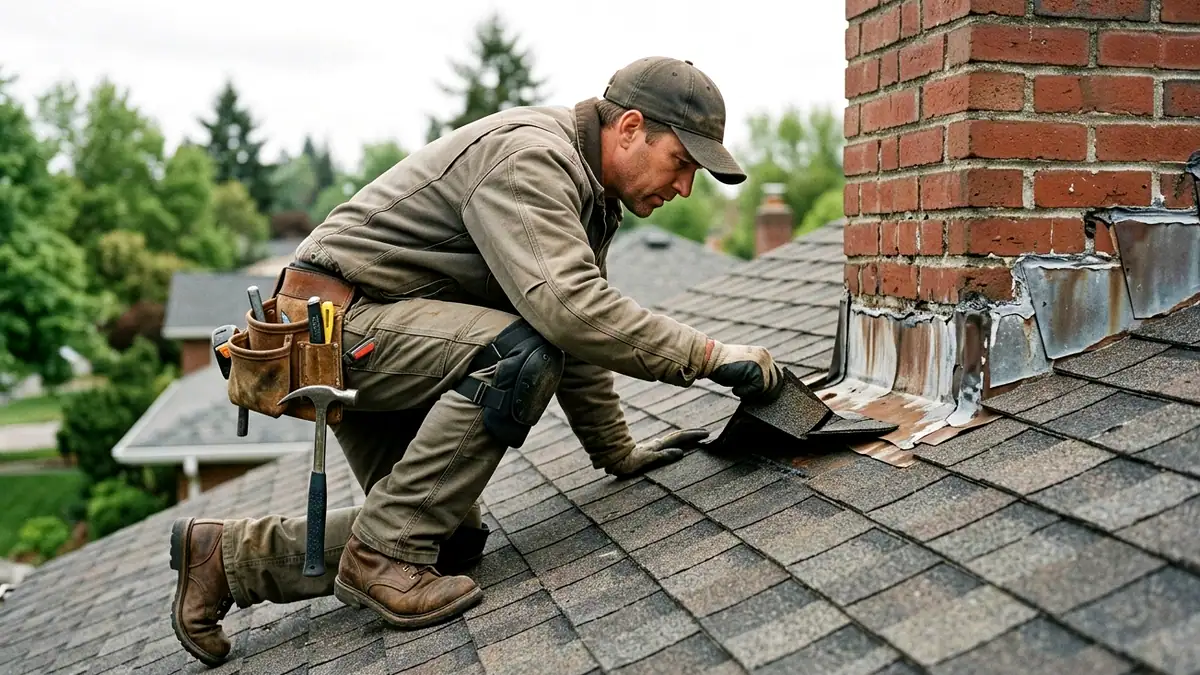
Steep roofs on older brick houses take more planning. The tarp has to be tied over the ridge or secured with battens along the sides, and the crew works with ropes and roof jacks. On slate and clay tile roofs we avoid walking on fragile pieces, and we secure the covering to the framing at the edges so we do not crack more tile or loosen the pieces that are still sound.
Flat roofs behave differently. A tarp cannot shed water on a nearly level surface, because the water pools on top. For flat rear sections common on south city brick homes and two-family flats, we usually patch the membrane or use a sealed temporary patch instead. We tell you which approach fits your roof when we see it, and we explain why a tarp would fail on that section before we choose another method.
Tarp types and coverage we use
Heavy-duty poly tarp
A thick, UV-treated tarp with reinforced edges stands up to wind and several weeks of sun. Thin hardware-store tarps tear within days, so we avoid them.
Ridge-to-eave coverage
For large damage, we cover the full slope from ridge to eave, so water has no seam to enter and the tarp sheds rain like a roof.
Valley and ridge wrap
When the damage crosses a hip, ridge, or valley, the tarp wraps over the peak and is battened on both sides to keep wind from lifting it.
Plywood patch plus tarp
Where a hole is large, we cover it with sheathing first, then tarp over it. This keeps the tarp from sagging into the opening and pooling water.
What does emergency roof tarping cost in St. Louis?
Tarp pricing follows the size of the area, the height and pitch of the roof, and how much preparation is needed before the cover goes on. A small tarp over one opening is a short job. A full slope on a steep two-story brick house takes more material, more people, and more safety gear. A removal charge at repair time is separate and usually modest.
Compare every roofing and siding price range or plan the order of your exterior work.
| Work | Typical range |
|---|---|
| Small tarp over one opening | $345 to $820 |
| Large tarp, full slope | $690 to $1,675 |
| Plywood patch plus tarp | $780 to $1,885 |
| Tarp removal at repair time | $145 to $335 |
These ranges are typical for temporary dry-in work in St. Louis, not a quote, and a very steep or tall roof can run higher.
Where we handle emergency roof tarping
The city, the counties and the towns below cover most of the homes we work on. If yours is not listed, call and ask.
- City of St. Louis 63102
- St. Louis County, MO 63105
- St. Charles County, MO 63301
- Florissant, MO 63031
- Chesterfield, MO 63017
- Oakville, MO 63129
- St. Charles, MO 63301
- O'Fallon, MO 63366
- St. Peters, MO 63376
- Kirkwood, MO 63122
- Mehlville, MO 63125
- Belleville, IL 62220
- University City, MO 63130
- Ballwin, MO 63011
- Wentzville, MO 63385
- Hazelwood, MO 63042
- Webster Groves, MO 63119
- Edwardsville, IL 62025
- Collinsville, IL 62234
- Alton, IL 62002
- O'Fallon, IL 62269
- Arnold, MO 63010
- Affton, MO 63123
- Jefferson County, MO 63050
Shingle, siding and window lines we install and repair around St. Louis include GAF, Owens Corning, CertainTeed and James Hardie, plus the other brands below.
- GAF
- Owens Corning
- CertainTeed
- IKO
- Atlas
- Malarkey
- James Hardie
- LP SmartSide
- Alside
- Mastic
- DaVinci
- Velux
- Carlisle
- Firestone
Emergency Roof Tarping questions
How long will an emergency roof tarp last on a St. Louis house?
A properly battened heavy-duty tarp typically holds for several weeks, but sun, wind, and repeated storms wear it down. We give you a realistic window when we install it, and we recommend scheduling permanent repair well inside that window.
Will tarp fasteners leave holes in my shingles?
Battens fastened through shingles can leave small holes. We keep them to a minimum, place them into rafters where possible, and fill or replace any affected shingles during the permanent repair, so the small holes do not turn into leaks later on.
Can a tarp be put on a wet roof?
Only when it is safe. A wet, steep roof is slippery, so we limit the work in heavy rain and may cover from ladders and the roof edge. If conditions are dangerous, we focus on protecting the interior and tarp as soon as footing is safe.
Why not just staple a tarp down myself until the roof is fixed?
Staples tear through tarp fabric in wind and leave a funnel for water. A tarp needs battens along its edges, correct overlap, and a secure top edge. Climbing a damaged roof is also dangerous, so we would prefer you stay on the ground.
How long can a tarp stay on while I wait on my insurance company?
Usually a few weeks is realistic, though it depends on the weather and the tarp. If the wait stretches out, tell us, and we can inspect the tarp, re-batten it, or replace it with a fresh one so your roof stays covered the whole time.
Related work we often pair with emergency roof tarping
Emergency Roof Repair
Roof emergency, any hour. A limb through the roof at midnight or water pouring through a ceiling on Sunday does not wait for business hours.
Storm Damage Roof Repair
After the storm passes. A severe storm seldom hurts a roof in just one way.
Tree Damage Roof Repair
Fallen tree and limb repair. A limb that lands on a roof can break more than shingles.
Roof Decking Replacement
The layer under your roof. Decking is the wood your whole roof is nailed to, and it often hides rot, gaps, or old plank spacing.
Need emergency roof tarping in St. Louis?
Call any hour. A roofer answers, asks a few questions and sets up a visit.