Flat and shingle roof repair in Maryland Heights, MO (63043)
Maryland Heights mixes apartment complexes, townhomes and subdivision houses near Creve Coeur Lake. That means flat roofs and shingle roofs on the same streets, and we work on both around the clock.
- ZIP codes
- 63043, 63146
- County
- St. Louis County
- Phone
- (314) 461-6440, answered 24/7
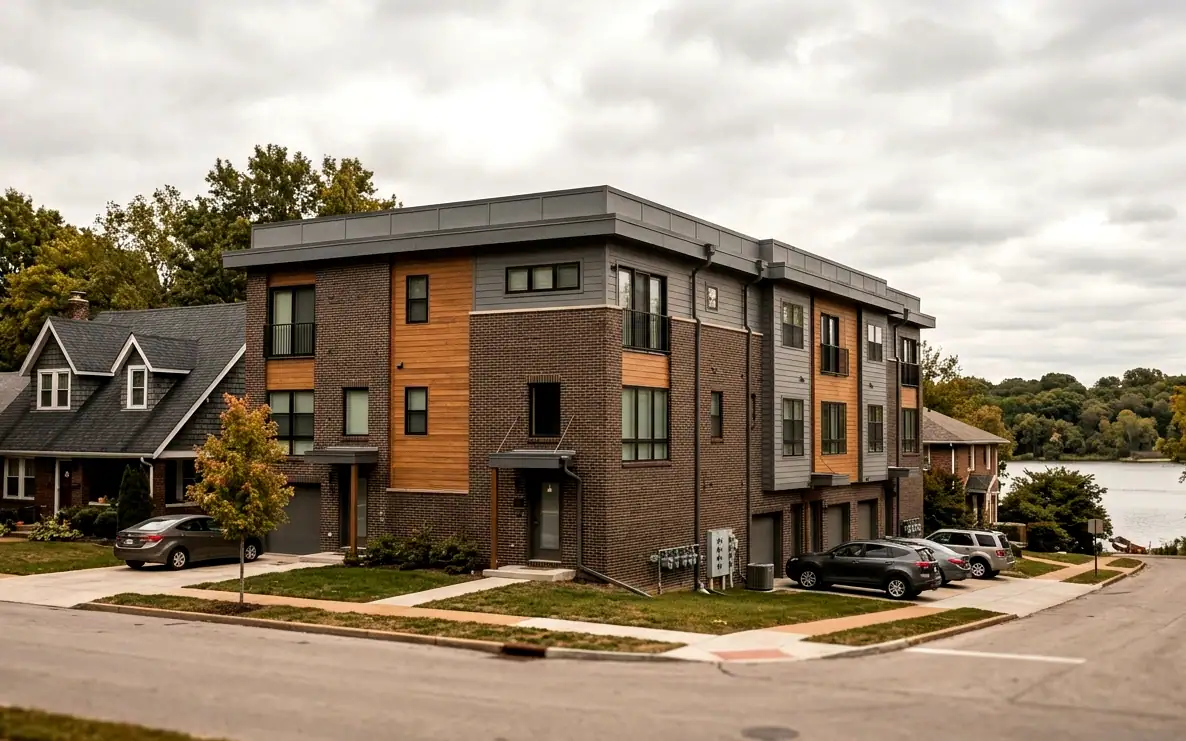
Maryland Heights roofing splits between low slope roofs on apartments and townhomes and shingle roofs on single family houses. We check membrane seams, drains, wall flashing and shingle condition, show you the photos, and describe repair or replacement options with typical price ranges. Calls are answered at any hour.
What Maryland Heights, MO homeowners call us about
Drive through Maryland Heights and the roofline changes every few blocks. Large apartment complexes sit near the highways, townhome rows share long walls, and nearby subdivisions hold ranches, split levels and two story houses. The city grew in layers, so almost every roof type in the county turns up here. That mix is the reason one visit rarely looks like the next, and why we ask what kind of building you have before anything else.
The first question on a Maryland Heights call is what kind of roof you actually have. A townhome with a flat or very low slope section needs a membrane approach, with attention to seams, drains and wall terminations. A subdivision house needs shingle work and flashing. We handle both and explain the difference as we go. Townhomes add one more wrinkle, since the roof over your unit may share drains or walls with the unit beside it, and we explain exactly where your part ends.
Water is also part of the setting. Creve Coeur Lake and the Missouri River bottoms sit nearby, so humidity runs high in summer and storms can arrive hard across open ground. Moisture sits on roofs longer than it does in drier spots, and small leaks have time to soak insulation before anyone sees a stain. Our inspection looks for those hidden wet areas, not only the visible drip, and we explain what we found in plain language.
Flat roofs, townhomes and subdivision houses in Maryland Heights
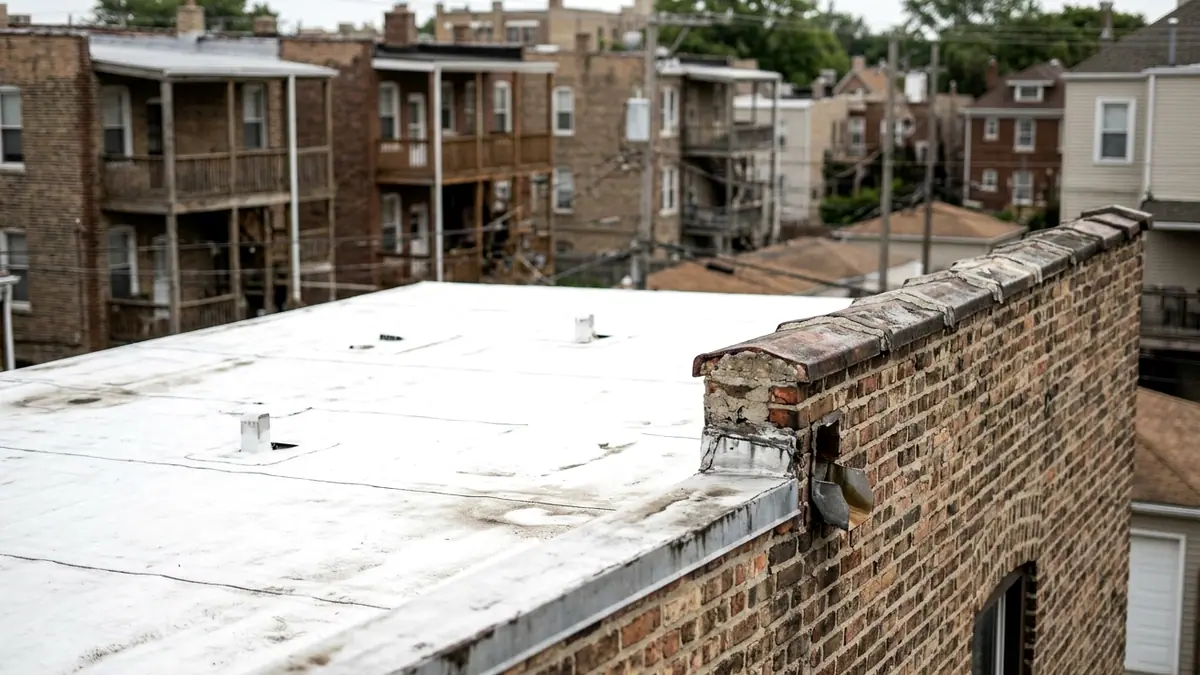
Apartment buildings and townhome rows in Maryland Heights often have low slope or flat sections covered in membrane, modified bitumen or built up roofing. These roofs depend on sealed seams, working drains and tight flashing at parapets and walls. When any of those fail, water collects instead of running off, and it finds its way into upper floor ceilings. Even a small tear in a seam can feed water into the insulation for months before a stain forms below.
The surrounding subdivisions are mostly ranches, split levels and two story homes from the 1970s through the 1990s, with asphalt shingles on moderate slopes. They share many typical problems with the rest of the county: aging shingles, tired flashing, and gutters that sag. Shared walls in townhomes also create unusual junctions where one owner's roof meets another's. Fire walls between townhome units create tight flashing details that need careful, patient work.
How roofs fail around Maryland Heights
Ponding on low slope roofs
Flat sections that do not drain fully keep standing water for days. That water stresses seams, grows algae and shortens the life of the membrane.
Open seams in the membrane
Heat, cold and foot traffic open seams over time. Water slips through hairline gaps and travels along the deck before appearing at a ceiling far from the actual defect.
Clogged scuppers and roof drains
Leaves, grit and debris block drains and scuppers on flat roofs. A single blocked outlet can raise a pond to the height of the wall flashing during a heavy rain.
Failed wall and parapet flashing
Where flat roofs meet brick walls or townhome party walls, flashing and sealant crack with movement. Rain runs behind the termination and into the building.
Wind-lifted subdivision shingles
Open ground near the lake lets storm wind race across rooftops. Unsealed shingle tabs crease and lift, and the exposed rows tear off in the next storm.
Seeing one of these in Maryland Heights, MO?
Call (314) 461-6440 any hour. We inspect in daylight and show you photos of what we find.
What our crew checks first on a Maryland Heights flat or low slope roof
- Standing water marks and low spots across the whole roof surface
- Seam welds, patches and penetrations for opened edges
- Drains, scuppers and overflow outlets for debris and cracks
- Wall terminations and parapet caps for loose or dry sealant
- Shingle roofs nearby for lifted tabs and creased rows
Services Maryland Heights, MO homes need most
Flat Roof Repair
Low-slope roof leaks fixed. Most St.
Flat Roof Replacement
Tear-off and a new flat roof. When patches stop holding, a full replacement resets the whole low-slope roof.
TPO Roofing
Welded white flat roofing. TPO is a single-ply white membrane whose seams are welded with hot air into one continuous sheet.
Modified Bitumen Roofing
Layered cap sheet roofing. Modified bitumen is a layered asphalt roof, reinforced with polyester and finished with a granulated cap sheet.
Roof Leak Repair
Find the real leak source. The stain on your ceiling is rarely under the hole in your roof.
Parapet Wall & Coping Repair
Seal the top of the wall. The short brick wall around a flat roof takes more weather than any other part of the building.
Nearby areas we also cover
Roofing questions from Maryland Heights, MO
Why does my Maryland Heights flat roof leak only after heavy rain?
Usually water is collecting somewhere it should not, such as a blocked drain or a seam that only stays wet during long storms. We check the roof after cleaning drains, trace the low spots and recommend the smallest repair that stops it. Often the repair is a small patch or a cleaned drain rather than a new roof.
Can you work on shared townhome roofs in Maryland Heights?
Yes, though the layout matters. Townhome roofs often share walls and drains with neighbors, so we explain which sections affect your unit and which belong to the association. We describe the repair so everyone involved understands it. Cost sharing is a separate matter between owners, but a clear description of the work makes that conversation easier.
What flat roof systems fit Maryland Heights buildings?
TPO, modified bitumen and EPDM are all common choices. The right one depends on the roof deck, drainage and budget. We compare them in plain terms and give you typical price ranges for each. Roof age, deck condition and the number of drains and penetrations all affect which system makes the most sense for the building.
Does Maryland Heights humidity affect roof repair choices?
It can. Damp air and standing moisture speed up algae growth and hold moisture in insulation. We favor details that drain fully and ventilate well, and we look for wet insulation whenever a flat roof has been leaking. Wet insulation is a hidden cost of long term leaks, so we probe for it before choosing any repair.
Roof or siding trouble in Maryland Heights, MO?
Call any hour. We set up a daylight inspection and walk you through what we find.