Gutter guards in St. Louis: screen, micro-mesh or reverse-curve
Gutter guards keep leaves and debris out of the trough so water can flow. The three main styles perform differently under oaks, maples and sweetgums, so we match the guard to your trees and roof.
- Answered 24/7
- Gutters
- City, county and Metro East
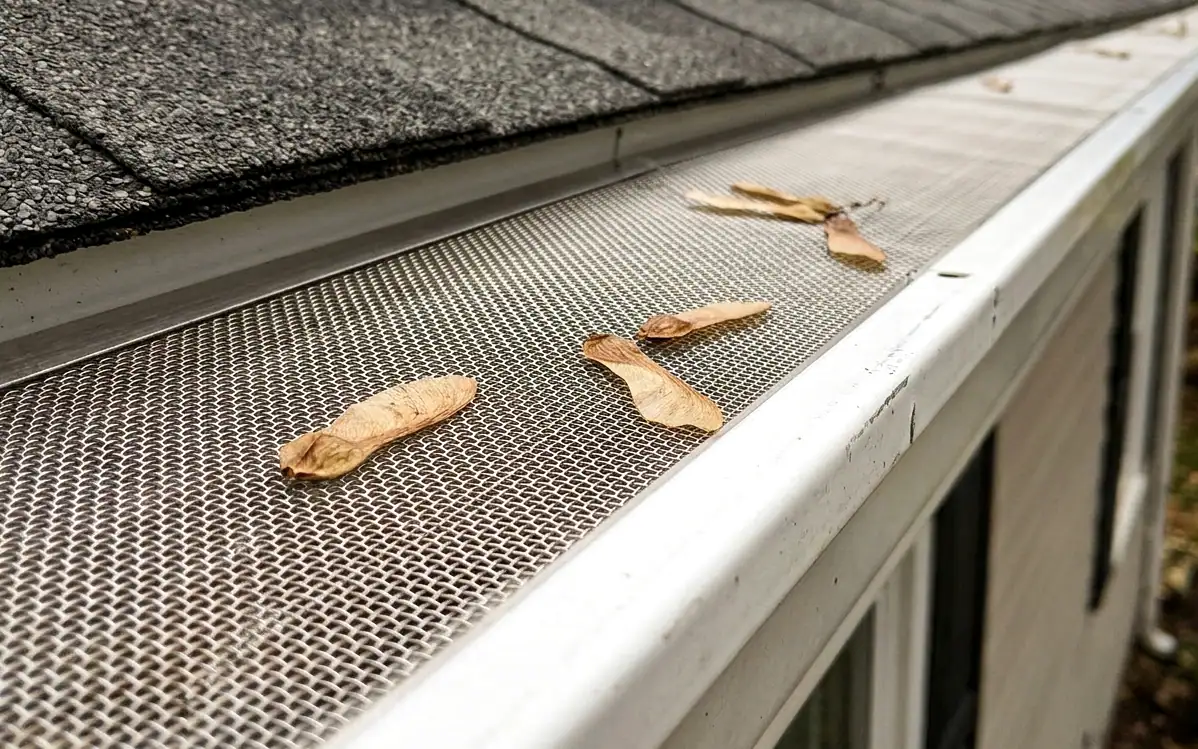
Gutter guards are covers fitted over the gutter that let water in and keep most debris out. The main types are perforated or wire screen, micro-mesh, and reverse-curve covers. You want them when gutters clog repeatedly, ladders are a hassle, or trees overhang the roof. No type removes all maintenance, but each cuts it down.
How we handle gutter guards on St. Louis homes
A clogged gutter stops doing its job. Water spills over the front edge, runs behind the trough, stains the fascia and soaks the soil along the foundation. In St. Louis yards with mature trees, that can happen several times a year. Guards are meant to break that cycle by keeping the bulk of the debris on top of the cover, where wind and rain can move it.
There is no single best guard. Screens are inexpensive and let water in readily, but small seeds and shingle grit pass through. Micro-mesh stops nearly everything, including pine needles and maple seed helicopters, but fine pollen mats can build on the surface. Reverse-curve covers use surface tension to pull water around a rounded nose, which works well until a heavy storm sends water straight over.
We ask about your trees, your roof pitch and how much cleaning you are willing to do. A steep roof with a heavy downpour shedding fast can overshoot a reverse-curve cover. A flat-pitched porch roof under a sweetgum may do better with mesh. The right answer comes from what falls on your roof, not from a catalog page.
Are gutter guards worth it for your house?
Gutters clog several times a year
If you are pulling out wet leaves every spring and fall, a guard that blocks most of that load can cut cleaning to a quick brush-off.
Trees hang over the roof
Oak, maple and sweetgum branches over the roofline drop huge volumes of debris. Guards help most when trees cannot be trimmed back.
Ladders are a problem
For tall homes, steep yards or anyone who should not be on a ladder, covers reduce how often someone has to climb up and scoop.
Water spills over the edge
Overflow staining on siding, mulch washed out below, and a dirty ribbon down the fascia suggest clogged troughs that guards could keep clearer.
Sprouting plants in the trough
Maple seedlings and weeds growing in a gutter mean debris has been sitting long enough to become soil. Covers stop the buildup that feeds them.
Pests nest in the gutter
Standing water and decaying leaves attract mosquitoes, birds and rodents. A cover reduces the habitat, though it does not replace occasional cleaning.
Which guard works under St. Louis trees
Our yard trees make this a real choice. Oak leaves are large and flat and tend to ride across a screen. Maple seed pods and sweetgum balls are the hard ones, since the spiky balls bounce and wedge, and the tiny seeds sneak through wide openings. Cottonwood fluff piles up in late spring and can coat a mesh surface. Each of these favors a different guard style.
Rainfall counts too. St. Louis thunderstorms dump water quickly, and a guard that is perfect in a drizzle may shed water over the edge in a downpour. Roofs that are steep or long send water faster and farther. We consider pitch, valleys and where the runoff meets the gutter, and we are upfront that every guard still needs an occasional brush or rinse, no matter what the box says.
How we choose and install gutter guards
- 1
Look at trees and roof layout
We note which trees are overhead, the roof pitch, the valleys that send concentrated flow into the gutter, and how much debris already collects after a typical season.
- 2
Clean and inspect the gutters
Guards go over a clean, sound trough. We clear out existing debris, check pitch and hangers, and repair loose or sagging sections before any cover goes on top.
- 3
Choose and fit the guard type
We select screen, micro-mesh or reverse-curve based on your situation, then cut and fit sections to the gutter profile, sliding them under the shingle edge or fastening to the front lip.
- 4
Secure and detail corners
Corners, outlets and valleys get special attention, since that is where water and debris concentrate. Sections are fastened so wind and snow will not lift them.
- 5
Test flow and explain upkeep
We run water over the covers to confirm that it enters properly, then tell you what to expect, including how and how often to brush or rinse the surface.
Screen, micro-mesh and reverse-curve guards compared
Screen or perforated covers
Metal or plastic sheets with openings. Lowest cost, quick to fit and good with big leaves, but small seeds and grit slip through and may need clearing.
Micro-mesh covers
Fine stainless mesh on a rigid frame that stops almost everything but pollen film. Strong against seeds and shingle grit, with a higher price and occasional surface brushing.
Reverse-curve covers
A solid hood with a rounded nose that draws water around the edge into a slot. Good on moderate roofs, but heavy flow can overshoot, and debris can lodge at the nose.
Foam or brush inserts
Inserts that sit in the trough. Cheap and easy, though they trap debris within the foam and can clog, so we rarely recommend them for a lasting fix.
What do gutter guards cost in St. Louis?
Guards are priced per linear foot, and the style makes the biggest difference. Screens are the budget option, micro-mesh sits in the middle to high end, and reverse-curve covers vary widely by product. Roof height, the number of corners and valleys, and the condition of the gutters underneath add to the price. If the gutters need repair or replacement first, we recommend doing that before putting a cover on top.
Compare every roofing and siding price range or plan the order of your exterior work.
| Work | Typical range |
|---|---|
| Screen or perforated cover, per foot | $4 to $9 |
| Micro-mesh cover, per linear foot | $9 to $19 |
| Reverse-curve cover, per linear foot | $8 to $17 |
| Typical full-house guard job, ranch size | $965 to $2,385 |
These are typical ranges for planning, not a quote, and house height, roof shape and the condition of existing gutters will change them.
Where we handle gutter guards
The city, the counties and the towns below cover most of the homes we work on. If yours is not listed, call and ask.
- City of St. Louis 63102
- St. Louis County, MO 63105
- St. Charles County, MO 63301
- Florissant, MO 63031
- Chesterfield, MO 63017
- Oakville, MO 63129
- St. Charles, MO 63301
- O'Fallon, MO 63366
- St. Peters, MO 63376
- Kirkwood, MO 63122
- Mehlville, MO 63125
- Belleville, IL 62220
- University City, MO 63130
- Ballwin, MO 63011
- Wentzville, MO 63385
- Hazelwood, MO 63042
- Webster Groves, MO 63119
- Edwardsville, IL 62025
- Collinsville, IL 62234
- Alton, IL 62002
- O'Fallon, IL 62269
- Arnold, MO 63010
- Affton, MO 63123
- Jefferson County, MO 63050
Shingle, siding and window lines we install and repair around St. Louis include GAF, Owens Corning, CertainTeed and James Hardie, plus the other brands below.
- GAF
- Owens Corning
- CertainTeed
- IKO
- Atlas
- Malarkey
- James Hardie
- LP SmartSide
- Alside
- Mastic
- DaVinci
- Velux
- Carlisle
- Firestone
Gutter Guards questions
Do gutter guards mean I never have to clean my gutters again?
No. A guard lowers how often you need to clean, but fine debris can build up on or under any cover over time, especially near valleys. Plan on an occasional brush-off or rinse. Anyone who tells you guards eliminate all maintenance is overselling the product.
Which gutter guard handles sweetgum balls best?
Sweetgum balls are tough on every style. Micro-mesh and rigid reverse-curve covers keep them out of the trough, but the balls sit on top and need sweeping off. Wide-opening screens let smaller pieces in. We will look at the tree and slope and tell you the best match.
Can gutter guards cause overflow during heavy rain?
They can, if the guard does not match the roof. Water running fast down a steep or long slope may jump past a reverse-curve nose or sheet across fine mesh. Choosing the right type and having the gutter pitched correctly reduces the risk, and valleys sometimes need special attention.
Will guards fit my existing gutters?
Most guards fit standard 5 inch and 6 inch K-style gutters, but they must sit on a sound, properly pitched trough. If your gutters are sagging, rusted or loose, fix or replace them first. Putting a cover on a failing gutter wastes money and hides the problem.
Do guards help in freezing weather?
Not much, and they do not prevent ice dams, which come from heat escaping through the roof. Covered gutters can still hold ice and snow, and some solid hoods collect icicles at the nose. Good attic insulation and ventilation address the real cause of ice at the eaves.
Related work we often pair with gutter guards
Gutter Cleaning
Clear gutters, every season. St.
Seamless Gutters
New gutters, cut to fit. Seamless gutters are rolled from a coil of aluminum at your house, one continuous piece per run.
Gutter Repair
Fix the gutter, not the symptom. A gutter that sags, drips at a seam or hangs by a few old spikes can often be saved.
Ice Dam Roof Repair
Ice dam damage repair. An ice dam forms when heat from the house melts snow on the roof and the water refreezes at the cold eave.
Need gutter guards in St. Louis?
Call any hour. A roofer answers, asks a few questions and sets up a visit.