TPO roofing in St. Louis with heat-welded seams for flat roofs
TPO is a single-ply white membrane whose seams are welded with hot air into one continuous sheet. It suits St. Louis flat roofs that bake in summer and need a clean, fast installation.
- Answered 24/7
- Flat & Commercial Roofs
- City, county and Metro East
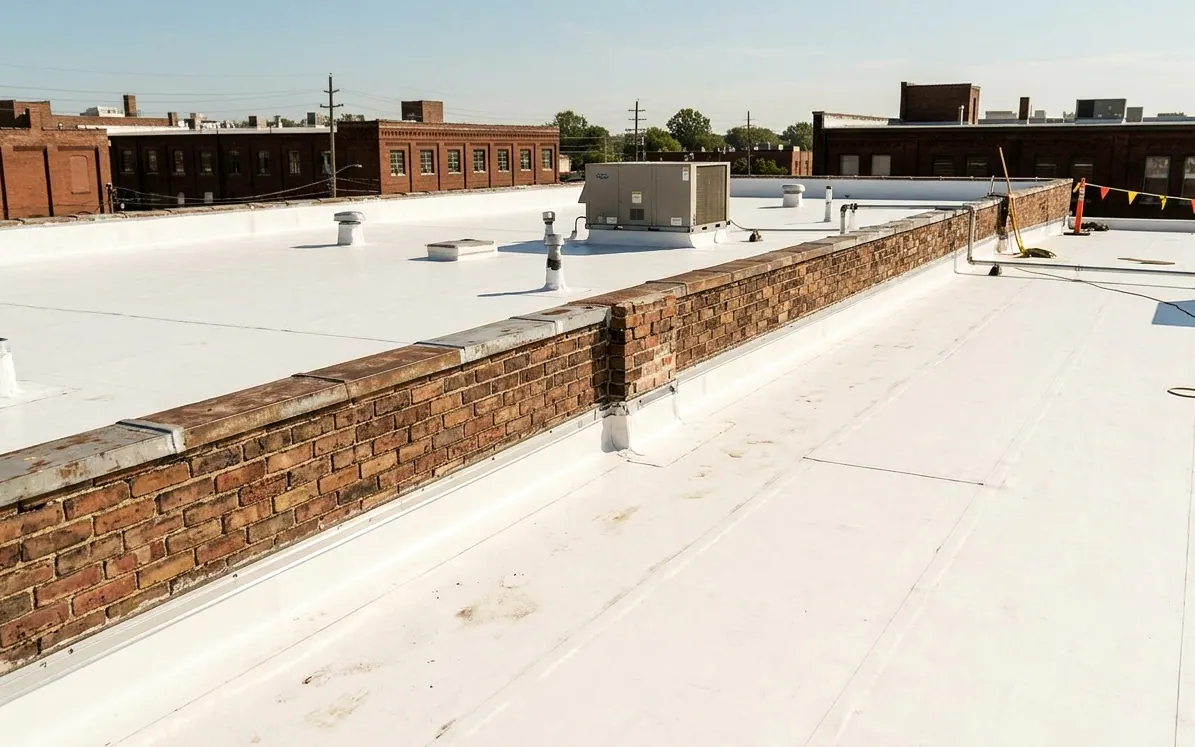
TPO roofing is a single-ply thermoplastic membrane, usually white, installed over insulation on a low-slope roof. Seams are welded with hot air, which makes them stronger than adhesive laps. It is a good fit for a flat roof that needs to reflect summer heat. A visit covers roof measurements, deck and insulation checks, flashing details and a membrane thickness recommendation.
How we handle TPO roofing on St. Louis homes
TPO, short for thermoplastic polyolefin, arrived on flat roofs in the 1990s and has become one of the most common single-ply membranes. It comes in rolls up to ten or twelve feet wide, in white, tan or gray, and in thicknesses of roughly 45 to 80 mils. The reflective surface keeps the roof cooler, which matters on a south city top-floor unit in July.
What sets TPO apart is the weld. A hot-air welder fuses overlapping sheets into a single piece, so seams are not relying on glue or tape. A probe test along every seam shows the crew whether the weld is complete. On a roof with many curbs, vents and short parapet runs, careful welding at each corner decides how long the roof lasts.
TPO is not the answer for every roof. It performs best over a clean, dry, properly sloped substrate, and it can be mechanically fastened, fully adhered or ballasted, depending on the building. Chimneys, rooftop equipment and grease exhausts may call for a different membrane. We look at what sits on your roof before recommending TPO, and we say so if EPDM or modified bitumen is the better match.
TPO thickness and attachment choices
45 and 60 mil sheet
Forty-five mil membrane is the economy choice for sheltered roofs. Sixty mil is the common step up for hail exposure and for roofs that will see occasional foot traffic.
Mechanically fastened system
Fasteners and plates in the seam laps hold the sheet down over insulation. It is quick, light and well suited to larger rear roofs and small commercial buildings.
Fully adhered system
The membrane is glued to the substrate across the whole roof. It looks smoother, resists wind flutter, and works well where a clean appearance or high wind exposure matters.
Tan or gray membrane
White reflects the most heat, but tan or gray hides dirt and suits roofs visible from nearby windows. We show you samples and the tradeoffs before you choose.
What TPO roofing costs in St. Louis
TPO prices respond to membrane thickness, attachment method, insulation, and how many details such as curbs, drains and parapet walls the roof has. A plain rear roof with few penetrations installs quickly. A roof full of vents or one with extensive parapet flashing takes more labor. Tear-off adds disposal cost, while a recover over dry substrate trims it. We itemize each of these when we walk you through the options for your building.
Compare every roofing and siding price range or plan the order of your exterior work.
| Work | Typical range |
|---|---|
| Membrane over prepared deck, small roof | $4,720 to $8,390 |
| Tear-off, insulation and TPO, two-family roof | $8,960 to $16,240 |
| Pre-made boots, curbs and drain flashing | $615 to $1,870 |
| Metal coping and edge termination | $1,285 to $3,730 |
These are typical ranges for St. Louis planning, not quotes, and each roof is priced after we see it.
How we install a TPO roof
- 1
Inspect the deck and insulation
We check the deck for rot and flatness, scan for wet insulation and decide whether the roof needs a tear-off, a recover or only a new membrane over sound substrate.
- 2
Install insulation and cover board
Tapered or flat polyiso boards are laid and fastened, then covered with a board that protects the TPO from fastener pressure and gives a clean surface to bond to.
- 3
Roll out and secure the sheet
The membrane is rolled out, then attached with fasteners and plates, adhesive or ballast, depending on the building, wind exposure and how the substrate is built.
- 4
Weld every seam
Overlaps are cleaned and welded with hot air at a controlled speed and temperature, then pressed with a silicone roller to fuse the sheets into one surface.
- 5
Probe, flash and finish
We probe the seams, weld pre-made boots on pipes, run the membrane up parapet walls, terminate it under coping, and walk you through photos of the finished roof.
Is TPO the right membrane for your flat roof?
Summer heat on top-floor units
If the upstairs apartment cooks in July, a white reflective membrane over added insulation can lower the heat gain and reduce how hard the air conditioner works.
A roof with many penetrations
Vents, skylights, curbs and short parapet runs are easier to detail with a membrane that welds into corners and wraps flashing boots cleanly.
Seams leak on the old roof
Failing adhesive laps or tar-sealed seams on an older roof point to a system whose seams were never fused. Welded TPO seams remove that weakness.
You want a lighter, faster install
TPO rolls out quickly, and mechanically attached systems add little weight to older joists. That makes it practical on rear roofs reached only through an alley.
The roof sees little foot traffic
TPO suits roofs walked on only for maintenance. Heavy traffic, grease or frequent equipment service may call for walkway pads or a tougher membrane.
Your building needs a cool roof
Some commercial buildings and owners want a reflective roof to reduce energy use. White TPO is a standard answer and keeps rooftop surface temperatures noticeably lower.
TPO on St. Louis rooftops: heat, storms and parapets
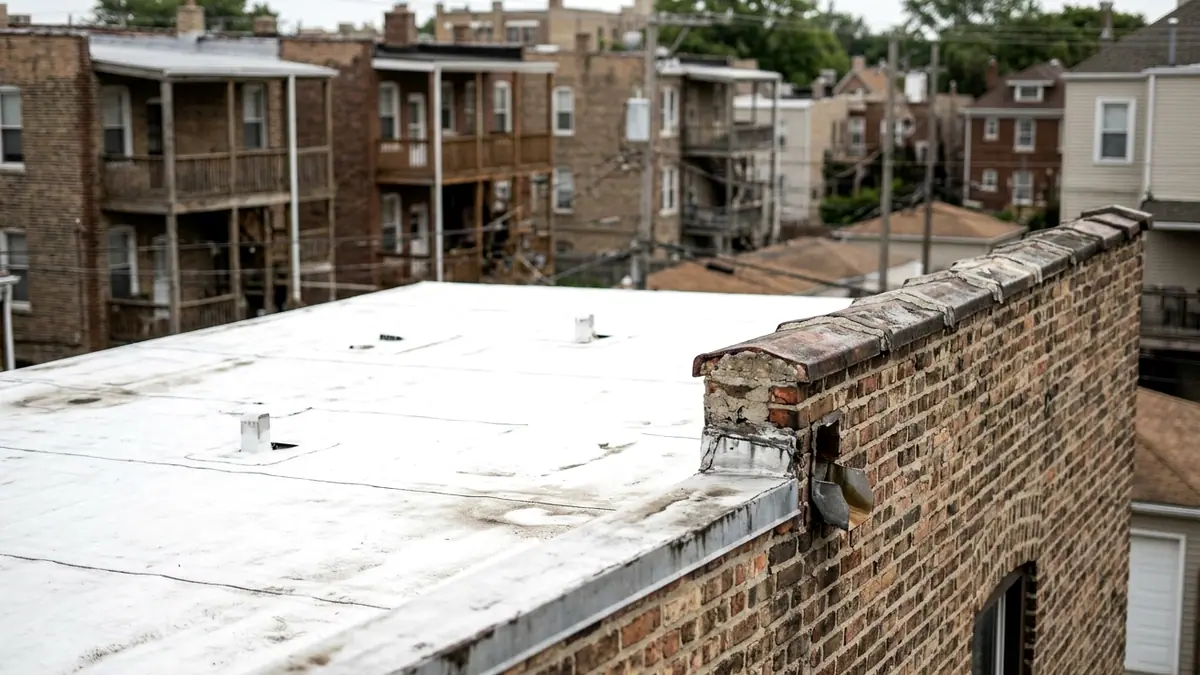
St. Louis summers are hot and humid, and a dark flat roof on a brick building becomes a heat sink. White TPO reflects much of that sunlight and holds up under the repeated expansion and contraction that come with hot days and cold nights. On two-family flats with a rear roof only a story or two above the alley, the cooler surface helps the units directly below. The savings are modest but real, and tenants notice the difference.
Local weather also tests the details. Spring thunderstorms can drop hail that dents and bruises thin membranes, so we recommend 60 mil sheet or thicker on exposed roofs. Winter freeze-thaw shows up at the parapet, where we run TPO up the wall and terminate it under new metal coping or a reglet so water cannot track behind it. Strong storm winds are why edge attachment gets as much attention as the field.
Where we handle TPO roofing
The city, the counties and the towns below cover most of the homes we work on. If yours is not listed, call and ask.
- City of St. Louis 63102
- St. Louis County, MO 63105
- St. Charles County, MO 63301
- Florissant, MO 63031
- Chesterfield, MO 63017
- Oakville, MO 63129
- St. Charles, MO 63301
- O'Fallon, MO 63366
- St. Peters, MO 63376
- Kirkwood, MO 63122
- Mehlville, MO 63125
- Belleville, IL 62220
- University City, MO 63130
- Ballwin, MO 63011
- Wentzville, MO 63385
- Hazelwood, MO 63042
- Webster Groves, MO 63119
- Edwardsville, IL 62025
- Collinsville, IL 62234
- Alton, IL 62002
- O'Fallon, IL 62269
- Arnold, MO 63010
- Affton, MO 63123
- Jefferson County, MO 63050
Shingle, siding and window lines we install and repair around St. Louis include GAF, Owens Corning, CertainTeed and James Hardie, plus the other brands below.
- GAF
- Owens Corning
- CertainTeed
- IKO
- Atlas
- Malarkey
- James Hardie
- LP SmartSide
- Alside
- Mastic
- DaVinci
- Velux
- Carlisle
- Firestone
TPO Roofing questions
How long does a TPO roof last on a St. Louis building?
A properly installed TPO roof commonly performs for 20 years or more when seams are welded well and drainage is correct. Hail, ponding water and rooftop foot traffic shorten that range. We cannot promise a number for your roof, but thicker membrane and clean detailing give the best odds.
Is white TPO too bright, and does it show dirt?
White TPO does collect some dirt and algae, but rain removes most of it, and a rinse once a year keeps it reflective. If appearance matters from nearby windows, tan and gray options hide staining better, at the cost of slightly less reflectivity. We bring sample swatches so you can see them in daylight.
Can TPO go over my existing flat roof?
Sometimes. A recover works when the existing roof is a single dry layer with sound insulation and a flat surface. We run a moisture scan and test cuts first. TPO also needs a separation layer over old asphalt materials, because contact can degrade the membrane, which is another reason we inspect before suggesting it.
What is the difference between a welded seam and a taped seam?
A welded seam melts two sheets together with hot air so they become one piece of membrane. A taped or glued seam depends on adhesive, which can creep or peel over time. Welded seams can be probe-tested right after installation, which is why TPO crews check every foot of them.
Can you install TPO around rooftop units and skylights?
Yes. We build curbs or use pre-made flashing boots, weld the membrane up the sides of each curb, and terminate it with a bar and sealant at the top. Equipment with sharp edges or grease exhaust may need extra protection, and we point that out when we see the roof.
Related work we often pair with TPO roofing
Flat Roof Replacement
Tear-off and a new flat roof. When patches stop holding, a full replacement resets the whole low-slope roof.
EPDM Rubber Roofing
Adhered rubber flat roofing. EPDM is a flexible synthetic rubber sheet, glued down in large pieces with few seams.
Commercial Roofing
Small commercial roof work. We handle roofs on small commercial buildings, corner storefronts and multi-unit apartment buildings across the St.
Silicone Roof Coating
Restore the roof you have. Silicone coating is a liquid waterproof layer rolled or sprayed over an existing flat roof that is still sound.
Need TPO roofing in St. Louis?
Call any hour. A roofer answers, asks a few questions and sets up a visit.