Silicone roof coating in St. Louis to restore a sound flat roof
Silicone coating is a liquid waterproof layer rolled or sprayed over an existing flat roof that is still sound. It seals seams and small cracks and can extend the life of a membrane that is not worn out yet.
- Answered 24/7
- Flat & Commercial Roofs
- City, county and Metro East
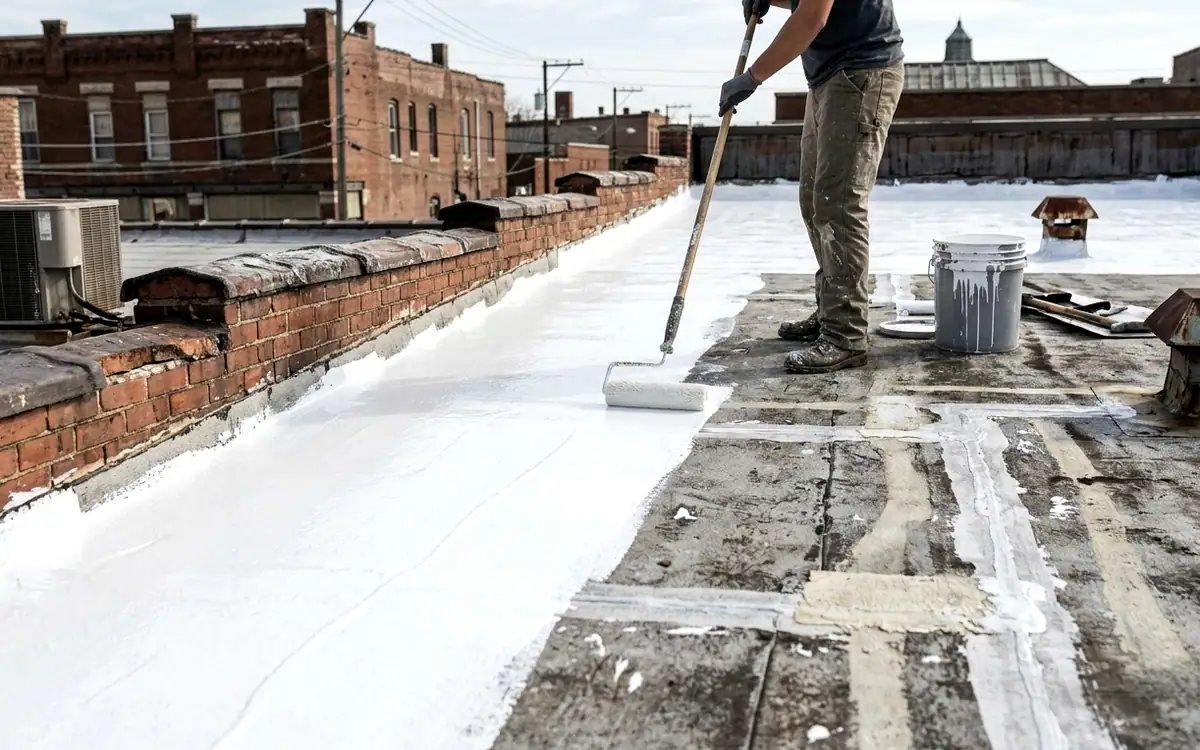
Silicone roof coating is a liquid, UV-stable waterproofing layer applied over a sound, clean, dry flat roof membrane. It seals seams, fasteners and hairline cracks and adds a reflective surface. You need it when the roof is aging but dry underneath. A visit includes a moisture check, cleaning, repairs, and the coating in one or two coats.
How we handle silicone roof coating on St. Louis homes
Coating is a restoration step, not a replacement. When the membrane is mostly intact, the insulation under it is dry and the failures are small, a silicone coating can seal the surface, close hairline cracks and refresh a roof that has begun to weather. The roof ends up with a continuous skin that has no taped or welded seams to give way.
Silicone has one property that sets it apart from acrylic and asphalt coatings: it cures into a rubbery layer that tolerates standing water. Ponding is common on St. Louis flats, so a coating that does not break down under puddles is useful. It also resists UV, which keeps the surface stable through long summers, and it can be applied over many membrane types.
The limits matter as much as the benefits. Coating cannot fix wet insulation, rotted decking, or a roof that is already failing across large areas. It also cannot be applied to a dirty or damp surface, because adhesion fails. We test moisture first and tell you honestly when a coating is a waste of money and a replacement is the better step.
Is your flat roof a candidate for silicone coating?
Membrane is aging but dry
If a moisture scan shows dry insulation and the membrane is only chalking, faded or lightly cracked, coating can add years without a tear-off or disposal.
Seams and fasteners are weeping
Fine seam leaks and exposed fastener heads are the type of defect that silicone seals well, once the surface is cleaned and the failed spots are repaired first.
Ponding sits for days
Silicone tolerates standing water, which many coatings do not. It is a practical choice on a roof with shallow ponding that you cannot regrade right now.
Summer heat is a problem
A white silicone surface reflects sunlight and lowers roof temperature. Top-floor tenants and small commercial spaces often notice the difference on hot afternoons.
Old metal roof has rust spots
On low-slope metal roofs, silicone applied over treated rust spots, seams and fastener heads protects against further corrosion and leaks without replacing whole panels.
Replacement is not in budget yet
If you plan to replace in a few years, coating can protect the roof meanwhile. It is a legitimate stopgap, as long as the roof is dry underneath.
Silicone coating on St. Louis flat roofs: where it works
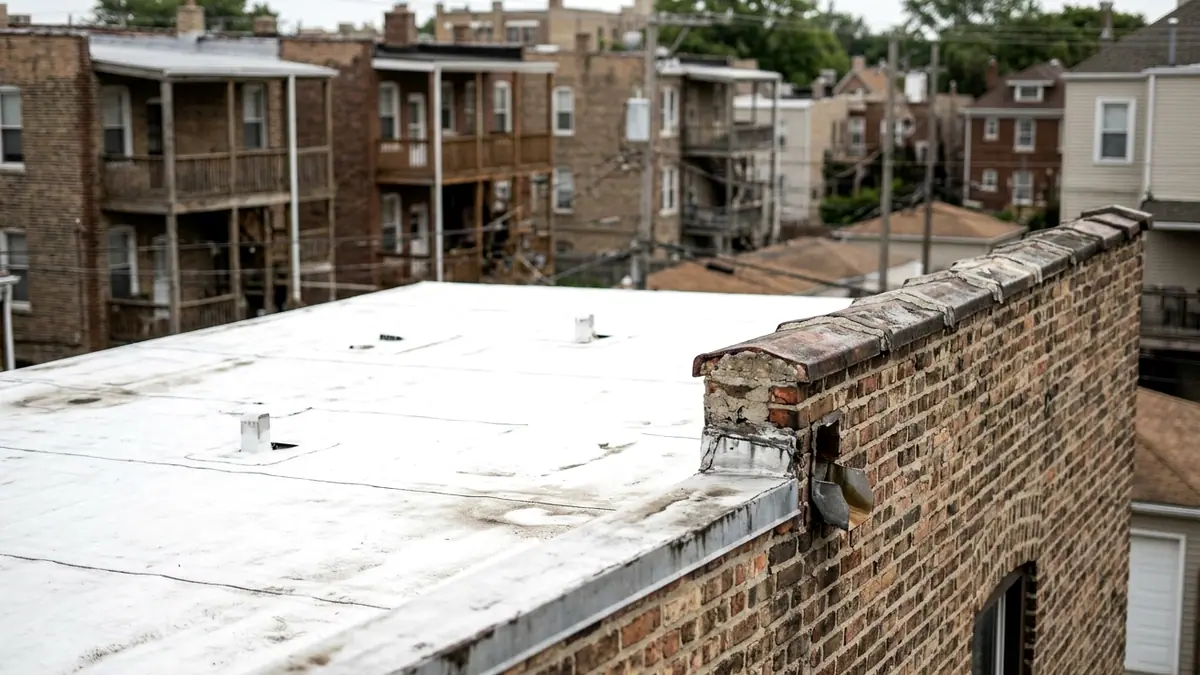
Many St. Louis commercial buildings, storefronts and flat additions carry aging metal, built-up or single-ply roofs that still have service left. A coating can bridge the gap on those roofs. The key is a dry assembly, which we confirm with an infrared scan or moisture meter, because trapped moisture under a coating swells into blisters in the first hot summer after it goes on. Brick-walled buildings with deep parapets suit the work, since the coating can be carried up the wall.
Local weather shapes the schedule. Silicone needs a dry surface and temperatures above freezing, so spring and fall are the best windows, with late summer working too when humidity allows. A thunderstorm after application can wash out an uncured coat, so we watch the forecast closely. Hail can still bruise a coated membrane, so after severe storms we inspect it as we would any flat roof. Winter coating is rarely recommended.
How a silicone coating job goes
- 1
Scan for moisture
We inspect the roof, use an infrared scan or moisture meter to find wet insulation, and tell you whether coating is appropriate before any material is ordered.
- 2
Pressure wash and clean
The surface is washed to remove dirt, chalking and biological growth, then rinsed and allowed to dry fully so the coating can bond to a sound, clean substrate.
- 3
Repair seams and flashings
Open seams, failed flashing, cracked mastic and loose fasteners are repaired first, using reinforcing fabric and sealant, because coating only covers what has been fixed.
- 4
Prime where needed
Some substrates, such as older asphalt or certain metals, need a primer for adhesion. We test a small area and prime only the surfaces that call for it.
- 5
Roll or spray the coats
Silicone is applied in one or two coats to a measured thickness, then left to cure. We check coverage at edges, seams and drains before leaving the roof.
Coating options and what they cover
Silicone over single-ply
Silicone can restore aging TPO, EPDM or PVC if the sheet is sound and clean. Some surfaces need primer, and we test adhesion before coating the whole roof.
Silicone over metal roofs
On low-slope standing seam or screw-down metal, coating seals fasteners and seams and slows corrosion, extending the life of a roof that is still structurally sound.
Silicone over built-up or mod bit
Silicone can seal an aging asphalt roof, but it needs the surface to be dry and primed. Acrylic or asphalt coatings may be a better match on some older roofs.
Reinforced seam and flashing system
Fabric-reinforced silicone at seams, curbs and parapet joints gives the weakest details extra strength, and the field coating then covers the entire roof.
What silicone roof coating costs in St. Louis
Coating prices depend on roof area, how much prep and repair are needed, the number of coats, and the surface being coated. A clean, tight roof costs far less than one with widespread seam failures or surface rust. Because coating cost grows with every repair, a roof that needs extensive fixes first can approach the cost of replacement. We tell you where your roof falls before work begins.
Compare every roofing and siding price range or plan the order of your exterior work.
| Work | Typical range |
|---|---|
| Pressure wash and clean, small roof | $465 to $1,090 |
| Seam and flashing repair before coating | $780 to $2,630 |
| Silicone coating, two-family rear roof | $2,940 to $6,250 |
| Silicone coating, small commercial roof | $6,870 to $14,380 |
These are typical St. Louis ranges for planning, not quotes, with final pricing set after a moisture check.
Where we handle silicone roof coating
The city, the counties and the towns below cover most of the homes we work on. If yours is not listed, call and ask.
- City of St. Louis 63102
- St. Louis County, MO 63105
- St. Charles County, MO 63301
- Florissant, MO 63031
- Chesterfield, MO 63017
- Oakville, MO 63129
- St. Charles, MO 63301
- O'Fallon, MO 63366
- St. Peters, MO 63376
- Kirkwood, MO 63122
- Mehlville, MO 63125
- Belleville, IL 62220
- University City, MO 63130
- Ballwin, MO 63011
- Wentzville, MO 63385
- Hazelwood, MO 63042
- Webster Groves, MO 63119
- Edwardsville, IL 62025
- Collinsville, IL 62234
- Alton, IL 62002
- O'Fallon, IL 62269
- Arnold, MO 63010
- Affton, MO 63123
- Jefferson County, MO 63050
Shingle, siding and window lines we install and repair around St. Louis include GAF, Owens Corning, CertainTeed and James Hardie, plus the other brands below.
- GAF
- Owens Corning
- CertainTeed
- IKO
- Atlas
- Malarkey
- James Hardie
- LP SmartSide
- Alside
- Mastic
- DaVinci
- Velux
- Carlisle
- Firestone
Silicone Roof Coating questions
Can silicone roof coating stop an active flat roof leak?
It can seal small leaks in a sound roof, but it does not repair a failing one. We find and fix the source first, such as an open seam or cracked flashing, then coat. If water has soaked the insulation, coating traps it and causes problems, so we scan before we recommend it.
How long does silicone roof coating last?
Silicone coatings commonly perform for 10 to 20 years depending on thickness, exposure and the condition of the roof beneath. Ponding, foot traffic and storm damage shorten that range. We cannot promise a figure for your roof, but thick, well-prepped application and regular inspections give the best result.
Is silicone better than acrylic coating on a ponding roof?
Usually yes. Silicone cures into a layer that tolerates standing water, while acrylic can soften and break down under puddles. Acrylic is easier to apply and less costly on dry, sloped roofs, so we match the coating to how your roof drains. We explain the tradeoffs on site.
Can you coat a roof that has already been coated?
Yes, if the earlier coating is clean and well adhered. Silicone adheres well to other silicone, but not reliably to some acrylic or asphalt coatings, so we run an adhesion test patch before coating the whole roof. Where the old coating is peeling, it must be removed first.
What weather do you need to apply silicone roof coating?
A dry surface, no rain in the forecast for several hours, and temperatures above freezing, with cooler mornings acceptable. Humidity slows cure but rarely stops it. In St. Louis, spring and fall give the most reliable windows. Dew on a roof surface can delay the start, so we often begin in mid-morning.
Related work we often pair with silicone roof coating
Flat Roof Repair
Low-slope roof leaks fixed. Most St.
TPO Roofing
Welded white flat roofing. TPO is a single-ply white membrane whose seams are welded with hot air into one continuous sheet.
Commercial Roofing
Small commercial roof work. We handle roofs on small commercial buildings, corner storefronts and multi-unit apartment buildings across the St.
Roof Maintenance
Small fixes, longer roof life. Roofs rarely fail all at once.
Need silicone roof coating in St. Louis?
Call any hour. A roofer answers, asks a few questions and sets up a visit.