Attic insulation in St. Louis for hot summers and cold winters
Heat leaves a house mostly through the ceiling. We seal the air leaks first, then add insulation to the attic floor so rooms stay steadier in July and January and the roof deck stays honest.
- Answered 24/7
- Roof Care & Claims
- City, county and Metro East
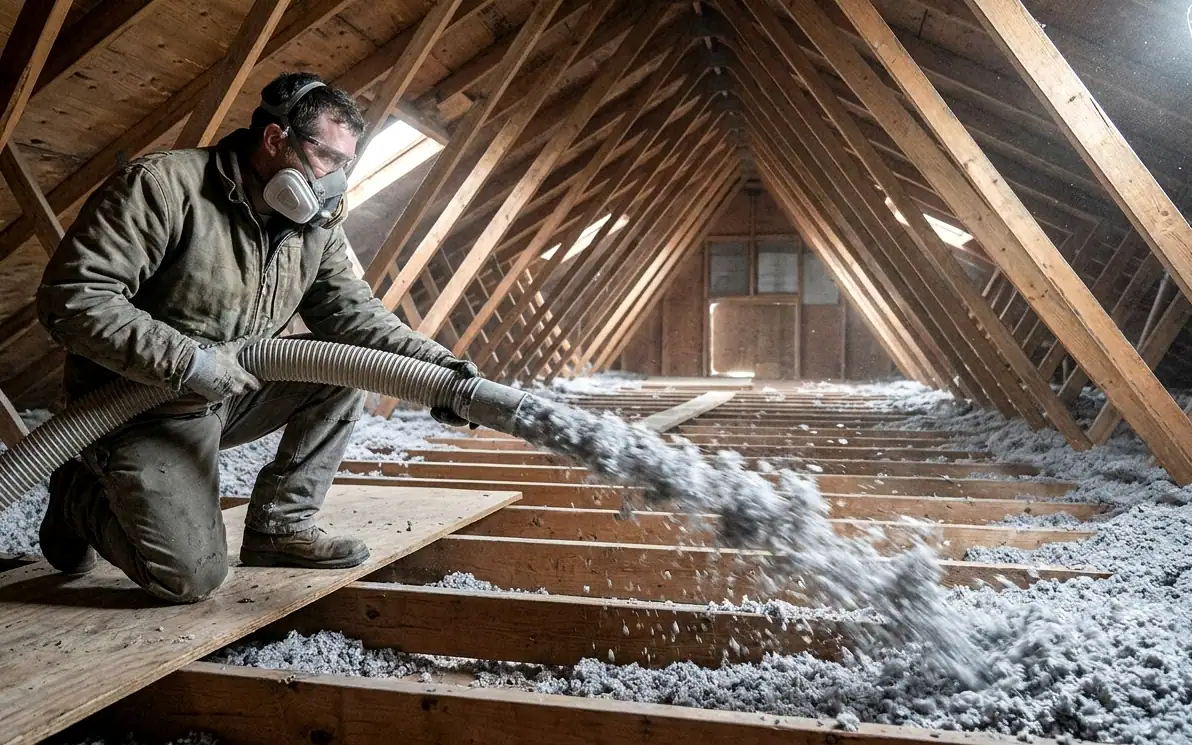
Attic insulation is a layer, usually blown fiberglass or cellulose, spread over the attic floor after gaps and penetrations are sealed. It slows heat moving between the house and the attic. You need it when rooms swing in temperature, ceilings show frost lines, ice builds at the eaves, or existing insulation is thin or matted.
How we handle attic insulation on St. Louis homes
In summer the attic can bake while the rooms below try to stay cool. In winter the heat you pay for drifts up through the ceiling into the cold space overhead. Insulation slows that exchange. But the part many people miss is that insulation alone does little if warm air is leaking through the ceiling around lights, chimneys and wiring holes, which is why we seal first.
We begin by looking at what is already up there: its depth, its type, whether it has been flattened or soaked, and where it has been pushed aside. Many older attics have a few inches of loose fill and bare patches near the edges. Others have decent insulation that was displaced during an HVAC or wiring job and never put back.
Then we make a plan that includes air sealing, baffles at the soffits to keep ventilation channels open, and enough new depth to reach the target for our climate zone. Our crews work from the access hatch with hoses and tools, keep walkways clear, and leave the attic cleaner than it was when we started.
Why is your house uneven, drafty or costly to heat?
Rooms that never hold temperature
If the upstairs is far hotter or colder than the main floor and the thermostat cannot fix it, the ceiling may be leaking heat that thin insulation cannot slow.
Joists visible above insulation
Look into the attic. When the tops of the ceiling joists poke through the insulation, there is probably less than half the depth modern guidance recommends.
Dark lines on ceiling drywall
Soot-like striping along ceiling lines shows dusty air being pulled through gaps next to cold joists. It is a sign of leakage as much as a lack of insulation.
Ice dams and melting at the eaves
Heat escaping into the attic warms the roof deck, melts snow from below, and refreezes it at the cold edge. Better insulation helps keep the deck evenly cold.
Matted, damp or stained insulation
Flattened, wet or discolored fill has lost much of its value. It often traces back to a roof leak, a bath fan venting into the attic, or past condensation.
High heating and cooling bills
When the HVAC equipment runs constantly and utility costs keep climbing, a leaky and under-insulated attic is one of the first places worth checking.
Insulation that suits St. Louis homes and climate
St. Louis sits in a climate zone that asks for a lot of attic insulation, commonly in the range of R-38 to R-60, and our long humid summers and real winters both put pressure on a thin layer. Many 1950s to 1970s ranch and split-level homes in St. Louis County have only a few inches of old batt or loose fill, so topping up delivers a big change in comfort.
City brick homes bring their own quirks: cut-up attic spaces, knee walls, tight access hatches, and sometimes plaster ceilings with old gaps. If we find loose gray, pebbly fill that looks like vermiculite, we stop and tell you, since some older products contain asbestos and should not be disturbed. Newer homes in St. Charles County usually just need depth added and soffit baffles checked.
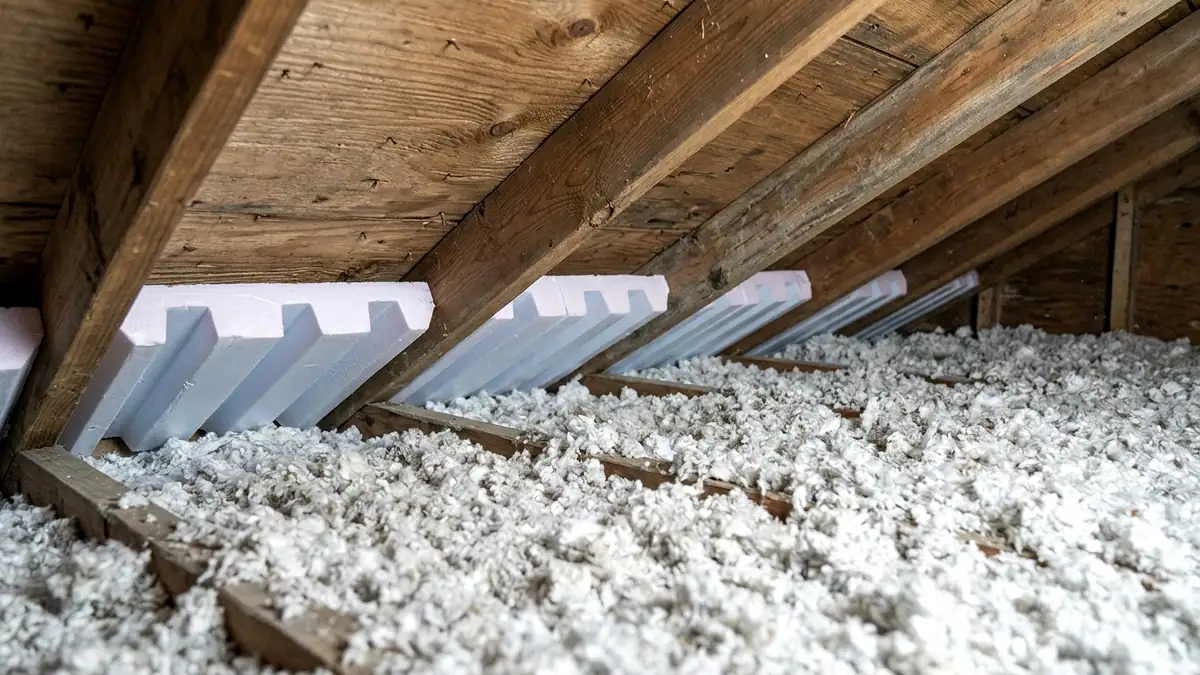
How we insulate an attic from start to finish
- 1
Survey depth, type and condition
We measure the existing insulation, look for moisture, wiring and bath fan ducts, and note any places where it has been compressed, moved, or contaminated by past leaks.
- 2
Seal air leaks at the ceiling
Gaps around recessed lights, chimney chases, plumbing stacks, wiring holes and the attic hatch are sealed with foam, caulk or metal, so warm air stops flowing upward unnoticed.
- 3
Install baffles and dams
Rafter baffles keep insulation off the soffit openings, preserving airflow from the eaves. Dams around the hatch and flues hold the insulation back from areas that need clearance.
- 4
Blow in the new insulation
A hose delivers fiberglass or cellulose to an even depth across the attic floor, with depth markers placed so you can see the result and measure it yourself later.
- 5
Verify depth and clean up
We check coverage and thickness against the plan, insulate and weatherstrip the hatch, tidy the work area, and show you photos of the finished attic and the depth rulers.
Insulation materials we use in attics
Blown fiberglass
Light, non-combustible loose fill that covers irregular areas well and resists moisture. It is a common choice for top-ups and open attic floors with plenty of room.
Blown cellulose
Dense recycled-paper fill treated for fire and pests. It packs tightly around obstacles and cuts air movement, though it can sag if the attic gets wet.
Fiberglass batts
Pre-cut rolls fitted between joists. They work for small areas and tidy attics, but gaps and compression reduce their performance when installation is rushed.
Air seal plus insulation package
A combined job where we seal the ceiling plane first, then add loose fill. For leaky older houses, this gives more comfort than simply stacking material on top.
What does attic insulation cost in St. Louis?
Price follows attic area, existing insulation, and how much air sealing is needed. A simple blown top-up over a clean, open attic is the lowest-cost scenario. Removal of old, damp or contaminated fill, work in cramped spaces, and extensive sealing around chimneys and wiring all add labor. Material choice matters less than depth and the sealing underneath it. Utility or energy-efficiency programs sometimes offer help, which is worth checking separately.
Compare every roofing and siding price range or plan the order of your exterior work.
| Work | Typical range |
|---|---|
| Blown top-up, average ranch attic | $1,385 to $2,765 |
| Air sealing at ceiling penetrations | $485 to $1,195 |
| Remove old insulation, prep and replace | $2,265 to $4,595 |
| Hatch insulation and baffle package | $195 to $445 |
These are typical St. Louis planning ranges, not a quote, and attic size, access and existing material will change the number.
Where we handle attic insulation
The city, the counties and the towns below cover most of the homes we work on. If yours is not listed, call and ask.
- City of St. Louis 63102
- St. Louis County, MO 63105
- St. Charles County, MO 63301
- Florissant, MO 63031
- Chesterfield, MO 63017
- Oakville, MO 63129
- St. Charles, MO 63301
- O'Fallon, MO 63366
- St. Peters, MO 63376
- Kirkwood, MO 63122
- Mehlville, MO 63125
- Belleville, IL 62220
- University City, MO 63130
- Ballwin, MO 63011
- Wentzville, MO 63385
- Hazelwood, MO 63042
- Webster Groves, MO 63119
- Edwardsville, IL 62025
- Collinsville, IL 62234
- Alton, IL 62002
- O'Fallon, IL 62269
- Arnold, MO 63010
- Affton, MO 63123
- Jefferson County, MO 63050
Shingle, siding and window lines we install and repair around St. Louis include GAF, Owens Corning, CertainTeed and James Hardie, plus the other brands below.
- GAF
- Owens Corning
- CertainTeed
- IKO
- Atlas
- Malarkey
- James Hardie
- LP SmartSide
- Alside
- Mastic
- DaVinci
- Velux
- Carlisle
- Firestone
Attic Insulation questions
How much insulation should my St. Louis attic have?
Our area calls for a high level, commonly around R-38 to R-60, which is roughly 13 to 20 inches of loose fill depending on the material. Many older homes have far less than that. We measure what you have and tell you how much depth would bring it up to a sensible target.
Should I remove my old attic insulation before adding new?
Usually not, if the old material is dry, clean and still fluffy. Adding on top is cheaper and works well. We remove it when it is wet, moldy, contaminated by rodents, or when it is a suspicious pebbly fill that needs proper handling before anyone works near it.
Will insulation make my attic hotter and hurt the shingles?
Insulation on the attic floor does keep more heat in the attic during summer, which is why ventilation matters. With open soffit intake and a ridge or other exhaust vent, the airflow carries that heat out. We check the ventilation path as part of every insulation job.
Is cellulose or fiberglass better for an attic?
Both perform well when installed to the right depth. Fiberglass is lighter and handles damp spots better, while cellulose is denser and resists air movement a bit more. We recommend based on your attic shape, existing material and budget, not a fixed preference.
Do I need to be home or empty the attic first?
Clear any stored boxes near the hatch if you can, and let us know about items you want kept in place. We use the hatch and a hose from outside, so we are not tramping through the living space. The area we touch is protected and cleaned afterward.
Related work we often pair with attic insulation
Roof Ventilation
Attic airflow that protects shingles. A roof needs air moving under it to shed summer heat and winter moisture.
Ice Dam Roof Repair
Ice dam damage repair. An ice dam forms when heat from the house melts snow on the roof and the water refreezes at the cold eave.
Roof Inspection
Roof inspection, top to bottom. A roof inspection shows you what the shingles, flashing and vents are doing before water finds the weak spot.
Roof Replacement
Full tear-off, start to finish. A roof replacement strips the old covering down to the deck, repairs what is hiding underneath, and builds a new system on top.
Need attic insulation in St. Louis?
Call any hour. A roofer answers, asks a few questions and sets up a visit.