Asphalt shingle roofing in St. Louis, installed to last
Asphalt shingles cover most St. Louis homes for good reason. What separates a roof that lasts from one that fails early is the shingle grade, the nailing pattern, and the layers beneath. We explain each choice plainly.
- Answered 24/7
- Roof Replacement
- City, county and Metro East
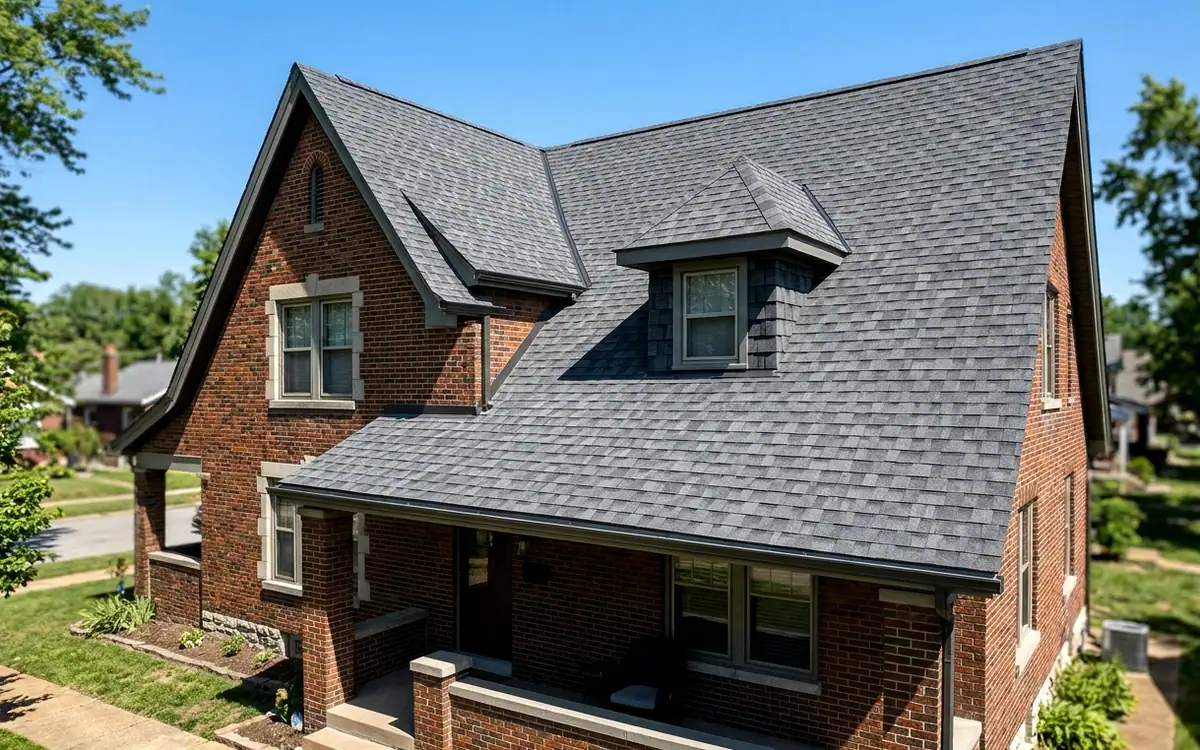
Asphalt shingle roofing means installing laminated or three-tab shingles over new underlayment, flashing, and a ventilated deck. It suits most St. Louis homes and budgets. You need it when a roof is worn out, storm damaged, or being replaced after a tear-off. A visit covers shingle grades, colors, nailing, and ventilation, then a clear plan for the install.
How we handle asphalt shingle roofing on St. Louis homes
Shingle choice is where most homeowners start, and the options are wider than a color swatch suggests. Architectural shingles have two laminated layers that give a thicker profile and better wind resistance. Older three-tab shingles are a single flat layer, are being phased out by many manufacturers, and are mostly found on roofs from the 1990s and earlier. We will show you the difference on a real sample before you pick.
Installation details decide how the shingles behave in a storm. Each shingle needs the right number of nails placed in the nailing strip, not high on the shingle where they miss the layer below. Overdriven nails cut the mat, and underdriven ones lift the next course. Starter strips at the eaves and rakes, sealed along the edge, give wind a harder time getting under the first row.
What sits under the shingles matters nearly as much as the shingles. Synthetic underlayment resists tearing while the roof is open, ice and water membrane seals the eaves and valleys, and fresh drip edge directs water into the gutter instead of behind it. We pair this with intake and exhaust ventilation, since a hot, humid attic cooks shingles from below and shortens their useful life.
Which asphalt shingle type should you choose?
Standard architectural
The workhorse laminated shingle. Good wind resistance, many colors, and a dimensional look that suits St. Louis brick and siding alike at a moderate price.
Impact-resistant shingles
Rubberized, polymer-modified shingles built to take hail hits without cracking the mat. Worth a look in hail-prone areas, and some insurers offer a premium discount, so ask yours.
Designer laminates
Thicker multi-layer shingles shaped to mimic slate or cedar. They add depth and curb appeal on older city homes where a flat shingle looks out of place.
Three-tab shingles
Budget single-layer shingles still sold in some lines. Lighter and less wind resistant, they fit tight budgets or outbuildings but are not what we usually recommend for a main house.
What do asphalt shingles cost in St. Louis?
Shingle grade is the first lever: three-tab sits at the bottom, architectural in the middle, and designer or impact-rated shingles at the top. After that, roof size, number of layers to tear off, steepness, and the amount of flashing around chimneys, dormers, and walls move the number. Brick city homes with steep pitches and tight access cost more per square than a simple ranch, mostly because of labor and safety setup. A square is 100 square feet of roof.
Compare every roofing and siding price range or plan the order of your exterior work.
| Work | Typical range |
|---|---|
| Three-tab shingles, per square installed | $285 to $398 |
| Architectural shingles, per square installed | $412 to $586 |
| Impact-rated shingles, per square installed | $538 to $724 |
| Tear-off of a second shingle layer, per square | $47 to $79 |
These are typical 2026 St. Louis ranges, not quotes, and final numbers depend on the roof we see in person.
How we install an asphalt shingle roof
- 1
Confirm the deck and layers
We inspect the attic and the roof edge to see how many layers are down and what the decking is made of. That tells us what the tear-off will uncover and what repairs to plan.
- 2
Dry in with membrane and felt
Ice and water membrane goes along eaves, valleys, and penetrations. Synthetic underlayment covers the rest of the deck with overlaps set so water runs over each seam, not into it.
- 3
Set metal edges and flashing
Drip edge goes on the eaves and rakes, step flashing weaves into every wall, and new pipe boots and vents are placed before any shingle courses start.
- 4
Shingle course by course
We snap lines, set the starter, and nail each course in the strip with the pattern the shingle requires. Valleys, hips, and walls get extra attention, since those are where leaks begin.
- 5
Cap the ridge and clean up
Ridge vent and cap shingles close the roof. Then we sweep the yard and gutters with magnets and brooms, and we walk you through photos of the finished work.
When is it time to put new asphalt shingles on?
Cracked or split shingle tabs
Thin cracks running across tabs, especially on south and west slopes, show the asphalt has aged out. Once the mat is cracking, swapping single shingles will not stop it from spreading.
Exposed nail heads showing
Rusted nail heads poking through the shingle surface mean the sealant is gone or the shingles have shifted. Each exposed nail is a small leak path waiting for a hard rain.
Dark streaks and moss patches
Algae streaks are mostly cosmetic, but moss on north slopes holds moisture against the shingles and lifts their edges. Heavy growth often means the granules are already worn thin.
Shingles curling at the edges
Edges that turn up or cup at the corners lose their grip on the seal strip. A curled shingle catches wind like a sail and can rip off the course below it.
Bare spots on the shingle face
Patches where the black mat shows through have lost their granules. Hail and years of sun cause it, and bare asphalt cracks quickly in a cold St. Louis snap.
Daylight through attic boards
Go into the attic on a bright day and turn the lights off. Pinpoints of light or stained decking around nail tips mean water has been finding its way in.
How St. Louis weather and homes shape a shingle roof
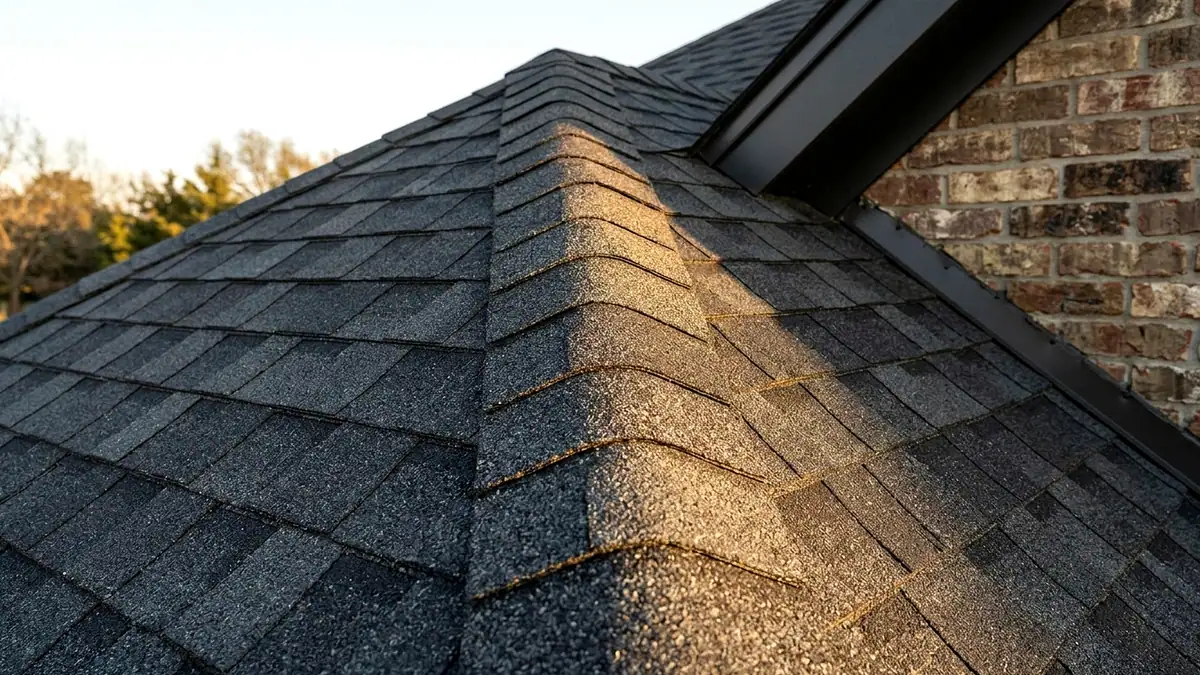
Hail season is the big factor here. Storms from March through June regularly bring impact-rated shingles into the conversation, and a shingle that carries an impact rating can shrug off small stones better than a standard one. Heat is the quiet enemy: July and August attic temperatures bake the oils out of asphalt, so we aim for steady airflow with ridge vents and soffit intake so the roof can shed that heat.
Different parts of the metro want different shingles. Mid-century ranches in places like Florissant and Affton often have low pitches that need careful underlayment and extra sealing on the first courses. Newer subdivisions in St. Charles County usually have steeper, busier rooflines with many valleys, where woven or closed-cut valley work and extra membrane keep water moving. On city brick homes with dormers and chimneys, the flashing work around the shingles can outweigh the shingles themselves.
Where we handle asphalt shingle roofing
The city, the counties and the towns below cover most of the homes we work on. If yours is not listed, call and ask.
- City of St. Louis 63102
- St. Louis County, MO 63105
- St. Charles County, MO 63301
- Florissant, MO 63031
- Chesterfield, MO 63017
- Oakville, MO 63129
- St. Charles, MO 63301
- O'Fallon, MO 63366
- St. Peters, MO 63376
- Kirkwood, MO 63122
- Mehlville, MO 63125
- Belleville, IL 62220
- University City, MO 63130
- Ballwin, MO 63011
- Wentzville, MO 63385
- Hazelwood, MO 63042
- Webster Groves, MO 63119
- Edwardsville, IL 62025
- Collinsville, IL 62234
- Alton, IL 62002
- O'Fallon, IL 62269
- Arnold, MO 63010
- Affton, MO 63123
- Jefferson County, MO 63050
Shingle, siding and window lines we install and repair around St. Louis include GAF, Owens Corning, CertainTeed and James Hardie, plus the other brands below.
- GAF
- Owens Corning
- CertainTeed
- IKO
- Atlas
- Malarkey
- James Hardie
- LP SmartSide
- Alside
- Mastic
- DaVinci
- Velux
- Carlisle
- Firestone
Asphalt Shingle Roofing questions
What is the difference between architectural and three-tab asphalt shingles?
Architectural shingles bond two layers into a thicker, dimensional shingle with better wind and tear resistance, while three-tab shingles are one flat layer cut into tabs. Architectural versions cost somewhat more but hold up better through St. Louis spring storms, and most homeowners choose them. Three-tab is becoming harder to find from major manufacturers.
How many nails should each asphalt shingle have?
Most manufacturers call for four nails per standard shingle, with six in high-wind locations or on steep roofs. The nails must sit in the nailing strip, not above it, and be driven flush rather than deep. Following the printed pattern on the wrapper matters more than speed, because loose or high nails are a leading cause of blow-offs.
Can new asphalt shingles go over my old shingles?
Sometimes code allows one overlay, but we rarely suggest it. A second layer hides soft decking, traps heat, adds weight to older framing, and shortens the life of both layers. Tearing off lets us fix the deck, replace flashing properly, and give the new shingles a flat, stable surface to lie on.
Which shingle color is best for hot St. Louis summers?
Lighter colors reflect more sun and run a few degrees cooler on the roof surface, which can slow shingle aging a little. Darker colors look sharper on brick but absorb more heat. Ventilation matters more than color, so we plan the intake and ridge vent first, then let you pick the shade that looks right on your home.
How long do asphalt shingles last on a St. Louis roof?
Asphalt shingles commonly last around 15 to 25 years depending on quality, ventilation, sun exposure, and storm history. Hail and heat shorten that range here, while good attic airflow and careful installation stretch it. Check the roof every spring and after major storms, and plan a replacement before leaks begin rather than after.
Related work we often pair with asphalt shingle roofing
Roof Replacement
Full tear-off, start to finish. A roof replacement strips the old covering down to the deck, repairs what is hiding underneath, and builds a new system on top.
Roof Ventilation
Attic airflow that protects shingles. A roof needs air moving under it to shed summer heat and winter moisture.
Hail Damage Roof Repair
Hail impact repair. Hail rarely punches holes.
Roof Flashing Repair
Flashing joint repair. Flashing is the thin metal and rubber that turns water away at every joint in a roof.
Need asphalt shingle roofing in St. Louis?
Call any hour. A roofer answers, asks a few questions and sets up a visit.