Vinyl siding in St. Louis: profiles, gauges and fit
Vinyl remains the most common siding on St. Louis area houses. We help you choose the profile, gauge and color, then hang it with the loose fastening that lets panels move through hot summers and freezing winters.
- Answered 24/7
- Siding
- City, county and Metro East
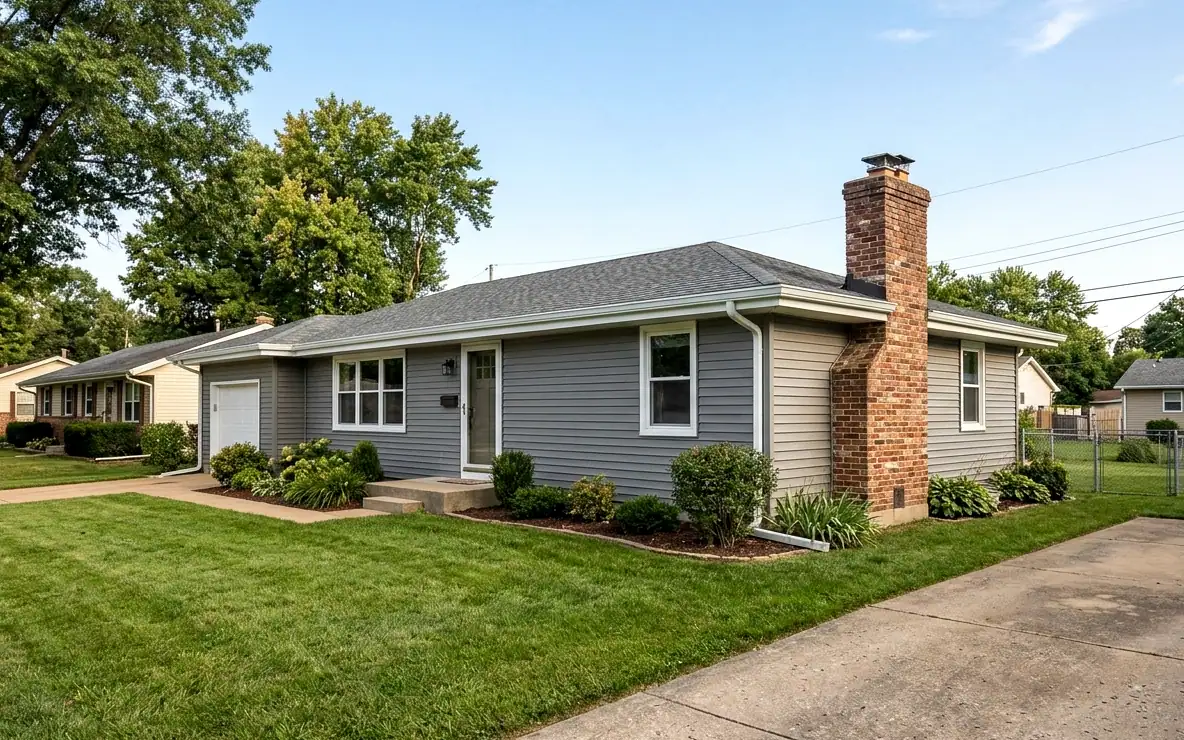
Vinyl siding is a PVC panel system sold in different profiles, thicknesses and colors, hung over a wrapped wall with trim pieces and J-channel. It suits owners who want a low-maintenance exterior that never needs paint. A visit covers your walls, the profile that fits the house, and the gauge that holds up to storms and daily wear.
How we handle vinyl siding on St. Louis homes
Profile is the pattern you see from the street, and it changes how a house reads. Traditional lap with a four or five inch exposure suits 1950s to 1970s ranches, Dutch lap adds a shadow line that works on bungalows and cottages, and board and batten gives a vertical look on gables. Shake and scallop panels show up on dormers and gable peaks. We bring sample pieces to the house so you judge them in real light.
Gauge is panel thickness, and it matters more than most owners expect. Thin builder-grade vinyl, around 0.040 inches, flexes in the wind and cracks easily when a branch or a hailstone hits it. Thicker panels near 0.046 to 0.055 inches stay flatter on the wall, hold their lock better, and look straighter in raking afternoon light. The price gap between thin and thick is modest compared with the cost of residing a house twice.
Color needs more thought than a swatch suggests. Dark colors absorb heat, and on a sunny south wall in July they push vinyl to expand more and ripple if the nails are set tight. Newer dark-color formulas handle this better than older ones, but light and mid tones remain the safest picks. Trim, soffit and gutters should be chosen together so the whole exterior reads as one clean palette.
Vinyl profiles and gauges worth comparing
Traditional lap
Long horizontal boards with a four or five inch reveal. It fits ranches and split levels, and it is the easiest profile to match when a section needs repair later.
Dutch lap and beaded
A groove or bead at the top of each board adds a deeper shadow line. It suits bungalows and cottages and gives plain walls more character from the street.
Board and batten
Vertical panels that imitate narrow strips over wide boards. Good on gables, entries and farmhouse styles, and useful for breaking up a tall, flat wall.
Insulated vinyl
Panels with foam backing fastened behind the vinyl. They stiffen the wall, reduce wobble, and make walls feel more solid and noticeably quieter in strong wind.
What vinyl siding costs in the St. Louis area
Vinyl is priced per square, where a square covers 100 square feet of wall. Builder-grade panels sit at the bottom of the range, while thick premium panels and insulated backing sit at the top. Story height, window count, rot repair and old-siding removal all change labor. A ranch with simple walls costs far less per square than a tall house with many gables, dormers and corners that need extra trim cuts.
Compare every roofing and siding price range or plan the order of your exterior work.
| Work | Typical range |
|---|---|
| Builder-grade vinyl, per square installed | $437 to $652 |
| Premium thick vinyl, per square installed | $594 to $836 |
| Insulated vinyl, per square installed | $688 to $948 |
| Trim, J-channel and corner posts, per home | $1,235 to $3,170 |
These typical ranges are for planning only and are not quotes, since wall area and wall condition change the final number.
How we hang vinyl so it lasts through St. Louis seasons
- 1
Measure walls and pick the profile
We measure each wall, count openings and corners, and set sample profiles against your brick and roof color so you can choose with the real light in front of you.
- 2
Prepare the wall and wrap it
Old siding comes off, damaged boards are replaced, and the wall is wrapped and flashed before a single panel goes up, since vinyl by itself does not stop water.
- 3
Set the starter strip and posts
A level starter strip and plumb corner posts decide whether every course reads straight. We snap lines and check them across the whole wall rather than trusting one corner.
- 4
Fasten loose, not tight
Nails go in the center of the slots and stop a hair short of clamping the panel, so each course can slide a little as temperatures swing from below freezing to ninety degrees.
- 5
Finish trim and clean up
J-channel, window surrounds and gable trim are cut and set, with sealant only where the maker asks for it. Scrap, nails and cut-offs are cleared before we leave.
When is it time to replace vinyl siding instead of living with it?
Cracks across several panels
A few cracked panels can be swapped. Cracks or brittle edges across several walls mean the vinyl has aged out, and individual replacements will not match the surrounding faded color.
Panels rippling or pulling loose
Waves along a course, laps that hang open, or panels that rattle in wind usually mean nails were driven too tight or have pulled out, and the whole course has lost its grip.
Faded color on sunny sides
South and west walls bleach first. A clear color difference between shaded and sunny walls, or powder on your fingers, shows the pigment layer is breaking down.
Melted or warped panels near windows
Reflected heat from low-E glass, or a gas grill parked against the wall, can distort vinyl in one patch. Replacing the panels and fixing the cause stops a repeat.
Mildew that keeps returning
Green and black film on shaded north walls is common in humid St. Louis summers. If washing does not hold and moisture sits behind the panels, the wall needs a closer look.
Wasps or birds in the wall
Wasps, carpenter bees or nesting birds slipping behind loose J-channel or damaged trim show gaps big enough for water as well. Those openings need to be rebuilt, not just caulked.
Vinyl siding on St. Louis ranches, split levels and subdivisions
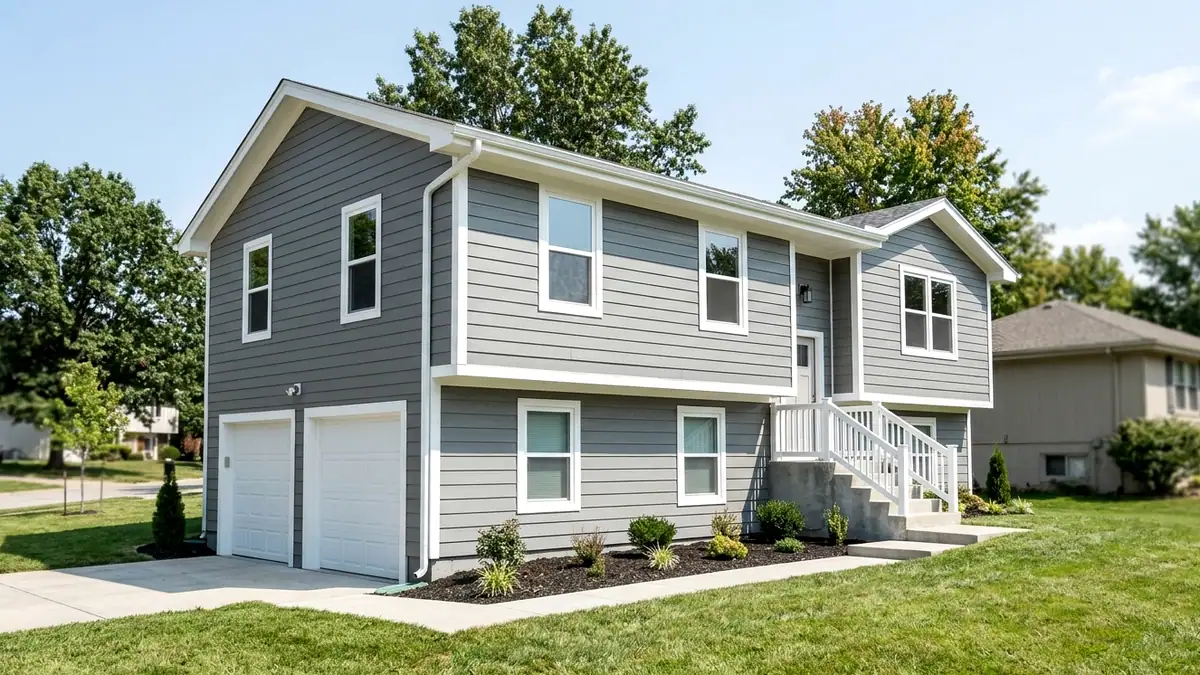
Vinyl went onto thousands of St. Louis County homes from the 1960s onward, often over the original wood or aluminum, and many of those jobs are now reaching the end of their life. We see faded panels on ranches in Florissant and Affton, split levels in Mehlville and Ballwin, and cracked trim where the original installer skipped flashing. Resurfacing with thicker panels, a proper wrap and fresh trim resets the wall.
St. Charles County and the Metro East add a different mix. Subdivisions from the 1990s and 2000s in O'Fallon, St. Peters and Wentzville wear builder-grade vinyl that has seen twenty or more seasons of sun and hail. Winter cold makes older vinyl brittle, so a ladder bump or an ice slide can crack it. Humidity encourages mildew on shaded walls, and a clean, flat wall dries faster between storms.
Where we handle vinyl siding
The city, the counties and the towns below cover most of the homes we work on. If yours is not listed, call and ask.
- City of St. Louis 63102
- St. Louis County, MO 63105
- St. Charles County, MO 63301
- Florissant, MO 63031
- Chesterfield, MO 63017
- Oakville, MO 63129
- St. Charles, MO 63301
- O'Fallon, MO 63366
- St. Peters, MO 63376
- Kirkwood, MO 63122
- Mehlville, MO 63125
- Belleville, IL 62220
- University City, MO 63130
- Ballwin, MO 63011
- Wentzville, MO 63385
- Hazelwood, MO 63042
- Webster Groves, MO 63119
- Edwardsville, IL 62025
- Collinsville, IL 62234
- Alton, IL 62002
- O'Fallon, IL 62269
- Arnold, MO 63010
- Affton, MO 63123
- Jefferson County, MO 63050
Shingle, siding and window lines we install and repair around St. Louis include GAF, Owens Corning, CertainTeed and James Hardie, plus the other brands below.
- GAF
- Owens Corning
- CertainTeed
- IKO
- Atlas
- Malarkey
- James Hardie
- LP SmartSide
- Alside
- Mastic
- DaVinci
- Velux
- Carlisle
- Firestone
Vinyl Siding questions
What is the difference between 0.040 and 0.046 inch vinyl siding?
The number is the panel thickness. At 0.040 inches the vinyl is lighter, bends more in wind and cracks more easily. At 0.046 and above it lies flatter, locks more firmly and takes a hit better. Both come in many colors, so thickness is the main way to buy durability instead of looks.
Will vinyl siding fade on the sunny side of my house?
All vinyl fades slowly, and south and west walls fade fastest in St. Louis sun. Color that runs through the full panel hides scratches better than a painted surface. Light and medium tones show fade least. If you choose a dark color, ask for a formula designed for heat and keep it away from reflected glare.
Why do some vinyl panels ripple after a hot summer?
Rippling almost always traces to fastening. Nails driven snug against the panel stop it from sliding as the sun heats it, so it bows instead. Blocked J-channel and trim packed too tight do the same. Loose nailing and room in the channels let the panel grow and shrink without waving.
Is insulated vinyl siding worth the extra cost?
Foam-backed vinyl adds a little R-value and makes panels stiffer, straighter and quieter in wind. It does not replace wall insulation and will not fix a drafty house on its own. It is worth considering when your walls are wavy, when you want a more solid feel, or when you are already resurfacing a full house.
Can I pressure wash vinyl siding to remove green algae?
Use a soft wash approach with a garden sprayer, mild cleaner and a gentle rinse from the ground. High pressure aimed upward can force water behind laps and into the wall. Wash from the bottom up, rinse from the top down, and skip it altogether if you see cracked or loose panels.
Related work we often pair with vinyl siding
Siding Installation
Full siding installation. A new siding job is more than panels on a wall.
Siding Repair
Spot siding repairs. Not every siding problem needs a full resurface.
Hail Damage Siding Repair
Storm damaged siding. Spring hail leaves cracked vinyl, dented aluminum and bruised board on St.
Seamless Gutters
New gutters, cut to fit. Seamless gutters are rolled from a coil of aluminum at your house, one continuous piece per run.
Need vinyl siding in St. Louis?
Call any hour. A roofer answers, asks a few questions and sets up a visit.