Skylight repair and installation in St. Louis, MO
Most skylight leaks come from the flashing around the unit, not the glass. We find the real source, repair or replace what failed, and install new skylights with proper flashing for our rain, hail and freeze-thaw.
- Answered 24/7
- Roof Care & Claims
- City, county and Metro East
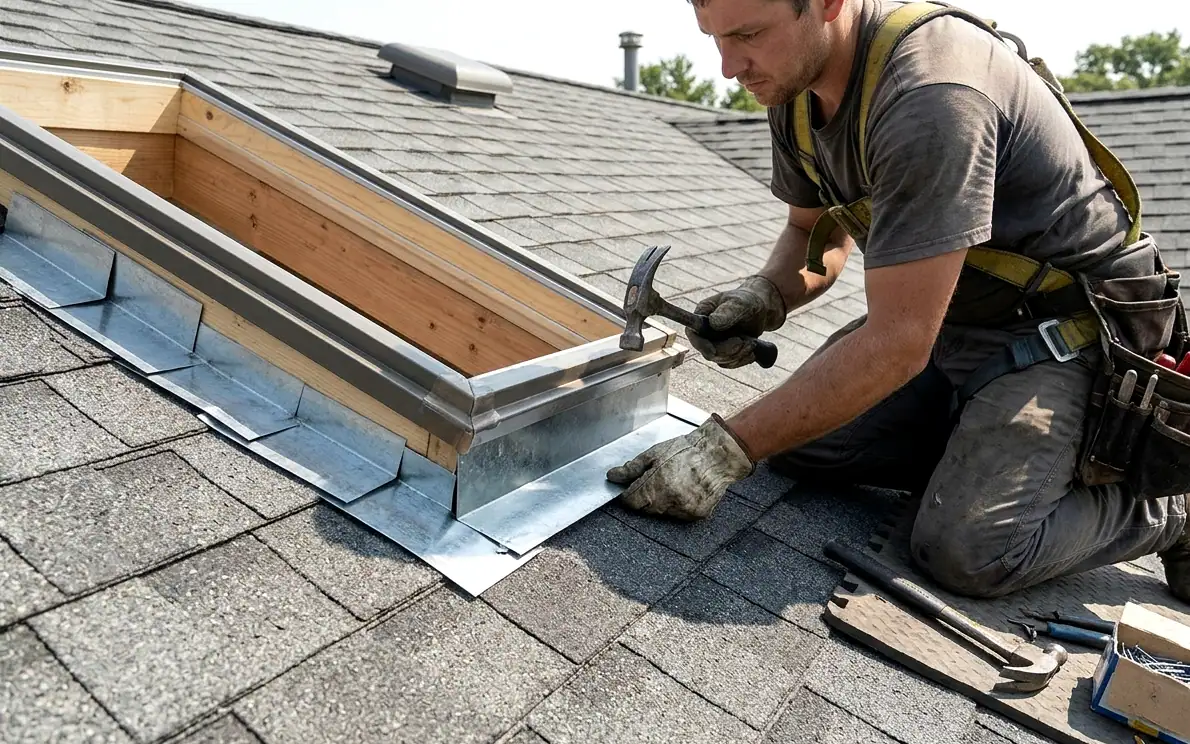
Skylight repair fixes leaks, fogged glass and failed seals by resealing or replacing the flashing, curb or unit itself. Installation cuts a new opening, frames it, flashes it into the shingles and finishes the interior shaft. You need it when water stains show near a skylight, or when you want daylight in a dark room.
How we handle skylight repair & installation on St. Louis homes
A skylight is a hole in the roof with a window in it, so the details around that hole decide everything. Water follows gravity and wind, and it wants to run down the roof into the upper corners and edges of the unit. When flashing is cut short, shingles are lapped the wrong way, or sealant is doing the job metal should be doing, the leak is only a matter of time.
Many skylight leaks get blamed on the glass, so homeowners replace a perfectly good unit and still see drips. We check the flashing kit, the curb, the shingle laps above and beside the frame, and the interior light shaft before recommending anything. Sometimes the answer is a new flashing kit. Sometimes it is a new skylight on an old curb that cannot be saved.
New installs are the other half of the work. We frame the opening between rafters, set the unit on a curb or deck mount, and weave the flashing into the shingle courses so water is carried over the top. Then we finish the shaft inside with insulation and drywall, so the light reaches the room without condensation or drafts.
Skylight types for St. Louis homes
Fixed glass skylights
A sealed unit that brings in daylight and does not open. It has fewer moving parts to leak and suits hallways, stairwells, and rooms where ventilation is not needed.
Venting skylights
Models that open by hand or by remote, useful in kitchens and baths. They let humid air out, but the opening mechanism adds a seal that needs to be maintained.
Tubular daylight units
A small dome on the roof with a reflective tube into the ceiling. Good for closets, hallways and baths where a full skylight does not fit between rafters.
Curb-mounted flat roof units
A raised frame set on the membrane and flashed into it. These suit low-slope and flat sections, common on city brick homes, and need careful membrane integration.
What does skylight work cost in St. Louis?
Repair pricing follows what failed. Resealing a minor flashing gap is far less than rebuilding the flashing and replacing wet decking. New installation prices rise with unit size, type, roof pitch and what is under the roof: a spot between two rafters is easier than one needing structural framing changes. Finish work on the interior shaft, including insulation and drywall, is part of the total. Unit prices from brands like Velux vary widely by model and glazing option.
Compare every roofing and siding price range or plan the order of your exterior work.
| Work | Typical range |
|---|---|
| Reflash and reseal an existing skylight | $385 to $795 |
| Replace a standard fixed skylight | $1,285 to $2,640 |
| New venting skylight with framed shaft | $2,145 to $4,385 |
| Tubular daylight unit installed | $685 to $1,395 |
These are typical St. Louis ranges for planning and not a quote, and unit choice, roof type and framing needs will change them.
How we repair or install a skylight
- 1
Trace where the water enters
We inspect the interior shaft, check the attic framing around the opening, then look at the flashing, curb and shingle laps on top. The goal is a diagnosis, not a guess.
- 2
Decide repair, reflash or replace
If the glass and frame are sound, new flashing may be enough. If the seal, gasket or curb is failing, or the unit is old, we explain why replacement makes more sense.
- 3
Open the roof around the unit
Shingles around the skylight are carefully lifted, the old flashing and failed material are removed, and the decking is checked for rot before anything new goes on.
- 4
Flash it in layer by layer
New flashing is installed bottom to top, with step flashing along the sides and a saddle or cap at the top, so each layer laps over the one below it and sheds water.
- 5
Finish the interior shaft
For new installs we frame, insulate and drywall the light shaft to the ceiling. We test the seal, clean up the roof, and walk you through how the finished unit should look and operate.
Is your skylight leaking or just sweating?
Stains on the light shaft
Brown rings or bubbling paint around the shaft usually mean water is getting past the frame or flashing. Fresh stains after a rain point to an active leak.
Drips only in wind-driven rain
If the skylight leaks only when storms push rain sideways, the cause is often the top or side flashing, or a gap in the shingle laps, and not the glass itself.
Fogged glass between the panes
Moisture trapped between double panes means the seal has failed. The unit still keeps water out, but it will not insulate well and the glass will not clear.
Condensation on the room side
Droplets on the inside of the glass in winter usually come from humid indoor air meeting cold glass. It may not be a leak, but a poorly insulated shaft makes it worse.
Cracked or crazed acrylic dome
Older plastic domes become brittle with years of sun exposure and hail. Cracks let water in and the unit cannot be properly resealed once the material has aged.
Rusted or lifted flashing
Corroded metal edges or caulk-covered patches around the frame show earlier repairs that did not last. Real flashing is layered into the roof, not painted on top.
Skylights and St. Louis hail, heat and freeze-thaw
Spring hail is the biggest outside threat to a skylight in this area. A direct hit can crack an acrylic dome or chip a glass lens, and even a small fracture will leak in the next storm. Summer sun then ages gaskets and seals, and a roof that bakes under that humid heat pushes sealant to its limit. That is why we look at the unit closely after any hail season.
Older St. Louis homes often have skylights added decades after the roof was built, sometimes by a handyman and sometimes with caulk instead of flashing. Brick Tudors and bungalows with steep pitches and slate or tile need extra care, since the surrounding material is fragile. Newer subdivision homes frequently have factory flashing kits that last well when installed correctly and kept clear of leaves and debris.
Where we handle skylight repair & installation
The city, the counties and the towns below cover most of the homes we work on. If yours is not listed, call and ask.
- City of St. Louis 63102
- St. Louis County, MO 63105
- St. Charles County, MO 63301
- Florissant, MO 63031
- Chesterfield, MO 63017
- Oakville, MO 63129
- St. Charles, MO 63301
- O'Fallon, MO 63366
- St. Peters, MO 63376
- Kirkwood, MO 63122
- Mehlville, MO 63125
- Belleville, IL 62220
- University City, MO 63130
- Ballwin, MO 63011
- Wentzville, MO 63385
- Hazelwood, MO 63042
- Webster Groves, MO 63119
- Edwardsville, IL 62025
- Collinsville, IL 62234
- Alton, IL 62002
- O'Fallon, IL 62269
- Arnold, MO 63010
- Affton, MO 63123
- Jefferson County, MO 63050
Shingle, siding and window lines we install and repair around St. Louis include GAF, Owens Corning, CertainTeed and James Hardie, plus the other brands below.
- GAF
- Owens Corning
- CertainTeed
- IKO
- Atlas
- Malarkey
- James Hardie
- LP SmartSide
- Alside
- Mastic
- DaVinci
- Velux
- Carlisle
- Firestone
Skylight Repair & Installation questions
Can a skylight leak be fixed without replacing the whole unit?
Often yes. If the glass and frame are in good shape, replacing the flashing and re-lapping the shingles solves the leak. If the seal has failed, the frame is warped, or the unit is old plastic, replacement is the more sensible route. We tell you which one applies after we see the roof.
Why does my new skylight drip when it is cold outside?
That is usually condensation, not a leak. Warm, humid indoor air touches cold glass and turns to water. A well-insulated shaft, a venting model, bath fan ducted outdoors, and lower indoor humidity all help. If stains appear on the drywall around the shaft, we will check for a true leak.
How long does a skylight installation take?
A single new skylight usually takes most of a day or two, depending on the shaft and whether framing has to be altered. Weather matters, since we do not open the roof when rain is in the forecast. Interior finishing such as drywall and paint may add another visit.
Will a skylight make my attic or room too hot in summer?
Skylights do add some solar heat, especially on south-facing slopes. Low-emissivity glazing, tinted glass, or a shade reduces it considerably. We can suggest a placement and glazing that suits your room, and a venting model can release hot air when you need it.
Can you add a skylight to a slate or tile roof?
It can be done, but it takes extra care because slate and clay tile are fragile and must be lifted and re-laid properly around the new curb and flashing. We assess the roof first and sometimes recommend a specific position that avoids cutting through the most delicate courses.
Related work we often pair with skylight repair & installation
Roof Leak Repair
Find the real leak source. The stain on your ceiling is rarely under the hole in your roof.
Roof Flashing Repair
Flashing joint repair. Flashing is the thin metal and rubber that turns water away at every joint in a roof.
Roof Inspection
Roof inspection, top to bottom. A roof inspection shows you what the shingles, flashing and vents are doing before water finds the weak spot.
Flat Roof Repair
Low-slope roof leaks fixed. Most St.
Need skylight repair & installation in St. Louis?
Call any hour. A roofer answers, asks a few questions and sets up a visit.