Storm damage roof repair in St. Louis, MO after severe weather
A severe storm seldom hurts a roof in just one way. Wind, hail, falling limbs, and driving rain often hit together, so we sort out every kind of damage slope by slope and repair in the right order.
- Answered 24/7
- Roof Repair
- City, county and Metro East
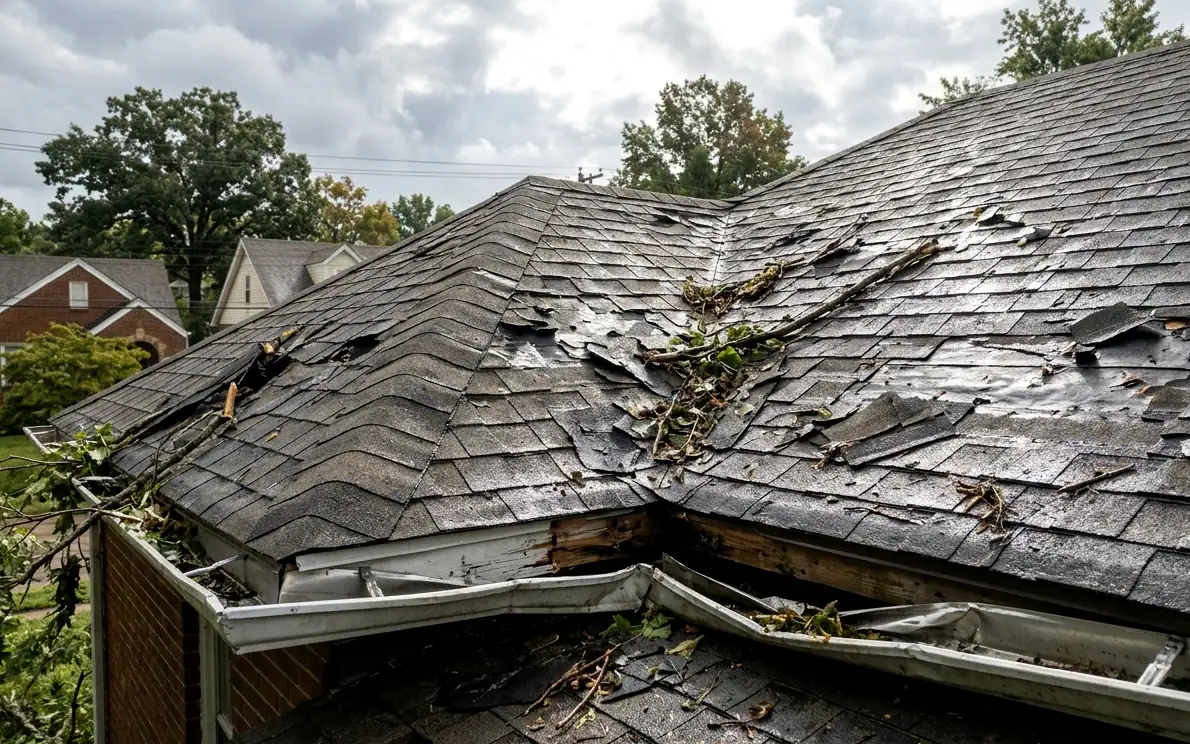
Storm damage roof repair covers the mixed damage severe weather leaves behind, including torn shingles, impact marks, bent metal, and broken vents. You need it after any major wind or hail event, even when nothing leaks yet. We inspect every slope, photograph what we find, protect the home, and repair in order of urgency.
What does storm damage on a roof actually look like?
Shingles and debris in the yard
Pieces of shingle, ridge cap, or bits of vent in the grass after a storm tell you which slope took the worst of it. Check upwind sides of the house first.
Dented soft metal
Dimples on gutters, downspouts, and roof vents show hail came with the storm. They also tell us the size of the stones, which guides what we look for on the shingles.
New ceiling spots after storms
A spot that was not there before the storm means water found a way in. Even a small one points to an opening that will take in more with the next rain.
Gutters bent or pulled away
Gutters hanging loose or crushed at the corners suggest wind pressure or impact at the roof edge. The shingles and drip edge just above often share that damage.
Cracked or missing vent caps
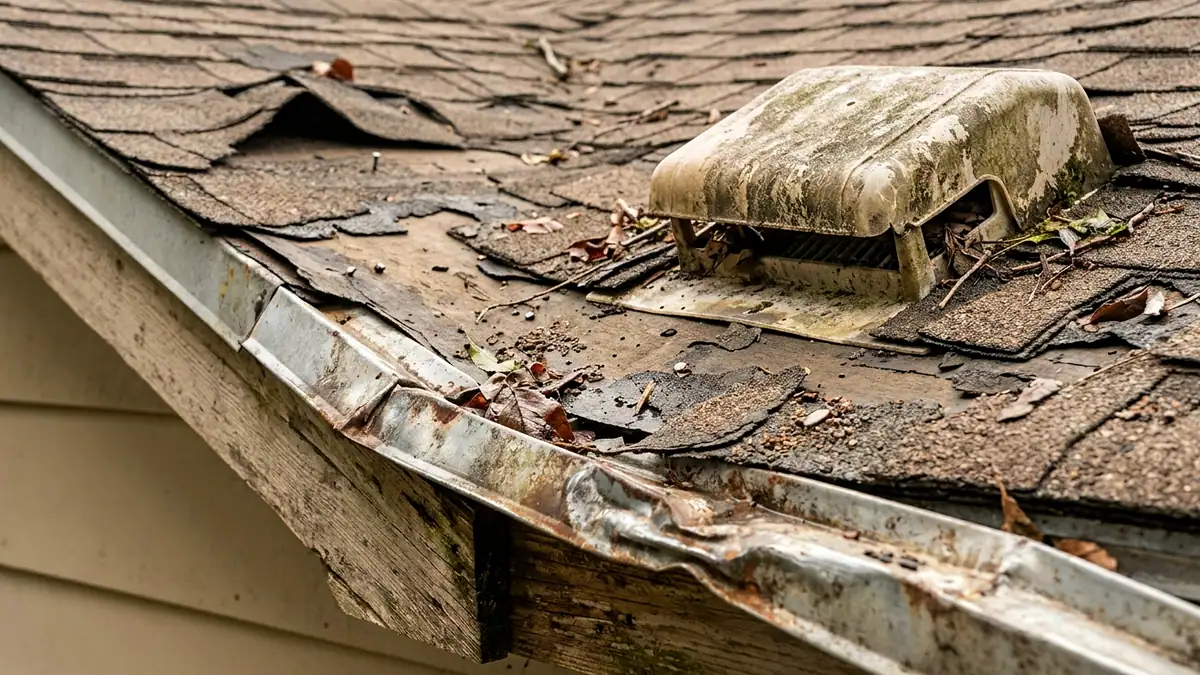
Plastic vent covers and ridge vents are the first parts to crack in hail or wind. A broken cap leaves a direct opening into the attic.
Repair activity on your street
When neighbors have tarps or crews, the storm hit your area hard. Even if your roof looks fine, an inspection is sensible, because damage can hide on slopes you cannot see.
Our storm repair sequence, from tarp to finished roof
- 1
Secure the open areas
If water is coming in, we cover the opening first with a temporary dry-in or a quick patch, since protecting the interior comes before any detailed documentation.
- 2
Walk every slope and elevation
We inspect each slope, the ridge, the vents, the gutters, and the soffits, photographing every item. Damage found near the roof edge is recorded along with its position.
- 3
Sort damage by urgency
We separate what is leaking now, what will fail soon, and what is cosmetic, then explain the list so you know which items cannot wait for dry weather.
- 4
Repair in order
Openings and exposed decking get fixed first, then shingles, vents, and edge metal. Gutters and soffits follow, so the roof sheds water properly before the finish work begins.
- 5
Hand over the photo set
You receive the full set of photos, labeled by slope, along with a plain-language summary of each repair, which you can keep for your records or share with your insurer.
How we handle storm damage roof repair on St. Louis homes
After a storm, most homeowners look for the obvious: shingles in the yard, a limb on the roof. The less obvious damage is often worse. Creased tabs, cracked vent housings, bent drip edge, and loosened ridge caps can all let water in weeks later, long after the weather is a memory. A proper storm repair starts with finding all of it, not just what shows from the street.
We work slope by slope. Each slope gets walked, photographed, and noted on a simple sketch of the roof, so every problem has a location and a picture. Then we sort the list into three groups: what is letting water in now, what will fail soon, and what is only cosmetic. That sorting is what lets repairs proceed in a sensible order.
Documentation matters because storm repairs often involve an insurance company. Clear, dated photos of every problem make that conversation easier, whatever the outcome. We give you the full photo set and walk you through it in plain language. The set shows the true condition of the roof, and it travels with you into any claim discussion.
How St. Louis storm season shapes roof damage
Severe weather in the St. Louis area is concentrated in the spring, from roughly March through June, when fast-moving thunderstorm lines bring straight-line winds, hail, and heavy rain. Damage follows the storm track, so a block can be untouched while the next suffers badly. That uneven pattern is why we inspect each roof on its own and do not assume a neighbor's results apply to yours.
Different roofs take different hits. Older brick homes with steep, slate or tile slopes lose individual pieces and suffer cracked ridges. Mid-century ranches lose ridge caps and drip edge on long, open slopes. Newer subdivision roofs with thin shingles lose tabs and show hail bruising quickly. Each pattern changes the order in which we repair the damage, and which parts of the roof we check before the others.
Repair or replace after storm damage?
Spot repair of damaged areas
When damage is scattered and the shingles around it are sound, we replace only the affected pieces. This is the most economical path for a younger roof.
Full slope replacement
If one slope took most of the damage, replacing the whole slope gives a uniform surface, and avoids stacking dozens of patches on weathered shingles.
Metal and vent replacement
Bent drip edge, cracked vents, and dented flashing are replaced as parts. These small items protect the roof edges and openings, so we do not leave them for later.
Complete roof replacement
When damage covers most of the roof or the roof was already near the end of its life, replacement is the sound choice. We lay out the reasoning with photos.
What does storm damage roof repair cost in St. Louis?
Storm repairs vary widely because the damage does. A roof with scattered missing tabs needs a short visit and a few bundles of shingles. A roof with hail across three slopes, torn vents, and bent edge metal is a larger job. Pitch, height, and the number of roof features all move the price, and so does the condition of the decking we find once the damaged shingles come off.
Compare every roofing and siding price range or plan the order of your exterior work.
| Work | Typical range |
|---|---|
| Storm inspection with photo set | $145 to $395 |
| Scattered shingle damage repair | $385 to $940 |
| Vent, drip edge, and ridge cap repair | $335 to $865 |
| One-slope shingle replacement | $1,740 to $4,380 |
These ranges are typical for St. Louis storm repairs, not a quote, and a roof with many damaged features can run above them.
Where we handle storm damage roof repair
The city, the counties and the towns below cover most of the homes we work on. If yours is not listed, call and ask.
- City of St. Louis 63102
- St. Louis County, MO 63105
- St. Charles County, MO 63301
- Florissant, MO 63031
- Chesterfield, MO 63017
- Oakville, MO 63129
- St. Charles, MO 63301
- O'Fallon, MO 63366
- St. Peters, MO 63376
- Kirkwood, MO 63122
- Mehlville, MO 63125
- Belleville, IL 62220
- University City, MO 63130
- Ballwin, MO 63011
- Wentzville, MO 63385
- Hazelwood, MO 63042
- Webster Groves, MO 63119
- Edwardsville, IL 62025
- Collinsville, IL 62234
- Alton, IL 62002
- O'Fallon, IL 62269
- Arnold, MO 63010
- Affton, MO 63123
- Jefferson County, MO 63050
Shingle, siding and window lines we install and repair around St. Louis include GAF, Owens Corning, CertainTeed and James Hardie, plus the other brands below.
- GAF
- Owens Corning
- CertainTeed
- IKO
- Atlas
- Malarkey
- James Hardie
- LP SmartSide
- Alside
- Mastic
- DaVinci
- Velux
- Carlisle
- Firestone
Storm Damage Roof Repair questions
How soon after a storm should I have my roof checked?
As soon as it is safe, ideally within days. Open areas should be covered right away, and a prompt inspection lets us record fresh damage clearly. Waiting weeks lets rain, sun, and a second storm blur which damage came from which event.
Can storm damage hide on a roof that looks fine from the ground?
Yes. Creased tabs, hail bruising, cracked vents, and loosened ridge caps are hard to see from the yard. Only a walk across each slope, with attention to the edges and penetrations, shows whether the storm left damage that will cause leaks later.
What do you photograph during a storm damage roof inspection?
Every slope, the ridge and hips, each vent and pipe, the drip edge, the gutters, and any soft metal. We also photograph the attic if water has entered. Each photo is labeled by location so the set reads clearly to anyone who reviews it.
Is storm repair worth it on a roof that is already fifteen years old?
Often yes, if the damage is limited and the shingles around it are sound. If the storm exposed a roof that was already worn, repair may only delay the next problem. We show you the condition of the whole slope so you can decide with real information.
Do storm repairs include gutters and soffits on the same visit?
They can. Gutters and soffits are often damaged by the same wind or impact that hit the roof edge, and fixing them in the same visit saves a trip. We note them in the damage list and tell you what we recommend repairing together.
Related work we often pair with storm damage roof repair
Hail Damage Roof Repair
Hail impact repair. Hail rarely punches holes.
Wind Damage Roof Repair
Windstorm roof repair. Wind often damages a roof without removing a single shingle.
Roof Insurance Claim Help
Roof damage, documented clearly. When storm damage may be covered, the roof evidence matters.
Emergency Roof Tarping
Temporary dry-in. A tarp is not a repair.
Need storm damage roof repair in St. Louis?
Call any hour. A roofer answers, asks a few questions and sets up a visit.