24/7 emergency roof repair in St. Louis, MO
A limb through the roof at midnight or water pouring through a ceiling on Sunday does not wait for business hours. Our line is answered 24/7, and we start by making the situation safe.
- Answered 24/7
- Roof Repair
- City, county and Metro East
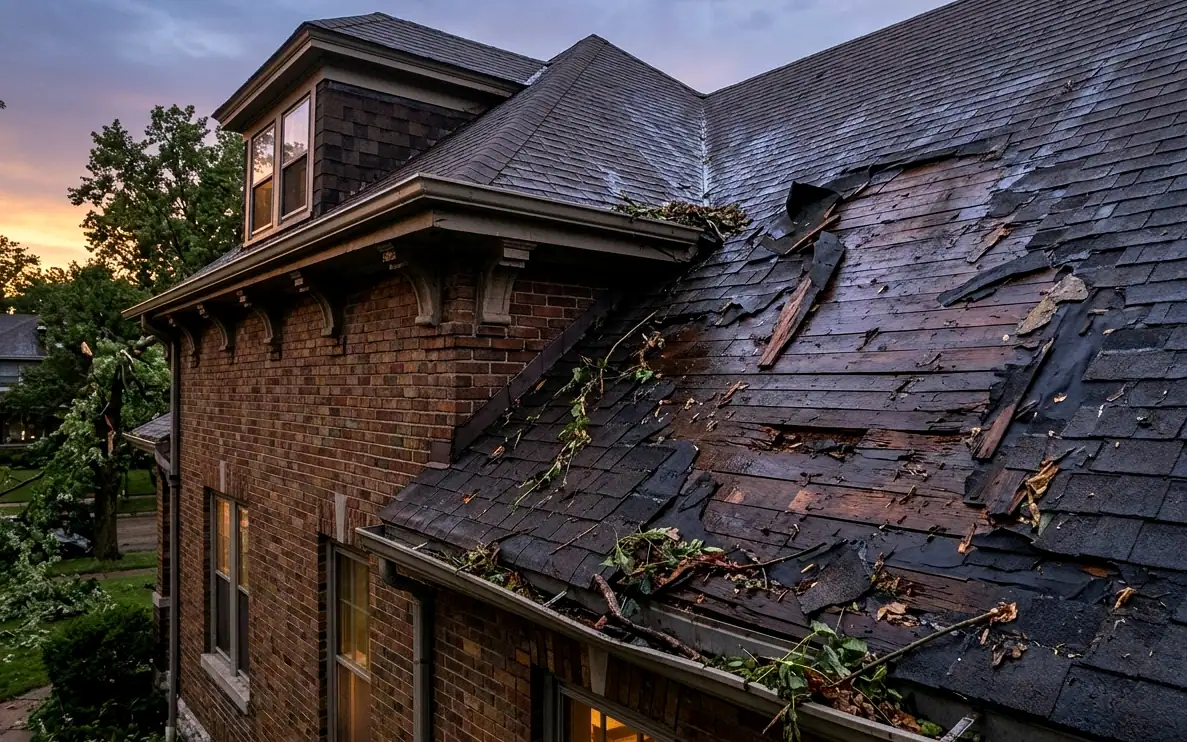
Emergency roof repair is the work of stopping active water entry and hazards at your home right now, then fixing the damage once conditions allow. You need it when a storm opens the roof, a ceiling is dripping, or debris has landed on it. We make the home safe first, protect the interior, and show you photos of what we find.
When is a roof problem an emergency and not a to-do?
Water flowing inside now
Water dripping steadily from a ceiling, light fixture, or wall during rain is an emergency. It soaks insulation and drywall fast and can reach wiring, so it should not wait for morning.
A bulging or sagging ceiling
A ceiling that bows downward is holding water or has lost support above it. Keep people out from under it, and call before the drywall lets go with a load of wet insulation.
Roof opened by a storm
Torn-off shingles, a peeled-back section, or exposed decking after wind leaves the home open to the next rain, and even a modest shower can soak a room.
Fallen limb on the roof
A limb resting on the roof can hide a puncture below it and may shift to break more. Stay off the roof and keep clear of any sagging section.
Daylight showing in the attic
Seeing sky through the roof boards from inside is an open hole. After a storm, check with a flashlight from the attic hatch without stepping off the joists.
Smell of damp insulation
A musty, wet smell in the attic after a storm means water has been getting in, often well away from where you see stains. It is worth a call before mold gets started.
How an emergency roof call unfolds with us
- 1
Phone triage, day or night
We answer around the clock and ask where water is entering, whether wires or branches are involved, and whether anyone is in danger, so we show up with the right materials for the damage.
- 2
Make the area safe
We check footing, clear hazards, and protect the home. If electrical lines are down, we hold until the utility clears them, then start work on the roof.
- 3
Stop the water
We dry in the opening with a temporary cover or a quick repair, whichever holds up better on that roof, so the next rain stays outside where it belongs.
- 4
Document the damage
We photograph every slope, vent, and edge, including damage you cannot see from the ground. You keep the whole photo set for your records and for any claim.
- 5
Plan the permanent repair
We explain what needs full repair, what can wait, and in what order. Then we schedule the work around dry weather so the finished roof is done once.
How we handle emergency roof repair on St. Louis homes
A roof emergency has two jobs. The first is to stop the harm that is happening: water running down a wall, a ceiling sagging under a load of rain, a branch hanging by a few shingles. The second is to repair the roof itself so you are not living under a temporary fix for months. We treat these as separate steps, and we tell you plainly which one we are on at any moment.
When you call, we ask a few practical questions. Is water entering now, and where? Is any part of the ceiling bulging? Are there downed wires near the house? Those answers decide how we arrive and what we bring. If power lines are involved, the utility has to clear them before anyone climbs, and we say so up front instead of leaving you guessing.
Once the immediate danger is handled, we look at the whole roof, not just the opening. Storms rarely damage one spot. We photograph everything, explain what needs permanent repair and what can wait, and give you the pictures so your insurance company sees the full condition of the roof, not just the hole that made you call.
Why St. Louis storms create so many roof emergencies
Spring severe weather in the St. Louis area arrives fast, with straight-line winds, hail, and heavy rain often in a single evening. Mature trees in older neighborhoods, from south city to the inner suburbs, add falling limbs to the mix. Because a storm can hit many homes at once, calling early matters, and a clear description of where water is entering helps us bring the right materials.
The housing mix changes what an emergency looks like. On a brick two-family flat, a failed rear roof can send water through two units. On a county ranch, a lost ridge cap lets rain straight into the attic. In newer subdivisions, thin builder-grade shingles tear off in long strips. Knowing these patterns lets us go to the likely trouble spot first when we arrive at your door.
Emergency fixes we choose between on the first visit
Same-visit permanent patch
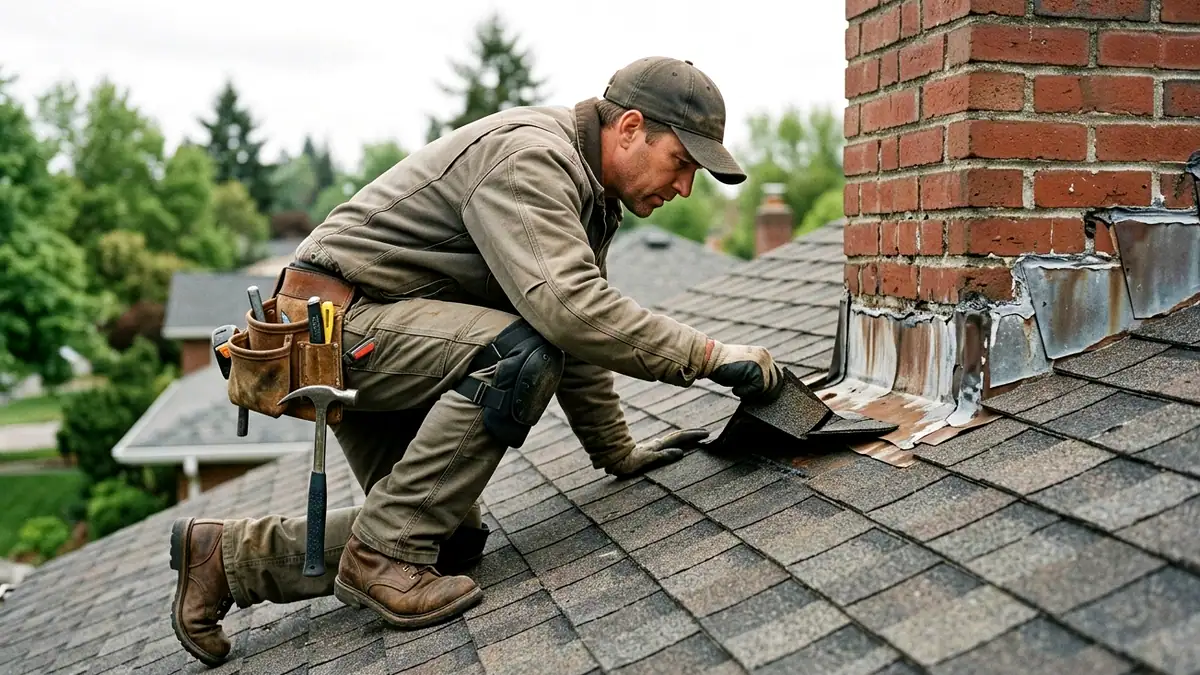
When the opening is small, such as a few torn shingles or a cracked vent boot, we replace and seal it properly on the spot so there is no second trip.
Temporary dry-in
When damage is large or weather is still active, we cover the area to stop water and return to repair it once the roof is dry enough to work.
Interior water control
We tell you where to set containers, what to move, and which room to keep people out of, so water drains where you choose and a wet ceiling does not come down.
Structural shoring
If decking or rafters are cracked, we support the area before anyone works over it and explain whether the framing needs a carpentry-level repair.
What does emergency roof repair cost in St. Louis?
Emergency work costs more than a scheduled repair because it happens outside normal hours, in bad weather, and often without time to plan materials. The biggest swings come from how large the opening is, how steep and high the roof sits, and whether decking or rafters are damaged. Many emergency calls end with a temporary dry-in first and a permanent repair priced separately once the roof can be inspected in good conditions.
Compare every roofing and siding price range or plan the order of your exterior work.
| Work | Typical range |
|---|---|
| After-hours visit with small patch | $395 to $955 |
| Temporary dry-in of one slope | $465 to $1,240 |
| Decking replacement at the opening | $680 to $1,730 |
| Permanent repair after a storm | $1,120 to $3,865 |
These are typical St. Louis ranges for emergency work, not a quote, and the final price depends on what we find under the damage.
Where we handle emergency roof repair
The city, the counties and the towns below cover most of the homes we work on. If yours is not listed, call and ask.
- City of St. Louis 63102
- St. Louis County, MO 63105
- St. Charles County, MO 63301
- Florissant, MO 63031
- Chesterfield, MO 63017
- Oakville, MO 63129
- St. Charles, MO 63301
- O'Fallon, MO 63366
- St. Peters, MO 63376
- Kirkwood, MO 63122
- Mehlville, MO 63125
- Belleville, IL 62220
- University City, MO 63130
- Ballwin, MO 63011
- Wentzville, MO 63385
- Hazelwood, MO 63042
- Webster Groves, MO 63119
- Edwardsville, IL 62025
- Collinsville, IL 62234
- Alton, IL 62002
- O'Fallon, IL 62269
- Arnold, MO 63010
- Affton, MO 63123
- Jefferson County, MO 63050
Shingle, siding and window lines we install and repair around St. Louis include GAF, Owens Corning, CertainTeed and James Hardie, plus the other brands below.
- GAF
- Owens Corning
- CertainTeed
- IKO
- Atlas
- Malarkey
- James Hardie
- LP SmartSide
- Alside
- Mastic
- DaVinci
- Velux
- Carlisle
- Firestone
Emergency Roof Repair questions
What should I do while waiting for you during a roof emergency?
Keep everyone out from under any sagging ceiling, move valuables away from drips, and set buckets to catch water. Turn off power to a room if water is near light fixtures or outlets and it is safe to reach the panel. Stay off the roof, and keep away from any fallen wires.
Do you answer emergency roof calls on holidays and weekends?
Yes. Our line is answered 24/7 every day of the year, including holidays and overnight. Storms do not respect calendars, so neither do we. Tell us where water is entering, and we work out the safest next step with you on the phone.
Is an emergency roof repair permanent or will I need follow-up work?
It depends on the damage. A few missing shingles or a cracked boot can be repaired for good in one visit. Large openings usually get a temporary dry-in first, then a permanent repair once the roof is dry. We tell you which applies before we start.
Can emergency roof repair happen while it is still raining?
We work in light rain when it is safe, mainly to keep water out of the house. In heavy rain, lightning, or high wind we limit the work to protecting the interior and wait for conditions to improve before going onto a wet, slick roof.
What if power lines are touching my roof after a storm?
Stay inside, away from windows near the wires, and call the utility first. We cannot work around live lines. Once the utility has made them safe, we come out, check the roof for damage, and handle the repair or temporary cover.
Related work we often pair with emergency roof repair
Emergency Roof Tarping
Temporary dry-in. A tarp is not a repair.
Storm Damage Roof Repair
After the storm passes. A severe storm seldom hurts a roof in just one way.
Roof Leak Repair
Find the real leak source. The stain on your ceiling is rarely under the hole in your roof.
Tree Damage Roof Repair
Fallen tree and limb repair. A limb that lands on a roof can break more than shingles.
Need emergency roof repair in St. Louis?
Call any hour. A roofer answers, asks a few questions and sets up a visit.