Ice dam roof repair in St. Louis, MO: eave leaks and backup
An ice dam forms when heat from the house melts snow on the roof and the water refreezes at the cold eave. The trapped water backs up under shingles and leaks into the walls.
- Answered 24/7
- Roof Repair
- City, county and Metro East
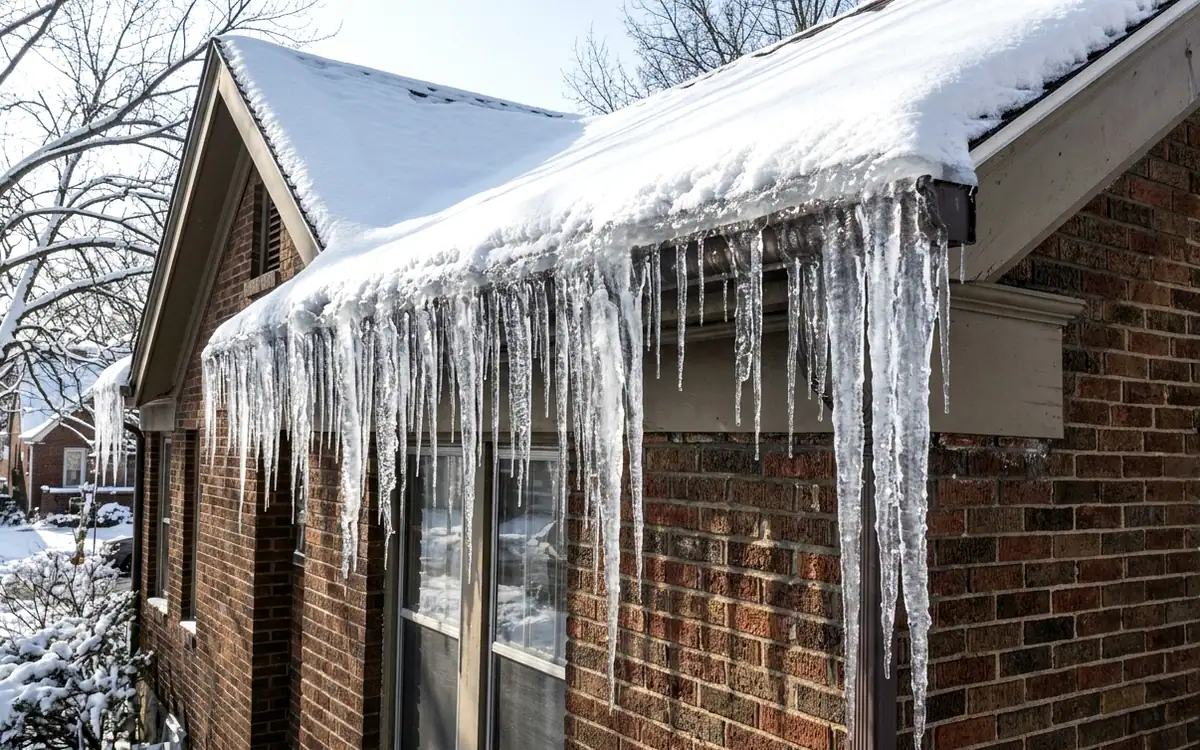
Ice dam roof repair fixes the leaks, soaked insulation, and lifted shingles left behind when frozen meltwater backs up at the eaves. You need it when ceilings stain near exterior walls after snow, or when icicles pile up along the edge. We repair the damage, add waterproof membrane at the eaves, and fix the heat loss that caused it.
How do you recognize ice dam trouble on your house?
Icicles along the whole eave
A few icicles are normal. A thick, continuous row of them, or a ridge of ice at the roof edge, shows meltwater is refreezing there and may be backing up.
Ceiling stains near outside walls
Stains that appear along the top of exterior walls after snow point to water backing up at the eave and traveling down inside the wall cavity.
Damp or peeling paint at eaves
Blistered paint on soffits, fascia, or the upper wall means water is getting behind them. Check after a thaw, when the ice releases its water.
Wet, flattened insulation
Attic insulation along the eaves that is dark, matted, or clumped has been wet. It loses insulating value and often holds moisture long after the snow is gone.
Frost on the attic roof deck
A white frosting of ice crystals on nails and the underside of the deck means warm, moist air is reaching the cold roof surface, which also feeds ice dams.
Gutters filled with solid ice
Gutters packed with ice cannot carry meltwater away. The water backs up into the roof edge instead, so a frozen gutter and an ice dam often travel together.
How we repair an ice dam and stop it returning
- 1
Find the leak and wet areas
We trace stains from the ceiling to the attic and the eave, measure damp wood and insulation with a meter, and mark where meltwater got in.
- 2
Remove damaged shingles at eaves
Lifted or cracked shingles along the lower courses are removed, along with old underlayment. This exposes the decking so we can see how far the water reached.
- 3
Dry or replace wet decking
Soft or stained sheathing at the eave is cut out and replaced, since wet wood at the roof edge decays quickly and holds the shingles badly.
- 4
Install eave waterproof membrane
A self-sealing membrane is laid along the eaves and up the roof past the warm wall line, then covered with new underlayment and shingles.
- 5
Air seal and ventilate the attic
We seal the gaps that leak heat, check the insulation depth, and make sure soffit and ridge vents move air, so the roof deck stays cold in winter.
How we handle ice dam roof repair on St. Louis homes
Ice dams are an attic problem that shows up on the roof. Warm air leaks from the living space into the attic, heats the underside of the roof deck, and melts snow from the top down. The meltwater runs to the eave, where the overhang is cold, and freezes into a ridge of ice. More melt then pools behind that ridge and works up under the shingles.
Shingles are designed to shed water downhill, not to hold a pool. Once water backs up under them, it reaches the nail holes and the seams in the decking, and it enters the wall cavity below. The stain usually appears on the ceiling near an exterior wall or on the wall itself, and the insulation above it gets soaked and loses most of its value.
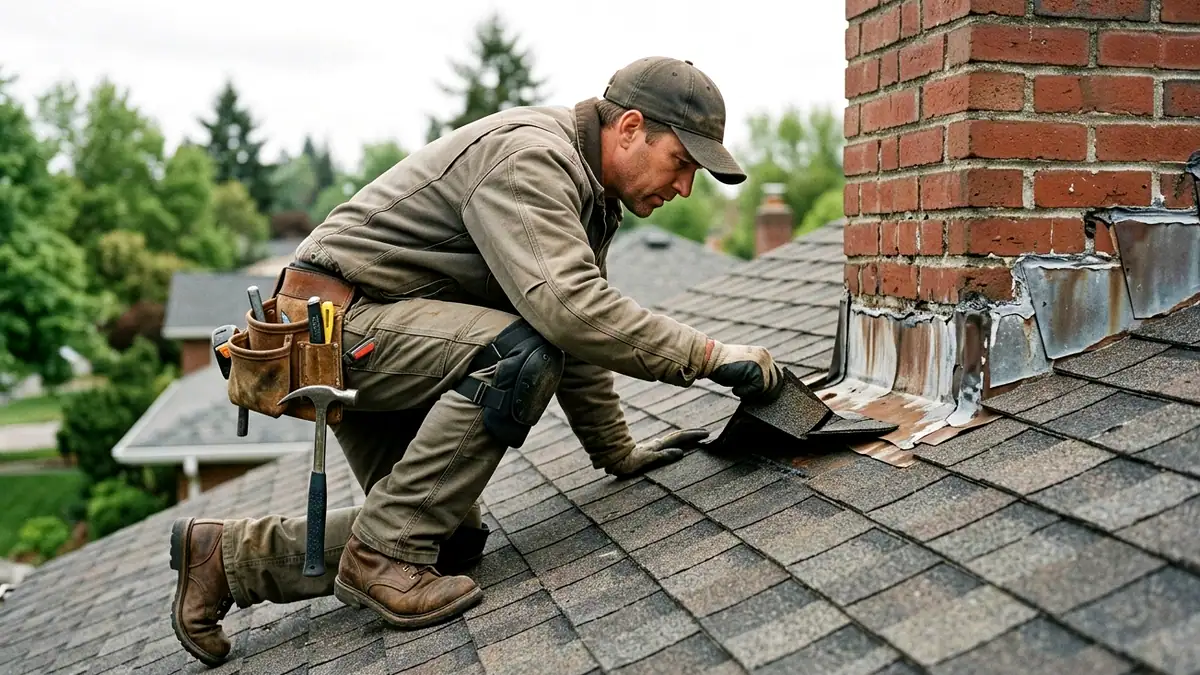
A real repair works on two fronts. On the roof, we replace damaged shingles and install a self-sealing waterproof membrane along the eaves, which seals around nails and blocks backed-up water. In the attic, we find where warm air is escaping and stop it, because a repair that ignores the heat will see the same ice dam next winter.
Ice dams in St. Louis: less snow, still enough freeze-thaw
St. Louis gets less snow than northern cities, but winters here bring repeated freeze-thaw cycles, and a snowfall followed by a sunny day and a cold night is all an ice dam needs. Dams also develop under thin snow cover when attic heat is strong. We see them most after storms that leave several inches on the roof and temperatures that swing around freezing.
Older brick homes with thin or missing attic insulation leak the most heat. Ranches from the 1950s to 1970s often have slim insulation and gaps around chimneys and light fixtures. Box gutters on south city homes can fill with ice and snowmelt, backing water into the roof edge. Cut-up rooflines with valleys and dormers give snow and ice more places to collect and hold on, long after the open slopes have cleared.
Long-term fixes that stop ice dams from coming back
Eave waterproof membrane
A rubberized membrane that seals around nails keeps backed-up water from reaching the decking, even if ice forms again. It is the best roof-side protection.
Attic air sealing
Gaps around chimneys, light fixtures, plumbing stacks, and the attic hatch leak warm air upward. Sealing them cuts the heat that starts the melt cycle.
Added attic insulation
More insulation over the living space keeps heat in the house and the attic cold. We check the depth and add where it is thin, especially above exterior walls.
Soffit and ridge ventilation
Air entering at the soffits and leaving at the ridge keeps the underside of the deck at outdoor temperature, so snow melts evenly or not at all.
What does ice dam roof repair cost in St. Louis?
Costs depend on how far the water traveled and what must be rebuilt. A small eave shingle repair is modest. A full run of waterproof membrane along an eave is more, because shingles come off and go back on. Air sealing and insulation work are priced by the attic. Interior repairs such as drywall and paint are separate from the roof work.
Compare every roofing and siding price range or plan the order of your exterior work.
| Work | Typical range |
|---|---|
| Eave shingle repair after a dam | $365 to $885 |
| Eave membrane, one side of the house | $1,180 to $2,760 |
| Attic air sealing at penetrations | $525 to $1,380 |
| Insulation top-up with baffles | $890 to $2,215 |
These ranges are typical for ice dam work in St. Louis, not a quote, and wet decking or insulation replacement adds to them.
Where we handle ice dam roof repair
The city, the counties and the towns below cover most of the homes we work on. If yours is not listed, call and ask.
- City of St. Louis 63102
- St. Louis County, MO 63105
- St. Charles County, MO 63301
- Florissant, MO 63031
- Chesterfield, MO 63017
- Oakville, MO 63129
- St. Charles, MO 63301
- O'Fallon, MO 63366
- St. Peters, MO 63376
- Kirkwood, MO 63122
- Mehlville, MO 63125
- Belleville, IL 62220
- University City, MO 63130
- Ballwin, MO 63011
- Wentzville, MO 63385
- Hazelwood, MO 63042
- Webster Groves, MO 63119
- Edwardsville, IL 62025
- Collinsville, IL 62234
- Alton, IL 62002
- O'Fallon, IL 62269
- Arnold, MO 63010
- Affton, MO 63123
- Jefferson County, MO 63050
Shingle, siding and window lines we install and repair around St. Louis include GAF, Owens Corning, CertainTeed and James Hardie, plus the other brands below.
- GAF
- Owens Corning
- CertainTeed
- IKO
- Atlas
- Malarkey
- James Hardie
- LP SmartSide
- Alside
- Mastic
- DaVinci
- Velux
- Carlisle
- Firestone
Ice Dam Roof Repair questions
Is it safe to chip ice off my roof edge to stop an ice dam?
We would advise against it. Chipping can crack shingles and gutters, and it puts you on a slippery edge or ladder under falling ice. A better short-term step is raking snow from the ground with a roof rake, and calling us if water is entering.
Do ice dams happen in St. Louis or only in colder cities?
They do happen here. St. Louis winters see freeze-thaw swings and occasional heavy snow, which is enough when a roof is poorly insulated. They are less frequent than in northern cities, but when conditions line up, the damage is the same.
Why does my ice dam appear only over certain rooms?
Ice forms where the attic is warmest, which is usually above rooms with poor insulation, recessed lights, or leaky ductwork. A dam over one room often points to a specific air leak or thin insulation there, and fixing that spot can stop the problem.
What does ice and water membrane do that regular underlayment cannot?
It is self-sealing and bonds to the deck, closing around nail holes so backed-up water cannot reach the wood. Ordinary felt or synthetic underlayment sheds water but does not seal. Along the eaves, where ice pools, that difference decides whether the deck stays dry.
Will ice dam roof repair also stop my frozen gutters?
Not directly, but it often helps. Frozen gutters are driven by the same melt and refreeze cycle, and a colder roof deck reduces it. We also look at gutter pitch and clogs, which can be repaired separately if they feed the ice.
Related work we often pair with ice dam roof repair
Roof Ventilation
Attic airflow that protects shingles. A roof needs air moving under it to shed summer heat and winter moisture.
Attic Insulation
Insulate the attic floor. Heat leaves a house mostly through the ceiling.
Gutter Repair
Fix the gutter, not the symptom. A gutter that sags, drips at a seam or hangs by a few old spikes can often be saved.
Roof Leak Repair
Find the real leak source. The stain on your ceiling is rarely under the hole in your roof.
Need ice dam roof repair in St. Louis?
Call any hour. A roofer answers, asks a few questions and sets up a visit.