Roof repair in St. Louis, MO for shingle and sealant failures
Most roof problems start small: a few lifted shingles, a cracked boot, a nail that backed out. We fix them while they are still a repair and not a replacement. Call us 24/7 to talk through what you see.
- Answered 24/7
- Roof Repair
- City, county and Metro East
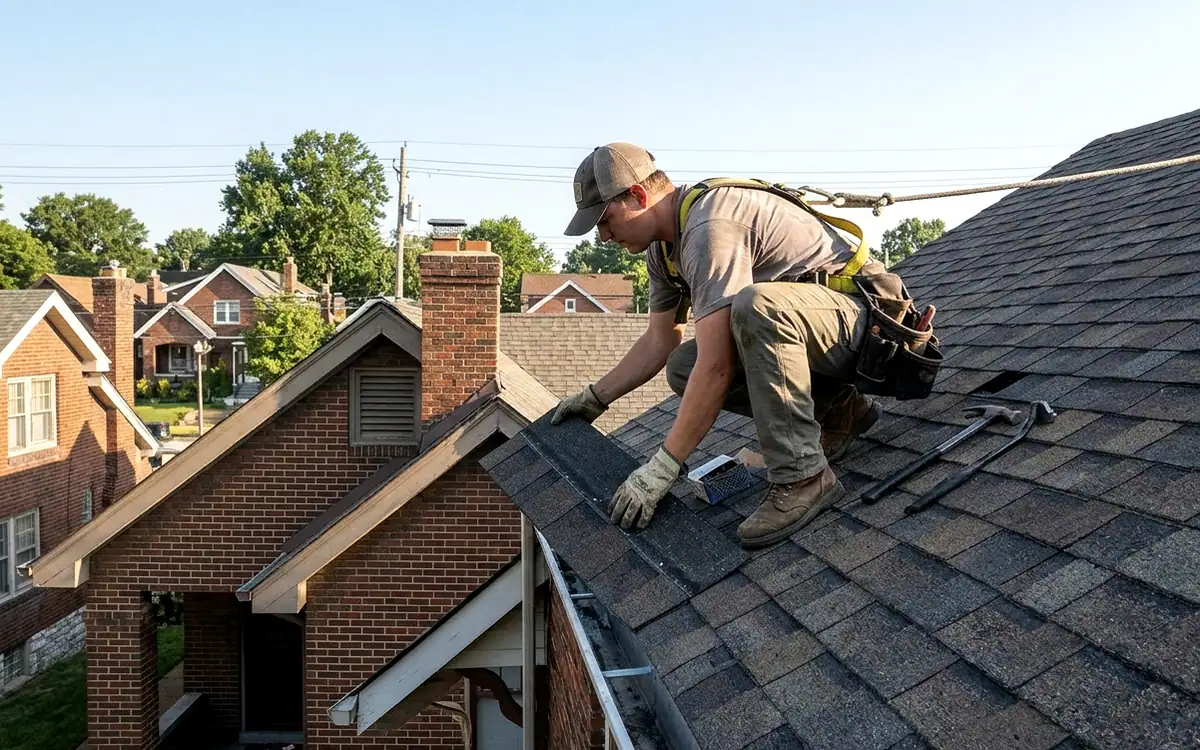
Roof repair means replacing failed shingles, resealing exposed fasteners and edges, and fixing small areas of rotted decking so the rest of the roof keeps working. You need it after missing shingles, ceiling stains, or granules in the gutters. A visit starts on the ground, moves to the roof and attic, and ends with us walking you through photos of each problem and the fix.
How we handle roof repair on St. Louis homes
A roof rarely fails all at once. It loses a shingle in a March windstorm, a sealant bead dries out by August, and a nail pops through during the first hard freeze. Each one is a small hole, and each one lets water reach the decking underneath. Repair is the work of finding those small failures and closing them before the damage spreads to the rafters and the ceiling below.
Our crews start with what the roof is telling us. We look at the field of shingles for cupping and curling, then at every penetration, edge, and transition. Fasteners get checked for backing out, and sealed edges get checked for lifting. A repair done right replaces only what failed and leaves the surrounding roof undisturbed, so you pay for the problem and not for a bigger project.
Repair is not always the right answer, and we say so when it is not. If a slope is past its life, patching it only buys a season or two. If the damage is limited to a few spots on a roof with years left, repair is the sensible move. We walk you through photos of both so the decision is yours and rests on what is actually up there.
Which repair approach fits your roof?
Single shingle replacement
Best for isolated damage on a roof with years left. We match the shingle type and weathered color as closely as the current product line allows and hand-seal each new tab.
Resealing and re-fastening
When shingles are intact but loose, we re-fasten them with proper nails and fresh sealant. It is a modest fix that stops the next windstorm from taking them.
Decking section replacement
Where water has softened the sheathing, we cut out the bad plywood or boards, fasten new decking to the rafters, and rebuild the shingle courses above it.
Staged repair plan
On an older roof we fix what is leaking now and list what will fail next. You see the order of work, so you can budget for replacement instead of facing it as an emergency.
What does roof repair cost in St. Louis?
Price follows three things: how much roof is involved, how steep and tall the house is, and whether the decking underneath has rotted. A single-story ranch with a few shingles down is a short visit. A three-story brick flat with a steep slope needs more safety setup and takes longer. Older roofs sometimes hide wet decking that only shows once shingles come off, so the ranges below leave room for that discovery.
Compare every roofing and siding price range or plan the order of your exterior work.
| Work | Typical range |
|---|---|
| Small shingle and sealant repair | $275 to $635 |
| Pipe boot and nail pop sweep | $195 to $465 |
| Decking section plus shingles | $615 to $1,480 |
| Multi-spot repair on one slope | $870 to $1,935 |
These are typical St. Louis ranges for common repairs, not a quote, and your roof may fall above or below them.
What a roof repair visit looks like, start to finish
- 1
Ground check and attic look
We walk the property first, noting missing pieces, stains, and gutter debris, then climb into the attic to look for damp decking, pinpoints of light, and water trails running down the rafters.
- 2
Roof walk with photos
A crew member walks each slope, presses on suspect shingles, and photographs every failure. You see what failed, where it sits, and why, so nothing about the work comes as a surprise.
- 3
Remove only what failed
Damaged shingles are lifted with a flat bar, nails are pulled, and any soft or stained decking is cut out back to solid wood. Sound shingles around the repair stay exactly where they are.
- 4
Replace, fasten, and seal
New shingles go in with the correct nail count in the correct zone, then get hand-sealed. Exposed fasteners and edges are covered, and underlayment is lapped so water sheds over it.
- 5
Cleanup and walk through
We run a magnet over the lawn and driveway for stray nails, clear debris from the gutters, and show you the finished photos so you can see each repair before we pack up.
How do you know your roof needs repair and not replacement?
Missing or lifted shingles
Look at your yard and gutters after wind. A bare patch of black felt, or a shingle flipped back on itself, means the sealant strip has let go and that area is open to rain.
Ceiling stains after rain
A tan ring that grows after storms points to a slow leak above. The stain is usually offset from the real entry point, so the repair starts with tracing it upslope.
Granules in the downspouts
Dark, sandy grit collecting at the downspout outlet is the protective surface wearing off your shingles. A little is normal on a new roof, but heavy buildup signals aging on that slope.
Nail heads showing through
Small bumps or rust dots on the shingle surface are nails pushing up as the deck moves with heat and cold. Each one is a pinhole waiting to leak under the shingle above.
Curled or cupped shingle edges
Corners turning up toward the sky mean the mat has dried out. When curling shows on one slope only, usually the south or west face, we can often repair that area rather than replace it.
Daylight or damp in the attic
On a bright day, pinpoints of light through the decking are open gaps. Dark, damp sheathing or flattened insulation under one spot tells us where water has been getting in.
What St. Louis weather does to a roof between repairs
St. Louis roofs work harder than most. Summer afternoons push attic temperatures high enough to bake the oils out of asphalt, then a spring storm cools the surface in minutes. That swing, plus freeze-thaw cycles through winter, loosens sealant strips and works nails upward. By the time a homeowner sees a stain, the shingles above have usually been moving for a couple of seasons. South and west slopes show it first.
Housing stock matters too. A 1920s brick bungalow in south city often has a steep main roof with a low, flat rear section and plenty of valleys, each a place where water slows down and finds a gap. Ranch homes in the county have long, simple slopes with plumbing vents and a chimney in the way. Newer St. Charles County subdivisions have cut-up rooflines with many hips and dormers. The repair changes with each.
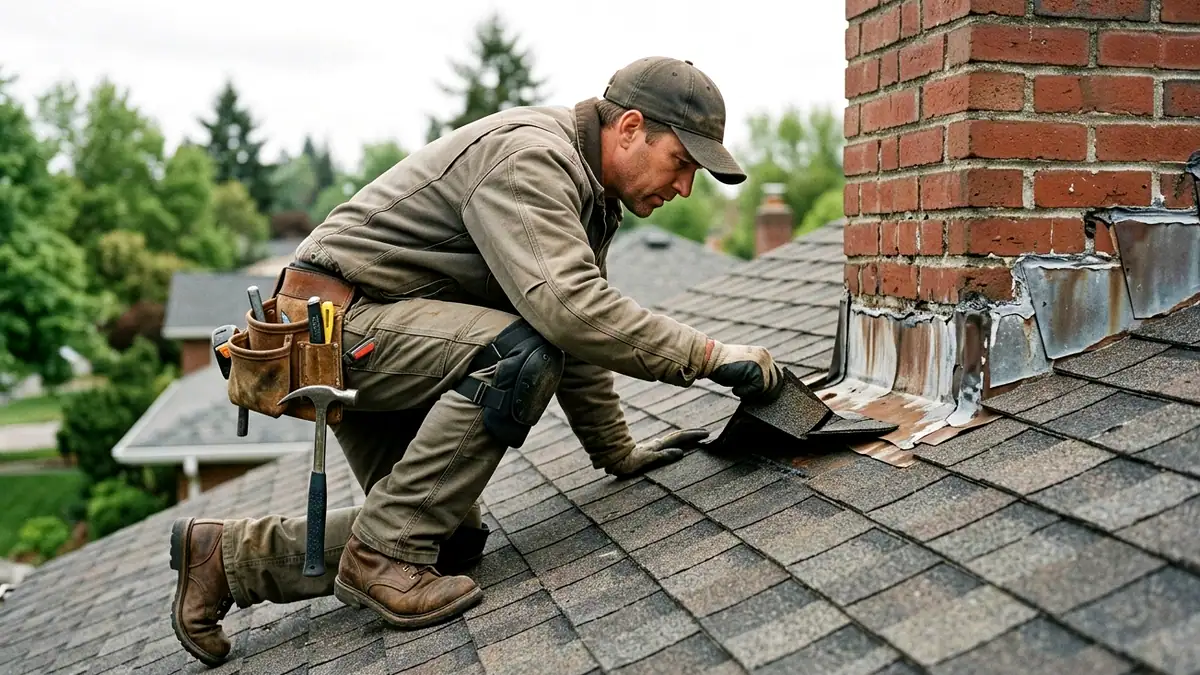
Where we handle roof repair
The city, the counties and the towns below cover most of the homes we work on. If yours is not listed, call and ask.
- City of St. Louis 63102
- St. Louis County, MO 63105
- St. Charles County, MO 63301
- Florissant, MO 63031
- Chesterfield, MO 63017
- Oakville, MO 63129
- St. Charles, MO 63301
- O'Fallon, MO 63366
- St. Peters, MO 63376
- Kirkwood, MO 63122
- Mehlville, MO 63125
- Belleville, IL 62220
- University City, MO 63130
- Ballwin, MO 63011
- Wentzville, MO 63385
- Hazelwood, MO 63042
- Webster Groves, MO 63119
- Edwardsville, IL 62025
- Collinsville, IL 62234
- Alton, IL 62002
- O'Fallon, IL 62269
- Arnold, MO 63010
- Affton, MO 63123
- Jefferson County, MO 63050
Shingle, siding and window lines we install and repair around St. Louis include GAF, Owens Corning, CertainTeed and James Hardie, plus the other brands below.
- GAF
- Owens Corning
- CertainTeed
- IKO
- Atlas
- Malarkey
- James Hardie
- LP SmartSide
- Alside
- Mastic
- DaVinci
- Velux
- Carlisle
- Firestone
Roof Repair questions
How long does a typical roof repair take on a St. Louis home?
Most single-area repairs wrap up in a few hours once the crew is on the roof, and a larger multi-spot repair on one slope can fill a day. Steep brick houses take longer because of the safety setup. Weather decides the rest, since we do not open a roof when rain is moving in.
Can roof repair be done in winter, or should I wait for spring?
Yes, we repair roofs through winter whenever it is dry enough to work safely. Cold shingles are brittle, so we handle them carefully and hand-seal tabs, since factory sealant may not activate until warmer days. For an active leak we do not wait, because water in a freezing attic does damage quickly.
When does patching a roof cost more than replacing it?
When a slope has failures every few feet, repeated patches add up and still leave aging shingles around them. If you are paying for repairs year after year, or the decking is soft in several places, replacement usually costs less over time. We show you photos and the pattern of failure so you can judge.
Will new shingles match the faded ones on my older roof?
Not perfectly. Sun and weather fade shingles, and product lines change, so a new tab can look darker at first. We pick the closest color and pull replacement pieces from less visible spots when possible. On most roofs the difference softens within a season or two of weathering.
Do you repair roofs on brick two-family flats with shared walls?
Yes. Flats often have a steep front slope, a low rear roof, and a parapet or party wall where the roofs meet. We check the wall joints and the rear section as carefully as the shingled slope, because those transitions are where water gets in on these buildings.
Related work we often pair with roof repair
Roof Leak Repair
Find the real leak source. The stain on your ceiling is rarely under the hole in your roof.
Roof Flashing Repair
Flashing joint repair. Flashing is the thin metal and rubber that turns water away at every joint in a roof.
Roof Inspection
Roof inspection, top to bottom. A roof inspection shows you what the shingles, flashing and vents are doing before water finds the weak spot.
Roof Replacement
Full tear-off, start to finish. A roof replacement strips the old covering down to the deck, repairs what is hiding underneath, and builds a new system on top.
Need roof repair in St. Louis?
Call any hour. A roofer answers, asks a few questions and sets up a visit.