Roof ventilation in St. Louis: balanced airflow for a longer roof life
A roof needs air moving under it to shed summer heat and winter moisture. We add or correct intake and exhaust vents so the attic stays closer to outdoor temperature, and shingles, framing and energy bills benefit.
- Answered 24/7
- Roof Care & Claims
- City, county and Metro East
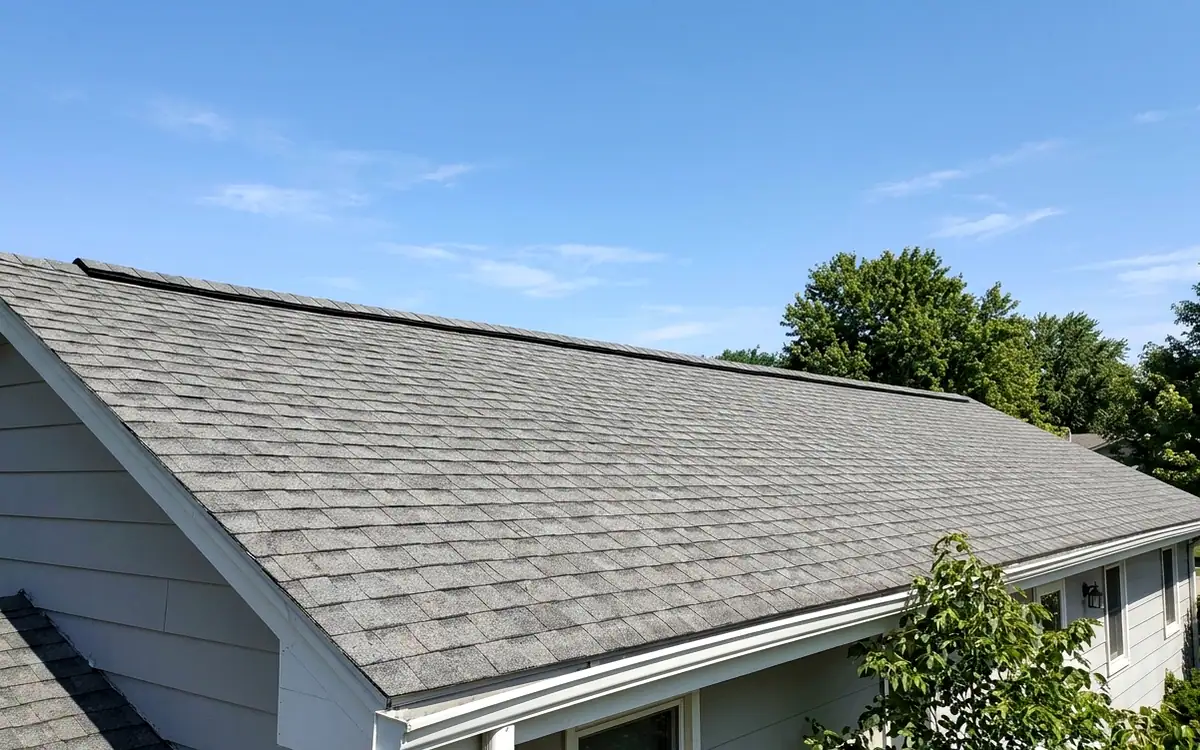
Roof ventilation is the balance of intake vents at the eaves and exhaust vents near the ridge that keep air moving through the attic. You need it when the upstairs runs hot, the attic shows frost or damp wood, or shingles wear early. A visit measures vent area, checks airflow paths and fixes the gaps.
How we handle roof ventilation on St. Louis homes
An attic is meant to breathe. In July the sun heats the roof deck until the space underneath can reach well beyond outdoor temperature, and that heat cooks shingles from below while pushing it down into the rooms. In January the opposite happens: warm, moist air from the house rises into a cold attic, condenses on nails and rafters, and soaks the wood.
The cure is not simply more vents. It is the right combination, intake at the soffits low on the roof and exhaust at or near the ridge, so air enters low, rises, and leaves high. Too much exhaust without intake pulls air from the wrong places, and blocked soffits turn even a brand-new ridge vent into a decoration.
We start by counting what is already there: ridge, box vents, gable louvers, soffit slots, bathroom and kitchen fan ducts. Then we compare it to the attic floor area and fix the imbalance. Often the biggest improvement comes from clearing insulation that has been pushed over the soffit openings, a free correction that costs nothing in materials.
How do you know the attic is not breathing?
Upstairs rooms stay hot
If the second floor is stuffy long after sunset and the air conditioner runs constantly, the attic may be holding heat and radiating it down through the ceiling.
Frost or damp on attic nails
White frost on roofing nail tips or darkened sheathing in winter shows moisture is condensing instead of escaping. Over time it leads to mold, rot and wet insulation.
Icicles and ice at the eaves
A warm attic melts snow from underneath, and the water refreezes at the cold edge of the roof. Better airflow keeps the deck uniformly cold so snow stays put.
Shingles blistering or curling early
Excess heat bakes the oils out of asphalt shingles from below, causing blisters, curling and cracking years before the roof should show wear.
Bathroom fan venting into attic
A fan that ends at the insulation dumps a shower's worth of moisture into the space daily. It should run through a duct to a proper exterior outlet.
Soffit vents painted or blocked
Intake slots clogged by paint, insulation or debris leave exhaust vents with nothing to pull from. The vent count may look fine while the airflow is close to zero.
Why St. Louis attics take a beating from heat and humidity
St. Louis summers are hot and humid, and attics on dark asphalt roofs sit in the sun for hours. That heat speeds shingle aging and adds load to air conditioning. The 1950s to 1970s ranch homes common in St. Louis County often have a long, low roof with only a few small box vents and no ridge vent at all, which is an easy upgrade.
Winter brings its own risks. Older city brick homes may have plaster ceilings with gaps where warm air leaks upward, then meets a cold roof deck. Add freeze-thaw cycles and you get condensation, damp insulation and the occasional ice dam. Newer St. Charles County homes tend to be tightly built, so a few missing soffit vents can matter more than they would in a drafty old house.
How we diagnose and fix attic ventilation
- 1
Map the existing vents
We note every intake and exhaust opening, from soffit slots to ridge and box vents, and measure their net free area against the attic floor size to see where the balance stands.
- 2
Check the airflow path inside
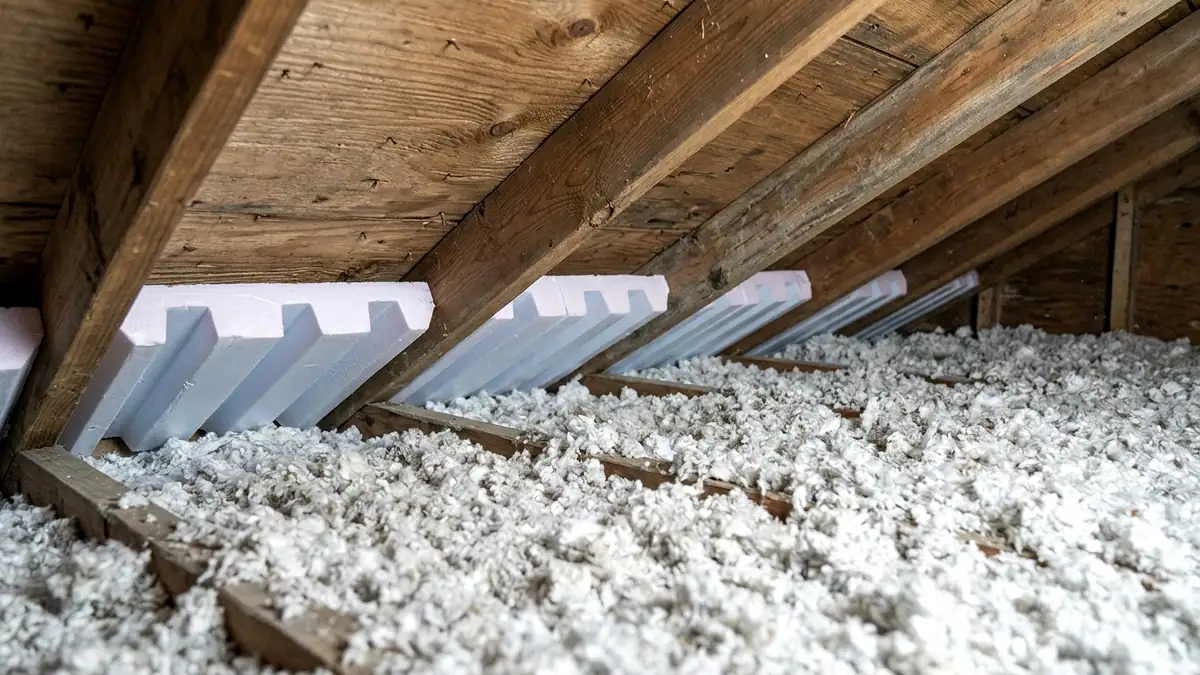
In the attic we look for insulation blocking soffits, missing baffles at the rafters, bath fan ducts ending short, and any dark staining that shows where air is stalling or moisture sits.
- 3
Design a balanced layout
We recommend which vents to add, replace or remove, aiming for roughly equal intake and exhaust, with intake at the lowest point of the roof and exhaust near the top.
- 4
Cut in and install vents
Crews cut the openings, install ridge vent or other exhaust, open soffit slots, and fit rafter baffles. Shingles are cut and re-lapped so the new vent sheds water like the rest of the roof.
- 5
Redirect problem ducts
Bathroom and kitchen fans are ducted to exterior outlets, sealed at joints, and sloped to drain. We confirm airflow from the attic side and show you the finished work.
Ventilation types and where each one works
Ridge vent with soffit intake
A continuous slot along the peak, paired with soffit vents. It moves air evenly along the full roof and is the usual first choice on simple gable roofs.
Box or static roof vents
Low-profile units placed high on a slope. They suit hip roofs with a short ridge or where a continuous vent will not fit, though they need careful placement and enough of them.
Gable end louvers
Vents in the gable wall. They work in certain attic shapes but can short-circuit airflow if mixed with a ridge vent, so we review the whole attic before keeping them.
Powered or solar attic fans
Motorized exhaust that can lower attic heat in summer. We use them cautiously, since a powered fan with weak intake can pull conditioned air from the living space.
What does roof ventilation cost in St. Louis?
Cost depends on the type of vent, the length of ridge involved, and how much work is needed from inside the attic. Adding a few box vents is a short job. Cutting a ridge slot along a long hip-and-valley roof, opening blocked soffits and installing baffles is more labor. If shingles must be removed and re-laid around a new vent, that adds time, and any rotted decking found along the way is priced separately.
Compare every roofing and siding price range or plan the order of your exterior work.
| Work | Typical range |
|---|---|
| Add box vents (per vent, installed) | $135 to $295 |
| Ridge vent on a standard gable roof | $565 to $1,235 |
| Soffit vent installation with baffles | $385 to $875 |
| Bath fan duct rerouted to exterior | $245 to $595 |
Ranges are typical for St. Louis planning and not a quote, and roof design and attic access can move them.
Where we handle roof ventilation
The city, the counties and the towns below cover most of the homes we work on. If yours is not listed, call and ask.
- City of St. Louis 63102
- St. Louis County, MO 63105
- St. Charles County, MO 63301
- Florissant, MO 63031
- Chesterfield, MO 63017
- Oakville, MO 63129
- St. Charles, MO 63301
- O'Fallon, MO 63366
- St. Peters, MO 63376
- Kirkwood, MO 63122
- Mehlville, MO 63125
- Belleville, IL 62220
- University City, MO 63130
- Ballwin, MO 63011
- Wentzville, MO 63385
- Hazelwood, MO 63042
- Webster Groves, MO 63119
- Edwardsville, IL 62025
- Collinsville, IL 62234
- Alton, IL 62002
- O'Fallon, IL 62269
- Arnold, MO 63010
- Affton, MO 63123
- Jefferson County, MO 63050
Shingle, siding and window lines we install and repair around St. Louis include GAF, Owens Corning, CertainTeed and James Hardie, plus the other brands below.
- GAF
- Owens Corning
- CertainTeed
- IKO
- Atlas
- Malarkey
- James Hardie
- LP SmartSide
- Alside
- Mastic
- DaVinci
- Velux
- Carlisle
- Firestone
Roof Ventilation questions
Will better roof ventilation really lower my cooling bill?
It can help, mostly by letting the attic shed heat so the ceiling radiates less into the rooms below. The size of the effect depends on insulation, ductwork and roof color. Think of ventilation as one piece of the attic system, which works best alongside good insulation and air sealing.
Can I have too many vents on my roof?
Yes. Mixing several exhaust types, such as a ridge vent plus box vents plus a powered fan, can create short loops where air enters one vent and leaves another without sweeping the attic. We look at the whole picture and often remove vents instead of adding them.
How do I tell if my soffit vents are blocked?
From the attic, shine a light at the eaves and look for insulation pressed against the roof deck near the edge, or paint filling the slots. From the ground, a soffit with no visible openings may be solid. If daylight cannot be seen through the vents, air cannot get in either.
Does ridge vent leak in heavy St. Louis storms?
A properly installed ridge vent with a baffle and capped with ridge shingles sheds rain well. Leaks usually trace to a poorly cut slot, missing end caps or wind-driven rain from a low-profile unit that was never meant for exposed locations. We install them with weather exposure in mind.
Should I fix attic ventilation before or during a roof replacement?
During is usually the most efficient time. With the shingles already off, cutting a ridge slot and fitting baffles is simpler and cheaper, and the new vent is flashed in with the new roof. If your roof is years from replacement, a standalone upgrade still makes sense.
Related work we often pair with roof ventilation
Attic Insulation
Insulate the attic floor. Heat leaves a house mostly through the ceiling.
Roof Replacement
Full tear-off, start to finish. A roof replacement strips the old covering down to the deck, repairs what is hiding underneath, and builds a new system on top.
Ice Dam Roof Repair
Ice dam damage repair. An ice dam forms when heat from the house melts snow on the roof and the water refreezes at the cold eave.
Roof Inspection
Roof inspection, top to bottom. A roof inspection shows you what the shingles, flashing and vents are doing before water finds the weak spot.
Need roof ventilation in St. Louis?
Call any hour. A roofer answers, asks a few questions and sets up a visit.