Roof leak repair in St. Louis, MO: tracing where water gets in
The stain on your ceiling is rarely under the hole in your roof. Water travels along decking and rafters before it drops, so we trace the full path first and then fix the true entry point.
- Answered 24/7
- Roof Repair
- City, county and Metro East
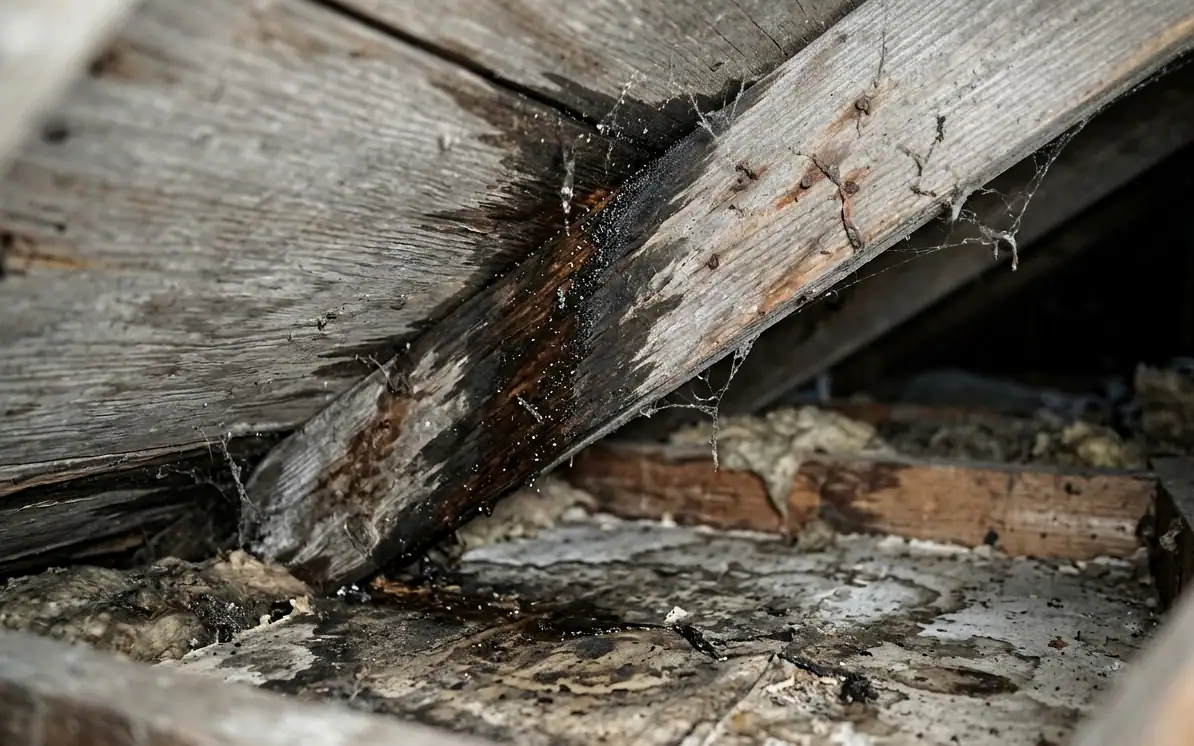
Roof leak repair is the process of tracing water from a ceiling stain or drip back through the attic and across the roof to its true entry point, then sealing or replacing the failed part. You need it when stains appear or grow after rain. A visit includes an attic check, a roof inspection, and sometimes a controlled water test.
How can you tell where your roof leak really is?
Stain far from any damage
If the stain sits in the middle of a ceiling while the visible roof damage is near an outside wall, the water is traveling along framing. The entry is usually uphill of the stain.
Leaks only in wind-driven rain
A leak that appears only when rain blows from one direction points to a vertical joint, such as a wall, dormer, or chimney, where sideways water gets behind the metal.
Drips during snowmelt
Leaks that show up as snow melts and not during rain often start at the eaves or in valleys, where meltwater lingers and can seep under the lowest shingle courses.
Rust on attic nail tips
Orange rust around nail tips and brown streaks on rafters mark old leaks or condensation. Fresh dampness on the same spots tells us the water path is still active.
A stain ring that keeps growing
Concentric tan rings mean the area has been wetting and drying repeatedly. Each new ring is another rain event, and the damage inside the ceiling is bigger than the stain suggests.
Musty smell in one room
A damp smell confined to a single room or closet often follows a hidden leak, and wet insulation above it can hold moisture for weeks after the rain stops.
How we trace and repair a roof leak, step by step
- 1
Interview and interior look
We ask when the leak appears, in what weather, and how it has changed, then examine ceilings and walls. Timing and wind direction give us clues before we ever touch the roof.
- 2
Moisture mapping in the attic
We trace staining along rafters and decking, measure damp wood with a meter, and mark the wet zone. The map points us to a short list of roof features uphill.
- 3
Uphill roof inspection
On the roof we examine every feature within that zone: shingle fasteners, vents, flashing, and seams. We photograph anything that has cracked, lifted, rusted, or separated.
- 4
Controlled water test
If the cause is unclear, we spray one section at a time from the bottom upward while someone watches inside. The first section that produces a drip identifies the entry.
- 5
Repair and retest
We fix the confirmed source, replacing the failed part instead of covering it, then retest the same way. You see the dry attic and the photos before we leave.
How we handle roof leak repair on St. Louis homes
Water follows gravity and surface tension, and neither cares where your ceiling stain shows up. It enters at a hole, runs down the underside of the decking until it meets a rafter or a nail, then travels along that wood before dripping. The drip point can sit six feet or more from the entry. Sealing the spot above the stain is how people end up with the same leak every spring.
We trace from both ends. Inside, we follow staining and moisture along rafters and the underside of the sheathing, using a moisture meter to find damp wood you cannot see. Outside, we study everything uphill of that point: shingles, flashing, vents, and wall joints. The two paths meet at one spot, and that is where the repair belongs.
When the cause is not obvious, we run a controlled water test. A hose starts below the suspected area and moves upslope in stages while someone inside watches the ceiling. The moment water appears, we know which stage is the entry. It takes patience, but it replaces guesswork with a confirmed answer before we cut, seal, or replace anything.
Where St. Louis roofs most often leak
Many south city brick homes have built-in box gutters, a lined trough hidden behind the roof edge. When the lining cracks, water runs down the inside of the wall and shows up as a stain on a second-floor ceiling, far from any roof surface you can see. These leaks mimic roof leaks, so tracing them takes care and a look at the roof edge as well as the field.
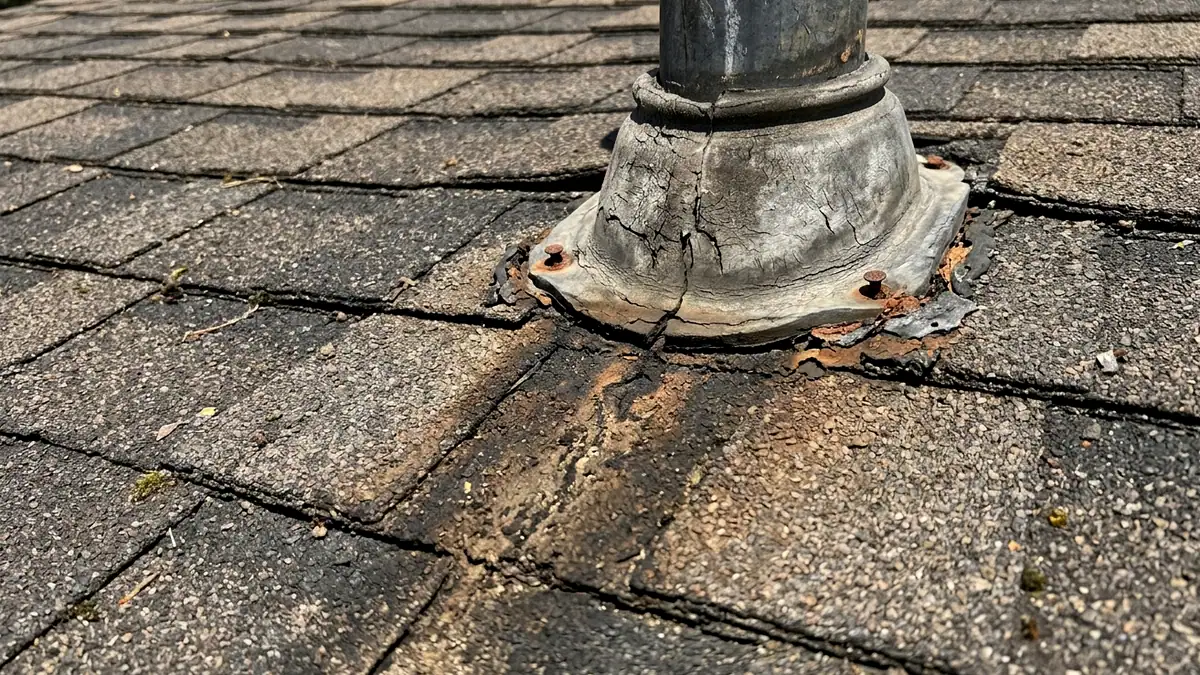
Out in the county, 1950s to 1970s ranches tend to leak at plumbing vent boots and where a later addition meets the original wall. Newer St. Charles County subdivisions leak most in valleys and around dormers. Humid summers add a twist: condensation on cool attic ducts can drip like a roof leak, so we check that first, before we cut into a roof that may be perfectly sound.
Ways we fix a leak once we have found it
Replace the failed component
A cracked vent boot, a rusted nail, or a torn shingle is replaced with a new part, not covered with sealant, so the repair lasts as long as the surrounding roof.
Rebuild the flashing joint
If the leak starts at a wall, dormer, or valley, we open the joint and re-lay the metal in layers so water sheds over each piece instead of behind it.
Cut out wet decking
When water has softened the sheathing around the entry, we cut back to solid wood and fasten new decking before reroofing the area, since shingles over soft wood fail again.
Re-lap underlayment
In older roofs, torn or brittle underlayment can be the real culprit. We expose it, replace the damaged strip, and lap it correctly with the shingle courses above.
What does roof leak repair cost in St. Louis?
Tracing a leak takes time, and time is part of the price. A simple vent boot leak is quick to find and fix. A leak that moves through framing and shows up far from its source can need an attic survey and a water test before any repair starts. The repair itself then depends on the part that failed and whether wet decking or insulation has to be replaced as well.
Compare every roofing and siding price range or plan the order of your exterior work.
| Work | Typical range |
|---|---|
| Leak trace with attic survey | $215 to $485 |
| Pipe boot or vent collar replacement | $235 to $520 |
| Valley or wall joint rebuild | $540 to $1,365 |
| Wet decking cutout and shingles | $625 to $1,590 |
These ranges are typical for leak work in the St. Louis area, not a quote, and a leak that has soaked insulation or drywall adds repair beyond the roof.
Where we handle roof leak repair
The city, the counties and the towns below cover most of the homes we work on. If yours is not listed, call and ask.
- City of St. Louis 63102
- St. Louis County, MO 63105
- St. Charles County, MO 63301
- Florissant, MO 63031
- Chesterfield, MO 63017
- Oakville, MO 63129
- St. Charles, MO 63301
- O'Fallon, MO 63366
- St. Peters, MO 63376
- Kirkwood, MO 63122
- Mehlville, MO 63125
- Belleville, IL 62220
- University City, MO 63130
- Ballwin, MO 63011
- Wentzville, MO 63385
- Hazelwood, MO 63042
- Webster Groves, MO 63119
- Edwardsville, IL 62025
- Collinsville, IL 62234
- Alton, IL 62002
- O'Fallon, IL 62269
- Arnold, MO 63010
- Affton, MO 63123
- Jefferson County, MO 63050
Shingle, siding and window lines we install and repair around St. Louis include GAF, Owens Corning, CertainTeed and James Hardie, plus the other brands below.
- GAF
- Owens Corning
- CertainTeed
- IKO
- Atlas
- Malarkey
- James Hardie
- LP SmartSide
- Alside
- Mastic
- DaVinci
- Velux
- Carlisle
- Firestone
Roof Leak Repair questions
Why does my ceiling only leak when the wind blows from one direction?
Wind-driven rain pushes water sideways into joints that normally shed it, such as wall flashing, dormer sides, and chimney edges. If the leak shows up only with a certain wind, the entry is almost always on the face of the roof or wall exposed to that direction.
How do you tell a roof leak from attic condensation?
Condensation appears on cold surfaces such as nail tips, ductwork, and the underside of the decking, often across a wide area and in cold or humid weather. A roof leak leaves a trail from one entry point and gets worse during rain. A moisture meter and the timing help us tell them apart.
Can a roof leak be traced if it has not rained recently?
Often yes. Stains, rust, and dark wood in the attic leave a record of the water path, and a controlled hose test can reproduce the leak on a dry day. We prefer testing in dry weather because we can isolate each roof feature one at a time.
Should I put roofing cement over the stain area myself?
We would advise against it. Cement sealed over the wrong spot hides the real path and traps moisture, and the stain you see is rarely under the actual hole. It also makes the later repair messier. A temporary bucket and a call let us find the true source.
How long can a slow roof leak go before it damages the framing?
Small leaks can run for a year or more before they show on a ceiling, but the wood is wetting and drying that whole time. Prolonged moisture rots decking, stains rafters, and grows mold in insulation. Once the stain is visible, the damage inside is usually larger than it looks.
Related work we often pair with roof leak repair
Roof Flashing Repair
Flashing joint repair. Flashing is the thin metal and rubber that turns water away at every joint in a roof.
Roof Repair
Everyday roof repair. Most roof problems start small: a few lifted shingles, a cracked boot, a nail that backed out.
Emergency Roof Tarping
Temporary dry-in. A tarp is not a repair.
Roof Ventilation
Attic airflow that protects shingles. A roof needs air moving under it to shed summer heat and winter moisture.
Need roof leak repair in St. Louis?
Call any hour. A roofer answers, asks a few questions and sets up a visit.