Soffit and fascia repair in St. Louis, from rot to capping
The soffit and fascia close the edge of your roof, keep out birds and wasps, and carry your gutters. We replace rotted board, install vented soffit and wrap trim in aluminum so it holds up.
- Answered 24/7
- Siding
- City, county and Metro East
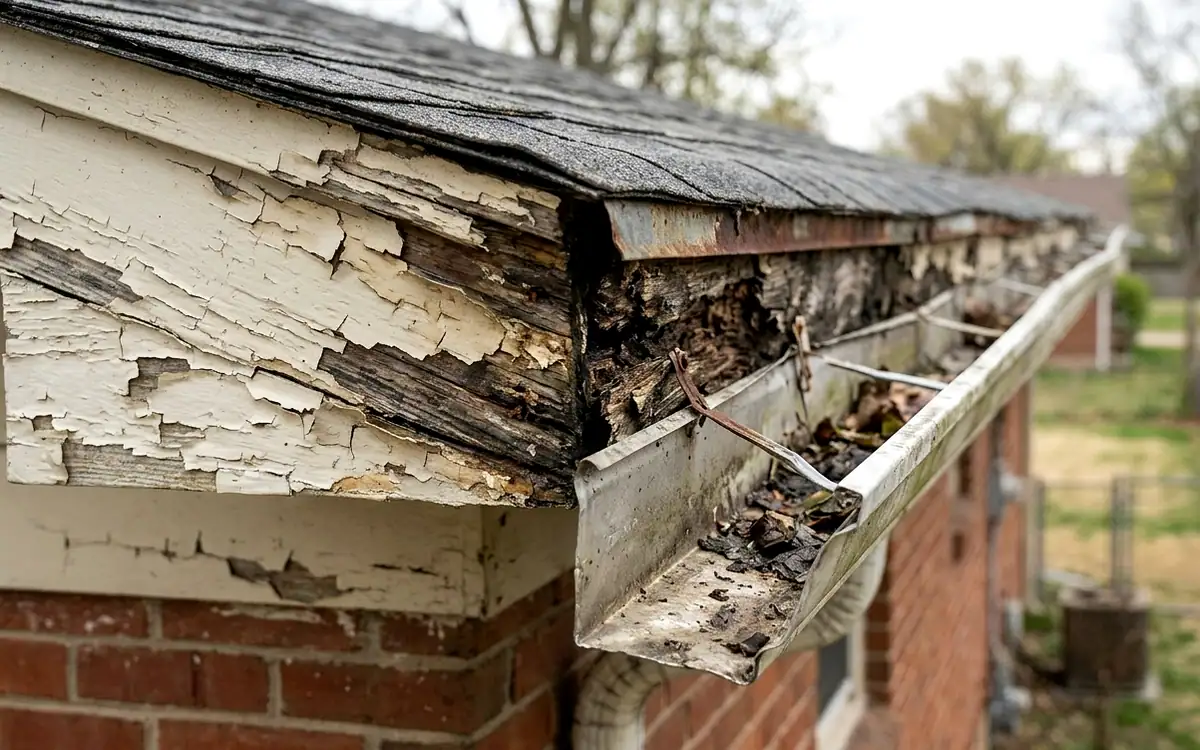
Soffit and fascia repair covers the boards and panels under and along the roof edge: the fascia board behind the gutter and the soffit under the eaves. You need it when wood rots, paint peels, pests get in or attic air is poor. A visit checks rafter tails, replaces damaged pieces and caps the trim.
How we handle soffit & fascia repair on St. Louis homes
The fascia is the board running along the ends of the rafters, behind the gutter, and the soffit is the underside of the eave between that board and the wall. Together they close the attic against weather and animals. They also carry the gutters and, with vented soffit, let fresh air into the attic. When they fail, water reaches the rafter tails and pests find a way inside.
Rotted fascia is the most common repair we see on older St. Louis houses. Gutters that overflow or leak soak the board over years, and paint cannot stop that. The cause often sits above the board, where a missing drip edge lets roof runoff run behind it. We cut out soft wood, check the rafter tails, and replace the board in lumber or a rot-resistant material, then correct the water path.
Aluminum capping wraps new or sound fascia and soffit in a pre-finished metal skin that does not need repainting. Vented soffit panels have slots or a continuous screen that feed attic ventilation. Closed soffit looks tidy but starves the attic of intake air, so we match vent area to the attic when we choose panels. Capping is a good fit for wood that is in good condition but has chronic peeling paint.
Materials for soffit and fascia
Wood board, replaced and painted
The right choice on historic cornices and houses where the original profile matters. New primed lumber is installed, painted, and maintained on a regular schedule.
Aluminum capping over sound wood
Pre-finished metal wraps the face and bottom edge of sound fascia. It is cut and bent on site, comes in many colors, and takes painting off the maintenance list.
Vented aluminum or vinyl soffit
Panels with continuous vent slots or spaced vents under the eave. They let fresh air into the attic and keep birds, squirrels and wasps out.
PVC and composite trim
Rot-proof boards for fascia where owners want a painted look without the weakness of wood. They need wider expansion gaps and care at joints but never soak up water.
What soffit and fascia repair costs in St. Louis
Soffit and fascia work is priced by the linear foot of roof edge, so a long ranch with a wide perimeter costs more than a narrow brick two-flat. Height matters because a second-story eave needs scaffolding. Rot that has reached rafter tails adds carpentry, and removing and rehanging gutters is part of nearly every job. Aluminum capping costs less than replacing wood but cannot cover soft board.
Compare every roofing and siding price range or plan the order of your exterior work.
| Work | Typical range |
|---|---|
| Replace fascia board, per linear foot | $14 to $27 |
| Vented soffit panels, per linear foot | $12 to $23 |
| Aluminum capping, per linear foot | $11 to $19 |
| Typical ranch, all eaves with gutters rehung | $3,274 to $6,918 |
These are typical planning ranges for the St. Louis area, not quotes, and rafter tail repair can change the total.
How we replace and cap soffit and fascia
- 1
Inspect the eaves from the ladder
We climb up and probe fascia, check rafter tails, look for pest entry points and note where gutters, drip edge and shingles meet the board.
- 2
Remove gutters and rotted board
Gutters come down carefully so they can be reused when sound. Rotted fascia and damaged soffit are cut out, and any wet rafter tails are repaired or sistered.
- 3
Fix the water path
Drip edge is added or reset so roof runoff drops into the gutter, and any gutter leaks or flashing gaps feeding the board are corrected before new trim goes on.
- 4
Install new board and vented soffit
Fresh fascia is fastened to the rafter ends, and soffit panels with vent slots go in, using continuous or spaced vents sized to the attic space.
- 5
Cap, caulk and rehang gutters
Aluminum capping is bent to fit and nailed through hidden fasteners, joints are sealed, and gutters are rehung level with the correct slope to the downspouts.
What tells you the eaves need soffit or fascia work?
Peeling paint along the roof edge
Paint that blisters and peels along the fascia usually means moisture is working from behind. Repainting alone buys little time when water keeps reaching the board.
Soft or crumbling fascia board
Probe the board with a screwdriver tip from a ladder, or look for dark, spongy wood behind the gutter. Soft spots mean rot has moved past the paint.
Gaps where animals get in
Squirrels, starlings and wasps enter through holes at soffit corners and gaps beside the fascia. Droppings, chewing marks or nests are the sign.
Sagging gutters near rotted board
Gutters pull away when screws bite into mush. If a run sags or spikes work loose, the fascia behind it is likely soft.
Stained or drooping soffit panels
Brown water stains, bowed plywood or hanging vinyl panels point to a roof or gutter leak above. The cause needs to be found as well as the panel replaced.
Hot attic and ice at eaves
Blocked soffit vents mean poor attic airflow, which raises summer heat and encourages ice at the eaves in winter. Clearing or adding vented soffit helps.
Soffit and fascia on St. Louis houses
Older city brick houses often have deep wood cornices, box gutters and painted wood eaves that sit under slate or tile roofs. These are not simple replacements. We repair what can be saved, rebuild decayed sections with matching profiles, and cap only where it will not hide the original design. Many south city blocks have uniform rooflines, so a rotten stretch of trim is easy to spot from the sidewalk.
On St. Louis County ranches, split levels and 1990s subdivision homes in St. Charles County, the eaves are typically shallow, with narrow wood fascia and plywood or vinyl soffit. Freeze-thaw cycles open the paint, and gutter overflow in spring storms soaks the fascia. Squirrels and starlings find any gap. New vented soffit and aluminum-wrapped fascia reduce upkeep and improve attic airflow during humid St. Louis summers.
Where we handle soffit & fascia repair
The city, the counties and the towns below cover most of the homes we work on. If yours is not listed, call and ask.
- City of St. Louis 63102
- St. Louis County, MO 63105
- St. Charles County, MO 63301
- Florissant, MO 63031
- Chesterfield, MO 63017
- Oakville, MO 63129
- St. Charles, MO 63301
- O'Fallon, MO 63366
- St. Peters, MO 63376
- Kirkwood, MO 63122
- Mehlville, MO 63125
- Belleville, IL 62220
- University City, MO 63130
- Ballwin, MO 63011
- Wentzville, MO 63385
- Hazelwood, MO 63042
- Webster Groves, MO 63119
- Edwardsville, IL 62025
- Collinsville, IL 62234
- Alton, IL 62002
- O'Fallon, IL 62269
- Arnold, MO 63010
- Affton, MO 63123
- Jefferson County, MO 63050
Shingle, siding and window lines we install and repair around St. Louis include GAF, Owens Corning, CertainTeed and James Hardie, plus the other brands below.
- GAF
- Owens Corning
- CertainTeed
- IKO
- Atlas
- Malarkey
- James Hardie
- LP SmartSide
- Alside
- Mastic
- DaVinci
- Velux
- Carlisle
- Firestone
Soffit & Fascia Repair questions
What is the difference between soffit and fascia?
Fascia is the vertical board along the roof edge, and the gutter hangs from it. Soffit is the horizontal underside of the eave, stretching between the fascia and the wall of the house. People often say one when they mean the other, so we point to each part on the eaves of your house during the visit.
Why are squirrels or starlings getting into my soffit?
Animals follow small gaps, and rotted corners, loose panels and cracks beside the fascia are easy to enlarge. Once inside, they nest in the attic and chew wiring. Sealing the hole alone traps them in, so we repair the opening after confirming it is clear and finish with durable materials.
Does vented soffit really help my attic?
Yes. Soffit vents bring cool air in at the bottom of the attic, and the ridge or roof vents let warm air out at the top. That airflow lowers summer heat and keeps moisture from condensing in winter. Painted-over or insulation-blocked vents defeat the purpose, so we check the whole path.
Can fascia be covered with aluminum if the wood underneath is rotted?
No. Capping over soft wood traps moisture and hides decay, and nails will not hold in rotted board. Rot has to be cut out first, the cause fixed, and sound wood or a rot-proof board installed. Capping is for sound or new fascia, where it shields the wood and ends repainting.
How do I know if the rafter tails behind my fascia are rotted?
Fascia that has been wet for years often means the rafter ends are damp too. We probe them with a tool once the board comes off. Dark, soft or crumbling ends are cut back and reinforced with new lumber. Fixing only the fascia while rafter tails stay wet leads to repeat failures.
Related work we often pair with soffit & fascia repair
Gutter Repair
Fix the gutter, not the symptom. A gutter that sags, drips at a seam or hangs by a few old spikes can often be saved.
Seamless Gutters
New gutters, cut to fit. Seamless gutters are rolled from a coil of aluminum at your house, one continuous piece per run.
Roof Ventilation
Attic airflow that protects shingles. A roof needs air moving under it to shed summer heat and winter moisture.
Aluminum Trim Capping
Wood trim you stop painting. Capping wraps the exposed wood around your windows, doors and roof edge in custom-bent aluminum.
Need soffit & fascia repair in St. Louis?
Call any hour. A roofer answers, asks a few questions and sets up a visit.