Engineered wood siding in St. Louis, LP SmartSide style
Engineered wood siding gives a painted-wood look with the workability of lumber and a factory-applied coating. It is lighter than fiber cement and fits many older St. Louis houses where original wood trim still shows.
- Answered 24/7
- Siding
- City, county and Metro East
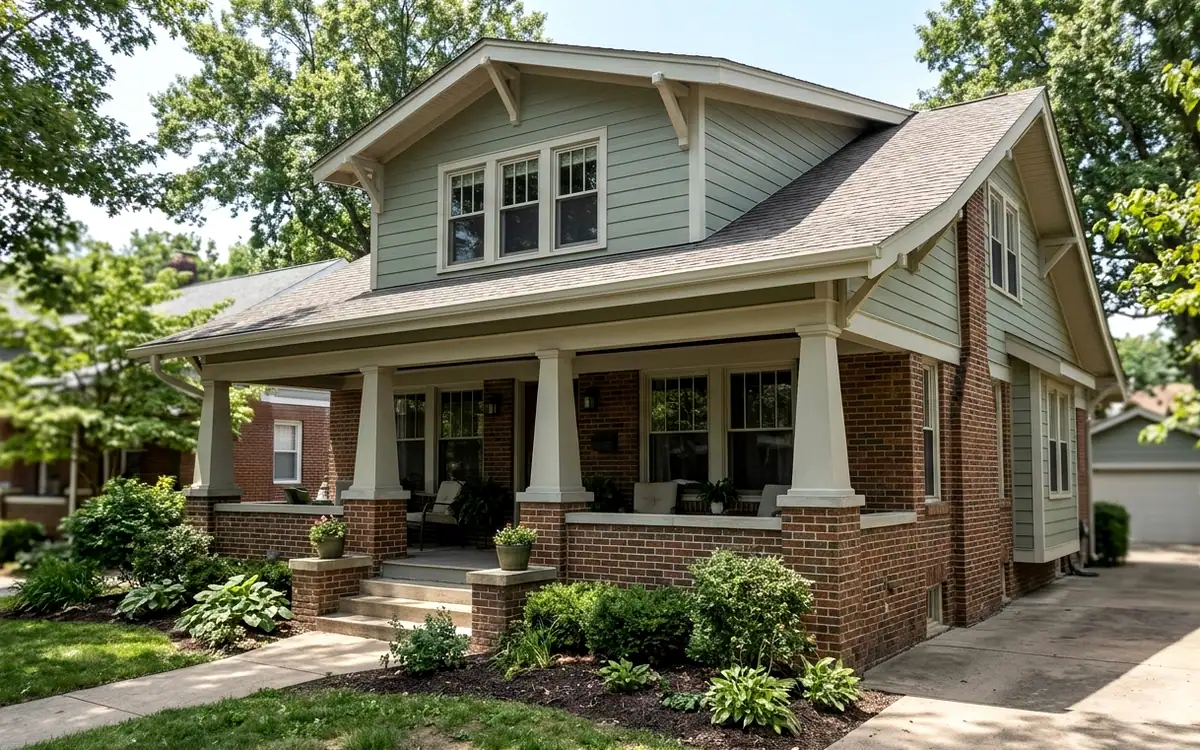
Engineered wood siding is made of treated wood strands pressed with resin and finished with a factory-applied coating, in products such as LP SmartSide. It cuts and nails like lumber, comes in lap, panel and trim profiles, and gives a painted-wood look at a lighter weight. A visit covers wall condition, profiles and edge sealing.
How we handle engineered wood siding on St. Louis homes
Engineered wood starts as wood strands, treated against rot and insects, then pressed with resin into long, straight boards. A factory-applied overlay and primer give the surface a smooth or wood-grain look. Because the strands are laid in an organized way, boards run flatter and straighter than much solid lumber, and they resist the splitting that plagues old cedar. Lengths of sixteen feet mean fewer joints on long walls.
Working it feels like carpentry. A standard carbide blade cuts it, finish nails drive without pre-drilling in most spots, and details like mitered corners and custom window surrounds are easy to build on site. That flexibility helps on older brick houses with dormers that were never square. Every cut edge, end and nail head must be sealed with the maker's edge paint or primer, since raw strand edges soak up water if left bare.
Weight is the practical benefit. Boards weigh well under fiber cement, so crews can handle long pieces on a second-story wall with fewer lifts and less risk to the material. In exchange, it expects more care on the details, with required gaps at trim, a clearance above roofs and decks, and a repaint cycle that keeps the coating sealed against St. Louis sun and storms.
Engineered wood profiles for different house styles
Lap siding in several reveals
Narrow to wide reveals, in smooth or cedar-grain faces, let you match the proportions of an older wood wall or give a ranch a clean modern look.
Shingle and cedar-look panels
Panels with a shingle or shake pattern work on gables, dormers and bungalow porches, adding texture that suits Tudor and craftsman style homes throughout older neighborhoods.
Panel and batten
Wide vertical panels with narrow battens over the joints give a board and batten wall that goes up quickly and works on additions and entry gables.
Matching trim and fascia boards
Trim boards in the same engineered material let corners, window casings and rakes expand and contract together with the wall, so joints stay tight over the seasons.
Engineered wood siding cost in the St. Louis area
Engineered wood usually lands between vinyl and fiber cement. The board itself costs more than basic vinyl, and the crew spends time sealing edges and painting. Primed boards need a field paint job, which adds labor but gives you any color. Detail-heavy walls with many windows, bump-outs and gables push prices up, as do tall walls that need scaffolding. Rot repair behind old wood siding is a common extra.
Compare every roofing and siding price range or plan the order of your exterior work.
| Work | Typical range |
|---|---|
| Primed lap boards, per square installed | $863 to $1,142 |
| Panel and batten or shingle accents, per square | $1,031 to $1,387 |
| Custom trim and corner boards, per home | $1,468 to $3,925 |
| Exterior paint on primed boards, per home | $3,174 to $6,840 |
Treat these as typical planning ranges for St. Louis, not quotes, since every wall and trim package is different.
How engineered wood siding is installed and sealed
- 1
Inspect the wall and old trim
We probe window casings and corner boards for rot, check wall straightness with a string line, and decide which trim pieces can stay and which should be rebuilt in new material.
- 2
Wrap and flash the wall
The wall gets house wrap, taped seams and flashing at every opening, with kickouts where roofs end against siding. Engineered boards need a dry wall behind them to stay stable.
- 3
Hang boards with correct gaps
Lap boards are nailed at the marked line with the specified clearance at trim, corners and roof edges. Those small gaps let the wood strands swell and shrink without bowing.
- 4
Seal every cut edge
Ends cut on site, notches around windows and nail holes are sealed with edge coating or primer before the next course covers them. This step protects the board where water can enter.
- 5
Paint or touch up the finish
Primed boards get two topcoats of quality exterior paint, and pre-finished boards get touched-up coating where cuts show. Then we walk the house to check lines and joints.
Why choose engineered wood over other siding?
You want the look of painted wood
Original wood clapboard or shingle siding on an older house is part of its character. Engineered boards repeat the grain and profile in a more stable material.
Custom trim and millwork details
Window crowns, corner boards, bump-outs and gable returns on city houses are cut and built on site with simple carpentry tools. Engineered trim boards keep those details sharp.
Walls that are not perfectly square
Older frames settle. Material that cuts like lumber lets the crew scribe boards to follow slightly out-of-plumb corners and curved walls without leaving visible gaps.
Concern about weight on upper stories
Boards are lighter than fiber cement, so crews carry long lengths up scaffolding with less strain and fewer chances of damage to the boards and your yard.
Wood siding that has split or checked
Cedar and pine boards crack along the grain as they dry and weather. Engineered strands resist splitting, so the surface stays tight and takes paint evenly.
A budget between vinyl and fiber cement
Engineered boards typically price between vinyl and fiber cement, making them a sensible step up when you want real texture without the highest material cost.
Engineered wood siding on St. Louis houses
Older St. Louis neighborhoods are full of houses where wood detailing is part of the street. In Webster Groves and Kirkwood, craftsman bungalows and Tudor revival homes often have wood clapboard on dormers and gables beside brick, and replacing that with vinyl looks flat. Engineered boards let a crew rebuild the original reveal and corner details, then paint the wall in a color that suits the era, without the soft rot that took the first boards.
Humidity and freeze-thaw cycles set the maintenance plan here. Boards stay stable if their edges are sealed, if they sit off the ground and roof surfaces, and if the paint coating is kept intact. Spring hail and wind-driven rain test the coating at corners, so a yearly walk-around looking for chipped paint and open joints helps. We explain what to watch on your specific walls when the job is done.
Where we handle engineered wood siding
The city, the counties and the towns below cover most of the homes we work on. If yours is not listed, call and ask.
- City of St. Louis 63102
- St. Louis County, MO 63105
- St. Charles County, MO 63301
- Florissant, MO 63031
- Chesterfield, MO 63017
- Oakville, MO 63129
- St. Charles, MO 63301
- O'Fallon, MO 63366
- St. Peters, MO 63376
- Kirkwood, MO 63122
- Mehlville, MO 63125
- Belleville, IL 62220
- University City, MO 63130
- Ballwin, MO 63011
- Wentzville, MO 63385
- Hazelwood, MO 63042
- Webster Groves, MO 63119
- Edwardsville, IL 62025
- Collinsville, IL 62234
- Alton, IL 62002
- O'Fallon, IL 62269
- Arnold, MO 63010
- Affton, MO 63123
- Jefferson County, MO 63050
Shingle, siding and window lines we install and repair around St. Louis include GAF, Owens Corning, CertainTeed and James Hardie, plus the other brands below.
- GAF
- Owens Corning
- CertainTeed
- IKO
- Atlas
- Malarkey
- James Hardie
- LP SmartSide
- Alside
- Mastic
- DaVinci
- Velux
- Carlisle
- Firestone
Engineered Wood Siding questions
Does LP SmartSide style siding swell when it gets wet?
Edges are the weak point. Boards with sealed edges and a coated face handle rain and humid summers fine. Raw cut ends that stay bare, or boards touching the ground or a roof, can swell. That is why the install details of sealing and gaps matter more than the board itself.
How does engineered wood compare with real cedar siding?
Cedar is beautiful but needs regular staining or painting and can split, warp or rot with age. Engineered boards are straighter, more consistent and resist splitting and insects because of their treatment. Cedar still wins for natural grain and easy repair on historic houses, so we talk through both.
How soon should engineered wood siding be repainted?
Factory-finished boards often hold their coating for many years, but any chipped paint, open joint or exposed nail head should be touched up promptly. Field-painted boards need a fresh topcoat on a similar schedule to other painted exteriors. South and west walls show wear first, so check them after each storm season.
Do engineered boards need to stay clear of the ground and roof?
Yes. Keep the bottom edge a few inches above grade, decks and flat roofs, and leave a clearance where siding meets shingle. Water pooling at the board end is the most common cause of swelling. We set clearances at the start of the job and check them against each house.
Is engineered wood a good option for a rear addition on a brick home?
It works well. A new rear addition often needs siding that suits both the old brick and fresh framing. Engineered boards go up fast, can be painted to coordinate with brick and trim, and are easy to detail at the joint where the addition meets the older masonry.
Related work we often pair with engineered wood siding
Siding Installation
Full siding installation. A new siding job is more than panels on a wall.
Fiber Cement Siding
James Hardie style board. Fiber cement board gives St.
Vinyl Siding
Vinyl siding options. Vinyl remains the most common siding on St.
Soffit & Fascia Repair
Roof edge trim repair. The soffit and fascia close the edge of your roof, keep out birds and wasps, and carry your gutters.
Need engineered wood siding in St. Louis?
Call any hour. A roofer answers, asks a few questions and sets up a visit.