Roofing across St. Clair County, Illinois (62220)
St. Clair County runs from the Mississippi River floodplain near East St. Louis out through Belleville and O'Fallon to farm towns like Millstadt and Smithton. We serve all of it with roofing, siding and gutter work.
- ZIP codes
- 62220, 62269, 62201, 62208, 62221
- County
- St. Clair County, IL
- Phone
- (314) 461-6440, answered 24/7
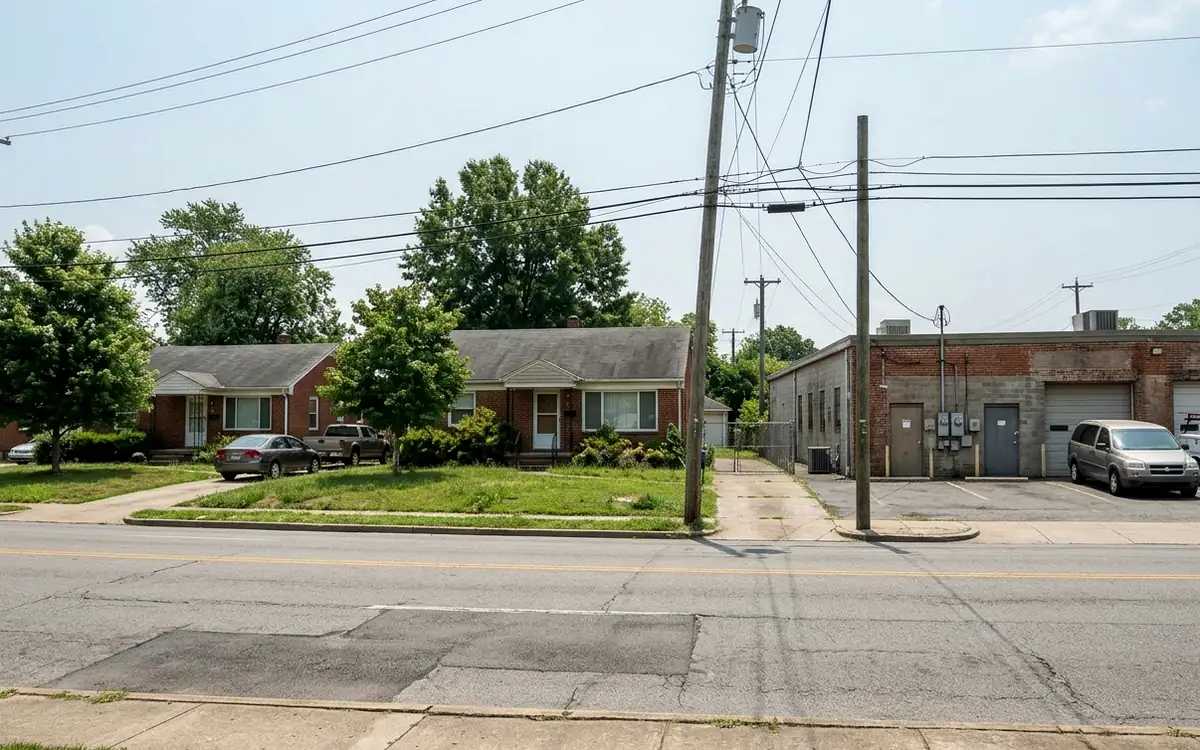
We repair and replace roofs, siding and gutters throughout St. Clair County, Illinois, including Belleville, O'Fallon, Fairview Heights, Swansea, Shiloh, Millstadt and Freeburg. Humid river-bottom air, older brick homes and low-slope commercial roofs shape the work. Call 24/7 and we explain what we find, with photos.
What St. Clair County, IL homeowners call us about
St. Clair County is the Illinois side of the Metro East, and its geography does much of the talking. The western edge sits low on the Mississippi floodplain known as the American Bottom, where air is humid and flat land holds water. Farther east the ground rises into Belleville, O'Fallon and the rolling farm country around Millstadt, Smithton and Freeburg. That mix explains why a single approach never fits every address here.
Because of that spread, the roofs differ. Old brick houses fill the oldest towns, while newer subdivisions surround O'Fallon, Shiloh and Fairview Heights. Strip centers, warehouses and shops along the busy highways have flat or low-slope roofs, and farmhouses and outbuildings in the east come with their own metal and shingle systems. We bring the right method for each building type rather than one standard approach.
We work calmly through each call. Describe what you see, and we ask a few practical questions about the roof, the age of the building and recent weather. Then we arrange an inspection, climb the roof and show you the evidence in photos. For storm damage after hours, the line is open 24/7 and we can arrange tarping when it is safe. You get a plain explanation of the findings and a sense of what can wait.
From floodplain flats to Belleville brick: roof types here
The county's housing stock spans late-nineteenth-century brick in Belleville to cul-de-sac subdivisions in O'Fallon and Shiloh built within the last few decades. Between them sit postwar ranches and split levels in Swansea and Fairview Heights, plus small farms toward the south and east. Asphalt shingles dominate, with slate, tile and metal on older and rural buildings. Knowing which era a house belongs to tells us a great deal before we climb up.
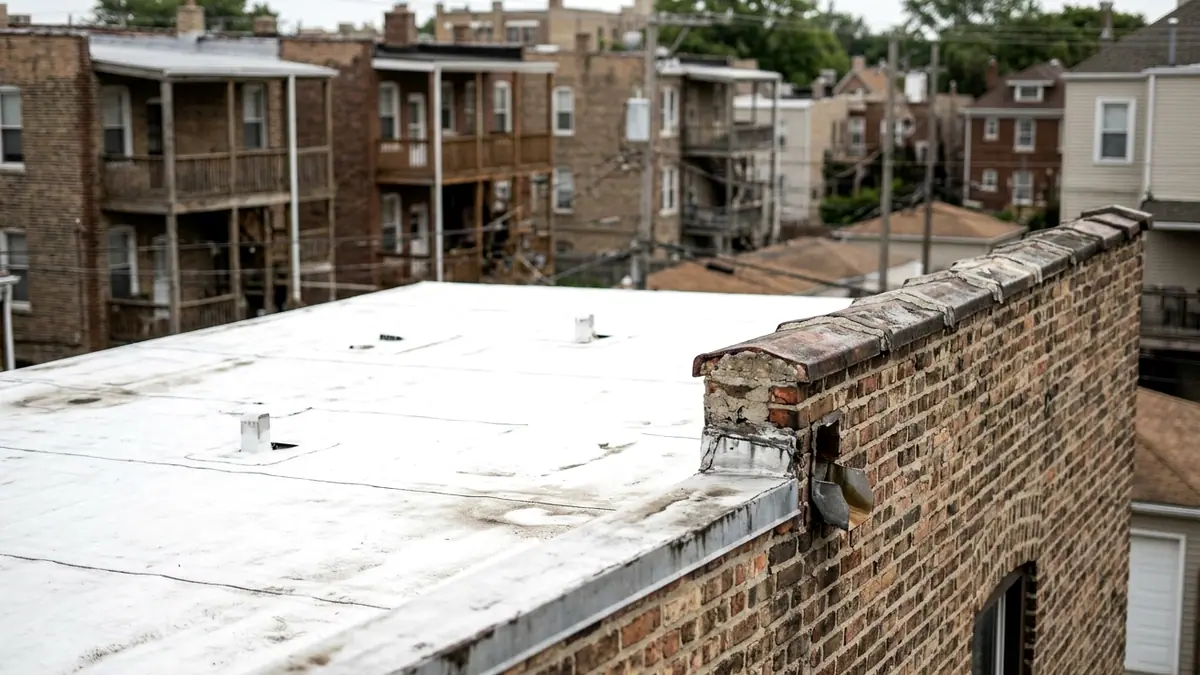
Commercial and public buildings add another layer. Low-slope roofs on shops, warehouses and offices along the highway corridors rely on single-ply membranes or built-up systems that live and die by drainage. Seams, flashing and drains matter more than the surface, and a roof can look fine until water stands for a week after rain. Penetrations for vents, drains and equipment are where most commercial leaks actually begin.
Moisture, ponding and age across St. Clair County
Attic moisture in humid bottomland air
Warm, damp air near the river floodplain condenses in poorly vented attics. Insulation turns damp, nails rust, and the underside of the decking darkens long before a leak appears in the ceiling.
Standing water on commercial roofs
Low-slope roofs with clogged drains or settled sections keep water for days. Seams soften, membranes blister and leaks emerge at the lowest point, often far from where the water first entered.
Aging shingles on postwar ranches
Ranch roofs in the older suburbs have been reshingled several times. Brittle, curled shingles and dry rubber collars let water in during wind-driven rain, particularly on slopes that face the weather.
Mortar and flashing failure on old brick
Brick chimneys and parapet walls in older towns lose mortar and sealant to freeze-thaw. Once flashing separates, water moves through the masonry and appears inside as peeling paint or damp plaster.
Poorly sealed roof penetrations
Exhaust fans, rooftop units and pipes on commercial and residential roofs are sealed with caulk and boots that age. A cracked seal beside a vent or unit sends water straight into the ceiling below.
Seeing one of these in St. Clair County, IL?
Call (314) 461-6440 any hour. We inspect in daylight and show you photos of what we find.
What our crew checks first on a St. Clair County roof
- Attic vents, insulation moisture and nail tips for rust
- Drains, low spots and seams on flat and low-slope roofs
- Curled or brittle shingles on slopes facing the weather
- Chimney mortar, parapet caps and wall flashing on older brick
- Seals around rooftop pipes, exhaust fans and mechanical units
Services St. Clair County, IL homes need most
Flat Roof Repair
Low-slope roof leaks fixed. Most St.
Flat Roof Replacement
Tear-off and a new flat roof. When patches stop holding, a full replacement resets the whole low-slope roof.
TPO Roofing
Welded white flat roofing. TPO is a single-ply white membrane whose seams are welded with hot air into one continuous sheet.
Roof Ventilation
Attic airflow that protects shingles. A roof needs air moving under it to shed summer heat and winter moisture.
Attic Insulation
Insulate the attic floor. Heat leaves a house mostly through the ceiling.
Parapet Wall & Coping Repair
Seal the top of the wall. The short brick wall around a flat roof takes more weather than any other part of the building.
Towns in St. Clair County with their own pages
Nearby areas we also cover
Roofing questions from St. Clair County, IL
Which St. Clair County towns do you serve?
We serve Belleville, O'Fallon, Fairview Heights, Swansea, Shiloh, Millstadt, Smithton, Freeburg, Dupo and the communities between them. Give us your address when you call and we confirm how we would handle your property. The line is answered 24/7, including during storms.
Why does my St. Clair County attic feel damp even without a leak?
Warm humid air can condense on cool surfaces in a poorly ventilated attic, wetting insulation and decking. The fix is usually better intake and exhaust airflow, sealed gaps at the attic floor and sometimes added insulation. We inspect the space, show you photos and explain which change matters most.
Can a flat commercial roof in St. Clair County be repaired instead of replaced?
Often. If the membrane is mostly sound, patching seams, replacing flashing and fixing drainage may solve the problem. If it is saturated, blistered across large areas or ponding persistently, replacement may be the better investment. We inspect, document and explain both paths so you can plan.
Do you do roof maintenance for St. Clair County homes?
Yes. Maintenance visits clear debris, check flashing and sealants, look at pipe boots and report on the condition of the whole roof. Catching a cracked boot or a clogged valley early is far cheaper than repairing the water damage behind it. Call to set up a visit.
Roof or siding trouble in St. Clair County, IL?
Call any hour. We set up a daylight inspection and walk you through what we find.