Commercial roofing in St. Louis for storefronts and apartments
We handle roofs on small commercial buildings, corner storefronts and multi-unit apartment buildings across the St. Louis area, where leaks affect tenants and customers and the work has to fit around occupied space.
- Answered 24/7
- Flat & Commercial Roofs
- City, county and Metro East
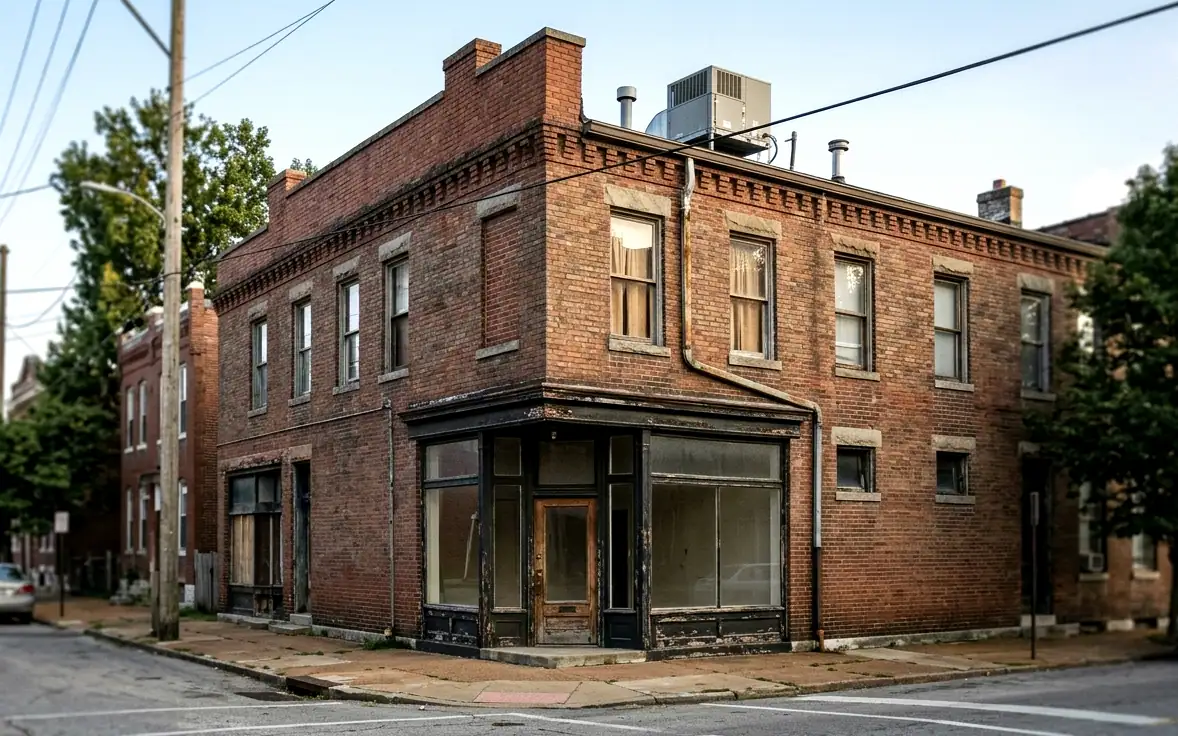
Commercial roofing covers repair, replacement and maintenance of low-slope and pitched roofs on storefronts, small offices, mixed-use buildings and apartment buildings. Typical systems include TPO, EPDM, modified bitumen and coatings. A visit covers the roof surface, drainage, rooftop equipment, flashing and a plan that keeps the building open.
How we handle commercial roofing on St. Louis homes
Small commercial buildings in St. Louis include corner storefronts with apartments above, brick mixed-use blocks along main streets, church halls, small office buildings and multi-unit apartment buildings. Their roofs are usually low-slope, bordered by parapets and crowded with HVAC units, vents and drains. A leak there costs more than a stained ceiling, because it can close a business or disrupt several tenants.
We scope each roof around how the building is used. Storefront owners need quiet hours, safe entrances and a roof that never sits open at the end of the day. Apartment owners need tenant notice and tidy staging. Property managers want photos, plain explanations and a clear scope. We plan access, materials and phasing to match, and keep the work area protected.
System choice follows the building. TPO or EPDM often suits roofs with moderate detail. Modified bitumen is a durable option where service traffic is heavy. Coating restores sound roofs that are only aging. Metal roofing and sloped sections can be handled on the same visit. We lay out the options with costs and tradeoffs so the decision rests on facts about your property.
Roof systems we install on commercial buildings
TPO or EPDM single-ply
Common on low-slope roofs with rooftop equipment. TPO welds and reflects heat, while EPDM glues down in large sheets and stays flexible in cold. We choose by roof size, details and budget.
Modified bitumen cap sheet
A layered asphalt system with a granulated surface that tolerates foot traffic and debris. It suits older buildings with mixed roof levels and complex flashing at walls and curbs.
Metal or standing seam
Used on pitched sections, canopies and some low-slope roofs, metal brings long service life and sheds snow and rain quickly. It needs careful detailing at transitions and penetrations.
Coating and restoration
Silicone or similar coatings extend the life of a sound commercial roof, seal seams and reflect heat. We confirm dryness with a scan before recommending coating.
What commercial roofing costs in St. Louis
Commercial roofing is priced by size, system, drainage and the number of curbs, drains and parapet walls. Access matters too: a roof reached by an interior ladder costs more to work than one with street access for a hoist. Occupied buildings call for phasing and protection that add time. Many owners start with a repair or a restoration coat, then plan a replacement when the roof can no longer hold up.
Compare every roofing and siding price range or plan the order of your exterior work.
| Work | Typical range |
|---|---|
| Storefront roof leak repair and flashing | $690 to $2,480 |
| Restoration coating, small commercial roof | $6,420 to $13,790 |
| Single-ply replacement, small commercial roof | $11,850 to $26,730 |
| Apartment building flat roof replacement | $18,360 to $44,910 |
Ranges are typical for St. Louis planning, not quotes, and each building is priced after an on-site review.
How we run a commercial roofing project
- 1
Survey the roof and building
We walk the roof, check the drains, equipment curbs and flashing, review interior leak locations with the owner or manager, and photograph every condition we find.
- 2
Choose the system and scope
We present repair, recoat or replacement paths, with materials, sequencing and tradeoffs, so the owner or property manager can pick a path that fits the building and budget.
- 3
Plan access and tenant impact
We schedule around business hours, protect entrances, set up staging, and notify tenants of noise and access, so the building stays open while the roof is worked on.
- 4
Install or repair in sections
Work proceeds in sections that are dried in at the end of each day, with temporary tie-ins and drains protected, so an overnight storm never meets an open roof.
- 5
Document and review
We finish with photos of the completed seams, flashing and drains, review what was done, and give you a clear record of the roof for your property files.
What problems send commercial building owners to us?
Leaks over tenant spaces
Stains in an upstairs apartment or a dripping storefront ceiling signal membrane or flashing failure. We trace the leak and start with the fastest safe repair to protect the space.
Ponding around rooftop units
Water that pools around HVAC curbs and drains points to slope or drain problems. Left alone, it shortens membrane life and can overload the structure underneath.
Failing seams and flashing
On commercial roofs, most leaks begin at seams, penetrations and parapet joints. Patching them promptly is cheaper than replacing wet insulation later.
Clogged drains and scuppers
Debris in roof drains and scuppers backs water up onto the membrane. After storms, owners see overflow stains on parapets or a roof that holds water for days.
Roof is old and patched
A commercial roof with layers of patches and repeated repairs may be near the end of its life. We compare the cost of continued repair with a planned replacement.
Roof questions during a sale
Buyers and lenders ask about roof condition. An inspection with photos and a repair or replacement plan gives you facts for that conversation.
Commercial roofs across St. Louis city and county
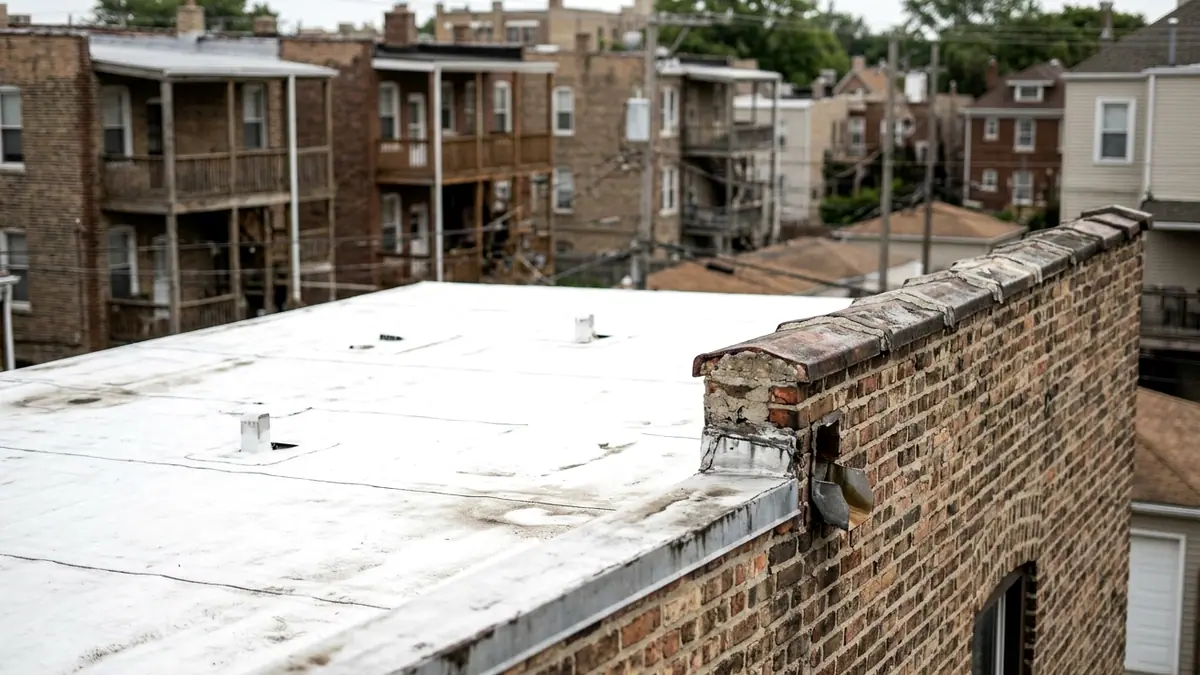
Inside the city limits, commercial roofs tend to be older, flatter and surrounded by masonry. Corner stores on south city streets, brick mixed-use buildings in Soulard and Tower Grove and small office buildings near downtown carry built-up or modified bitumen roofs that have been recoated and patched for decades. Access is the first problem: narrow lots, shared walls and alleys decide how materials reach the roof.
Out in the county and in St. Charles, the buildings change. Strip centers, small offices and apartment complexes from the 1970s through the 2000s usually have larger low-slope roofs, with single-ply membranes and rooftop units. Drainage is by interior drains or edge gutters rather than parapet scuppers. In every location, hail and wind season from March through June is the stress test, so we inspect after major storms.
Where we handle commercial roofing
The city, the counties and the towns below cover most of the homes we work on. If yours is not listed, call and ask.
- City of St. Louis 63102
- St. Louis County, MO 63105
- St. Charles County, MO 63301
- Florissant, MO 63031
- Chesterfield, MO 63017
- Oakville, MO 63129
- St. Charles, MO 63301
- O'Fallon, MO 63366
- St. Peters, MO 63376
- Kirkwood, MO 63122
- Mehlville, MO 63125
- Belleville, IL 62220
- University City, MO 63130
- Ballwin, MO 63011
- Wentzville, MO 63385
- Hazelwood, MO 63042
- Webster Groves, MO 63119
- Edwardsville, IL 62025
- Collinsville, IL 62234
- Alton, IL 62002
- O'Fallon, IL 62269
- Arnold, MO 63010
- Affton, MO 63123
- Jefferson County, MO 63050
Shingle, siding and window lines we install and repair around St. Louis include GAF, Owens Corning, CertainTeed and James Hardie, plus the other brands below.
- GAF
- Owens Corning
- CertainTeed
- IKO
- Atlas
- Malarkey
- James Hardie
- LP SmartSide
- Alside
- Mastic
- DaVinci
- Velux
- Carlisle
- Firestone
Commercial Roofing questions
Do you work on occupied storefronts and apartment buildings?
Yes. We plan the work around business hours and tenant routines, set up protected walkways and staging, and dry the roof in at the end of each day. Notice to tenants covers noise and access. The aim is a roof project that does not close the building.
What size commercial roofs do you handle?
Our work centers on small commercial buildings: storefronts, small offices, mixed-use blocks, church halls and apartment buildings with low-slope or mixed roofs. Very large warehouse or big-box roofs call for a different scale. If you are unsure, describe the building when you call and we say whether it is a fit.
Can you give a property manager photos and a clear scope?
We take photos of every roof condition we find, then walk you through them during the visit and explain each recommended fix. That record helps with budgeting, owner updates and later comparison. The scope covers materials, sequence and access, so everyone on the property team sees the same plan.
How do you protect tenants and customers during commercial roof work?
We mark work zones, protect entrances and walkways, keep debris contained and lower tear-off in chutes or containers. Loud work is scheduled with tenants in mind, and the roof is dried in each day. Interior protection is added where we need to open ceilings or remove rooftop equipment.
Should a commercial building replace or coat its roof?
Coating works when the membrane is sound and the insulation is dry. Replacement is the right call when moisture is widespread, seams have failed across the roof, or repairs keep recurring. A moisture scan and test cuts give the facts, and we show you the results before you choose.
Related work we often pair with commercial roofing
TPO Roofing
Welded white flat roofing. TPO is a single-ply white membrane whose seams are welded with hot air into one continuous sheet.
Modified Bitumen Roofing
Layered cap sheet roofing. Modified bitumen is a layered asphalt roof, reinforced with polyester and finished with a granulated cap sheet.
Silicone Roof Coating
Restore the roof you have. Silicone coating is a liquid waterproof layer rolled or sprayed over an existing flat roof that is still sound.
Parapet Wall & Coping Repair
Seal the top of the wall. The short brick wall around a flat roof takes more weather than any other part of the building.
Need commercial roofing in St. Louis?
Call any hour. A roofer answers, asks a few questions and sets up a visit.