Storm and hail roof repair in Lindenwood Park (63139)
Lindenwood Park is a leafy southwest city neighborhood of brick Cape Cods and ranch homes. We repair hail, wind and fallen limb damage on its roofs, and the phone is answered every hour.
- ZIP codes
- 63139
- County
- St. Louis City
- Phone
- (314) 461-6440, answered 24/7
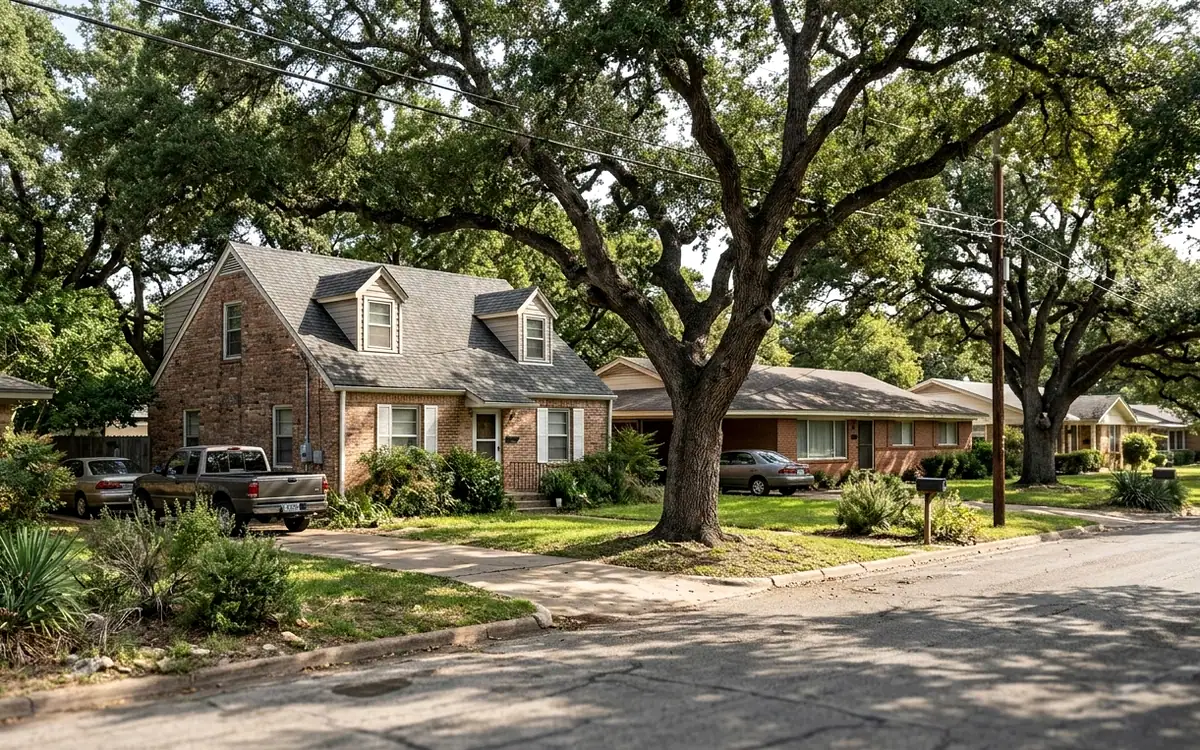
Stars and Stripes repairs hail, wind and tree damage on roofs in Lindenwood Park. The neighborhood's brick Cape Cods and ranch homes sit under big mature trees, which makes limbs and storms the usual culprits. We inspect after a storm, document damage with photos and help you plan repairs. After the next storm, call (314) 461-6440.
What Lindenwood Park, St. Louis homeowners call us about
Lindenwood Park sits in the southwest corner of the city, and it is known for tall trees arching over quiet residential streets. Brick Cape Cods, ranch houses and modest bungalows fill the blocks, mostly built after the Second World War. The yards are well kept and the feel is closer to a suburb than to the dense city blocks north and east. Garages sit at the back of deep lots, and the streets stay quiet well into the evening.
Those trees are lovely and they are a roofing challenge. A single big oak can drop limbs in a thunderstorm, scrub the shingles in wind and rain acorns and leaves into the gutters for months. Storm season from March through June is when we hear from Lindenwood Park most, with hail, falling branches and wind-lifted shingles after a front passes through. Even a mild storm can leave a line of leaves and twigs across a roof valley.
After a storm, damage is not always obvious from the ground. A limb strike may crack decking under intact shingles, and hail can bruise a roof that still looks fine. We walk the roof, check the attic for daylight and wet insulation, and document what we find with photos you can use when you talk with your insurance company. Dated photos taken before cleanup matter, so we capture them first whenever it is safe to do so.
Postwar brick homes with lower, wider roofs
Lindenwood Park homes were built mostly in the 1940s and 1950s as brick Cape Cods, small ranches and Tudor-influenced cottages. Roofs are simpler than the prewar neighborhoods, with moderate pitches and wide, uninterrupted slopes. That simplicity helps a repair go quickly, but it also means a large area of shingle is exposed to every hailstone that falls. Because the pitch is gentle, walking and working on these roofs is safer than on steep prewar houses.
Many roofs here are on their second or third coverings of asphalt shingles. Attached garages, breezeways and rear additions add flat or low-pitch sections. Metal vents, gable louvers and old chimney caps all sit on the roof surface and take the hits when hail comes through, so we look closely at every one of them after a storm. Filled gutters and loosened flashing from earlier storms are common finds even when the shingles still look healthy from the street.
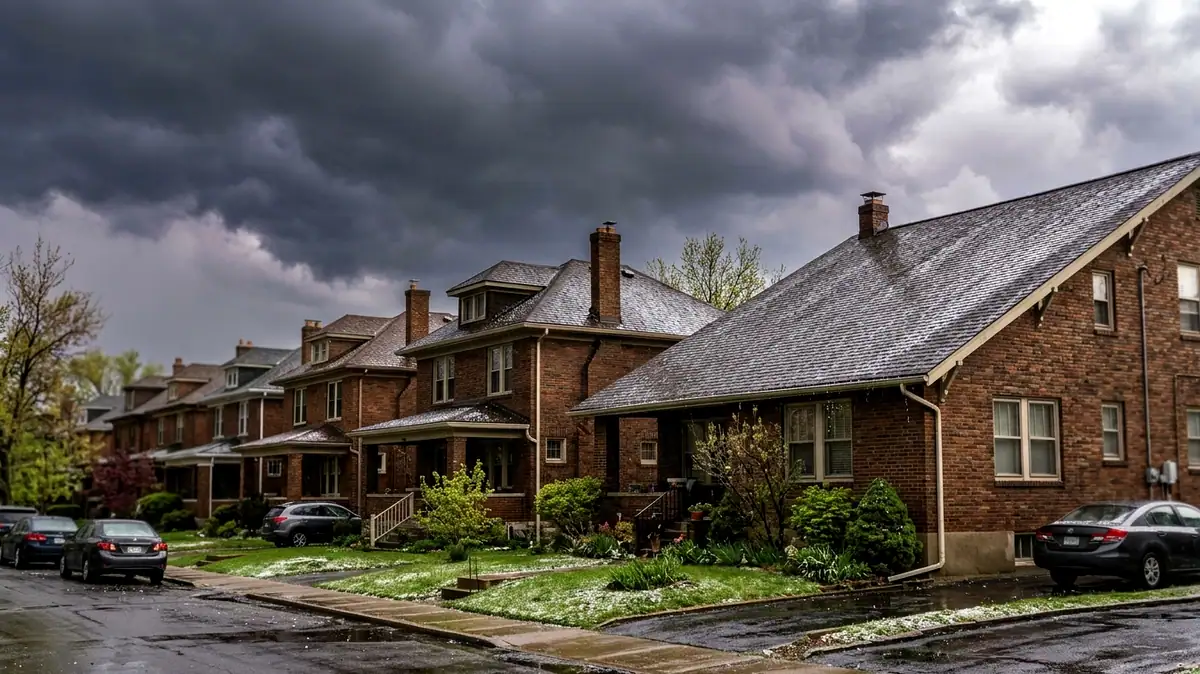
What storms and trees do to these roofs
Hail bruises across wide slopes
Large uninterrupted roof planes take the full force of a hailstorm. Shingles show dark spots where granules were knocked off, and the mat underneath cracks.
Limb strikes that crack decking
A fallen branch can punch through shingles or fracture the plywood beneath them. The roof may look intact while the deck sags and lets in water.
Dented vents and gable louvers
Metal vents and louvers dent under hail, and cracked ones let rain and animals into the attic. Replacement is cheap if caught early. Check them after every storm.
Wind creasing shingle tabs
Gusts bend tabs back along the ridge and eaves, creasing the shingle. A crease breaks the mat and the tab will tear off in the next storm.
Breezeway and garage roof tie-ins
The low-slope roofs joining house and garage shed water slowly and collect debris. Storm-driven leaves block the joint and water backs up under shingles.
Seeing one of these in Lindenwood Park, St. Louis?
Call (314) 461-6440 any hour. We inspect in daylight and show you photos of what we find.
What our crew checks first after a storm in Lindenwood Park
- Test squares on each slope for hail bruising and granule loss
- Deck firmness and cracked plywood under any limb strike
- Dents in metal vents, caps, gutters and drip edge
- Creased or missing shingle tabs along ridges and eaves
- The low roof connecting the house to the garage
Services Lindenwood Park, St. Louis homes need most
Hail Damage Roof Repair
Hail impact repair. Hail rarely punches holes.
Storm Damage Roof Repair
After the storm passes. A severe storm seldom hurts a roof in just one way.
Tree Damage Roof Repair
Fallen tree and limb repair. A limb that lands on a roof can break more than shingles.
Wind Damage Roof Repair
Windstorm roof repair. Wind often damages a roof without removing a single shingle.
Roof Insurance Claim Help
Roof damage, documented clearly. When storm damage may be covered, the roof evidence matters.
Emergency Roof Tarping
Temporary dry-in. A tarp is not a repair.
Nearby areas we also cover
Roofing questions from Lindenwood Park, St. Louis
How do I know if hail damaged my Lindenwood Park roof?
Look for dents in gutters, dings on metal vents and granules collecting at the downspouts. On the shingles, dark circular spots with missing granules are the sign. Since the damage is easy to miss from the ground, we walk the roof and photograph it. That is the quickest check.
What should I do first when a tree limb lands on my Lindenwood Park roof?
Stay clear of the area and call (314) 461-6440. We answer 24/7. If it is safe, photograph the damage from the ground and move belongings from the room below. We can arrange a tarp quickly so rain does not make the damage worse.
Do you help with insurance paperwork for storm damage in Lindenwood Park?
We document the damage with dated photos and a written description that you can share with your insurance company. We cannot file the claim for you or promise an outcome, but clear documentation makes the conversation easier. Call and we explain the process. Ask us to explain it.
Is it worth trimming the trees near my Lindenwood Park roof?
Trimming limbs that overhang or rub the roof reduces strike risk and debris. A tree service should do the cutting, and we handle the roof side. Even a few feet of clearance cuts down on granule wear and keeps gutters from filling as quickly. Hiring the right trades keeps it safe.
Roof or siding trouble in Lindenwood Park, St. Louis?
Call any hour. We set up a daylight inspection and walk you through what we find.