Roof and exterior repair in Belleville, IL (62220)
Belleville is a city of old brick, steep gables and chimneys that have stood through well over a century of freeze-thaw. We repair and replace the roofs and exteriors that keep those homes dry.
- ZIP codes
- 62220, 62221, 62223, 62226
- County
- St. Clair County, IL
- Phone
- (314) 461-6440, answered 24/7
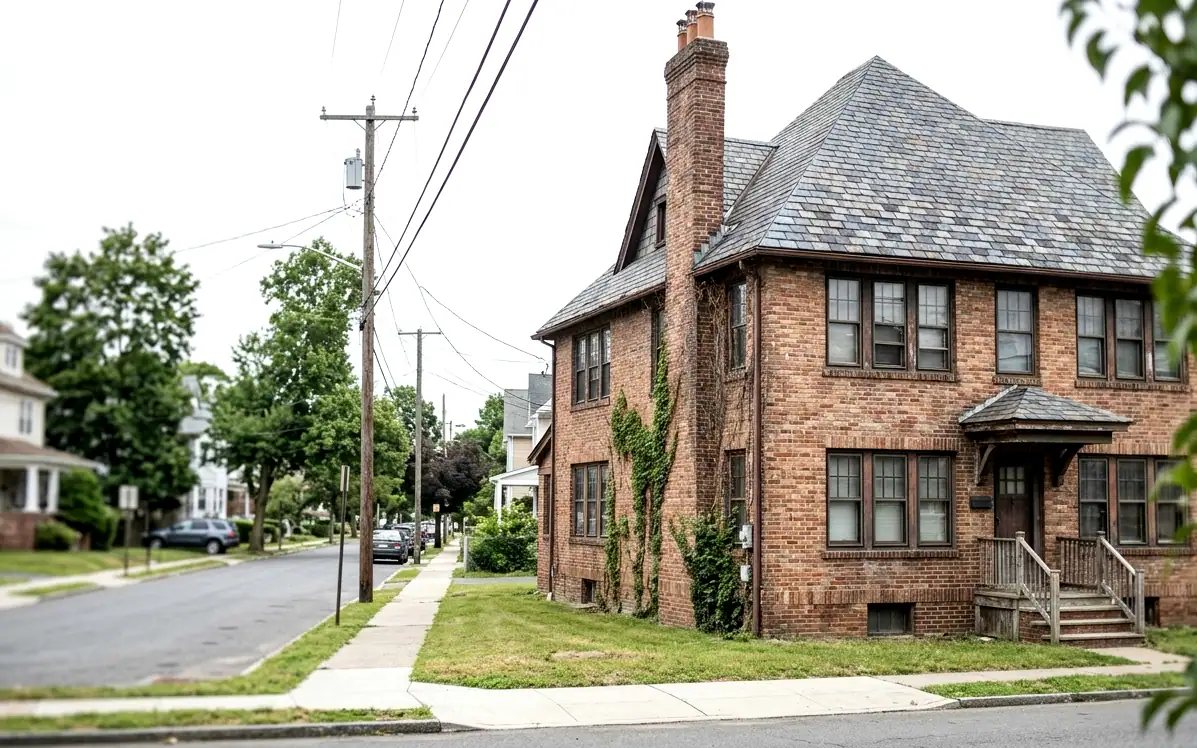
We repair and replace roofs, gutters and siding on Belleville homes, from nineteenth-century brick two-stories near downtown to postwar ranches on the edge of town. A visit starts with the chimney, the flashing and the decking, because older Belleville houses usually leak at those points first. Call 24/7 and we walk you through what we find.
What Belleville, IL homeowners call us about
Belleville grew up around its historic downtown, and the streets around it are lined with brick houses that were built to last. Many have steep gabled roofs, tall chimneys, front porches with their own small roofs and decorative trim that few newer homes carry. That detail is the charm of the place, and it is also where water finds a way in. A roof here is rarely just a field of shingles, so repair starts with understanding every plane, valley and intersection.
Our crews work on Belleville roofs through every season, but the pattern is steady. Spring brings wind and hail across the Metro East, summer heat bakes older shingles until they curl, and winter freeze-thaw cycles pry at mortar and flashing. After a storm we climb the roof, trace the stain in the ceiling back to its source, and show you the damaged spot in photos before any repair is agreed. Many leaks start small and local.
Not every Belleville house needs a new roof. A cracked chimney crown, a lifted valley or a rotted gutter board can be fixed on its own, and replacing only what has failed often makes more sense than tearing off sound material. When replacement is the honest answer, we say so and explain why, then plan around the tall gables and tight access that older streets create. Call any hour and a person answers.
What the older Belleville housing stock asks of a roof
The core of Belleville is full of brick homes from the late 1800s and early 1900s: two-story farmhouse styles, narrow city lots, Victorian-era cottages and sturdy bungalows. Their roofs often began as slate, tile or wood shingles laid over plank decking, then were covered again and again with asphalt as the decades passed. It is common to find two or three layers on one roof, and the old boards underneath may have gaps, soft spots or leftover nails.
Beyond the historic core, Belleville has plenty of 1950s and 1960s ranches and split levels with simpler gable roofs and aluminum or vinyl trim, and newer subdivisions toward the edges of town. Those roofs fail in the usual ways: aged shingles, worn pipe boots and overflowing gutters. The brick homes fail at junctions, where a chimney, dormer or porch roof meets the main slope and the original flashing has finally given up.
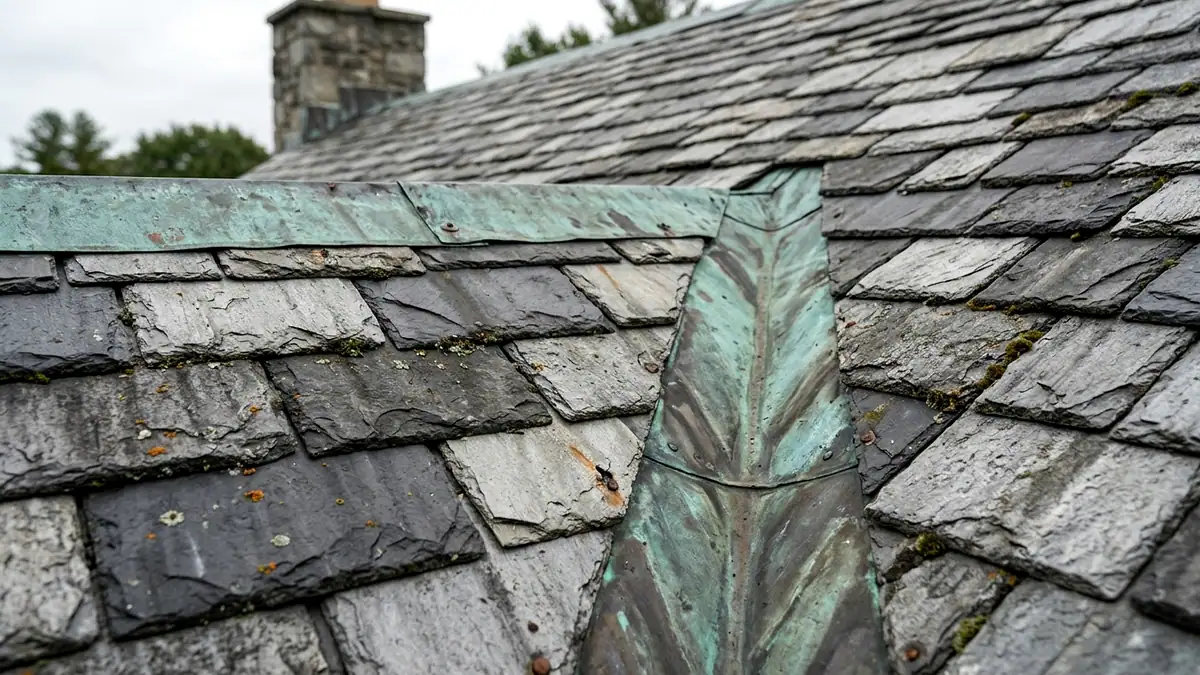
Where Belleville roofs usually start to leak
Chimney mortar and crown cracks
Tall brick chimneys take freeze-thaw punishment from every side. Mortar joints open, the crown cracks, and water runs down the flue wall or behind the step flashing into the attic below the roofline.
Stacked layers on plank decking
Roofs recovered more than once carry extra weight and trap moisture. Under the shingles, old plank decking can shrink, split or rot, so a tear-off often reveals boards that must be replaced before new roofing goes on.
Slate and tile held by rusty nails
Original slate and clay tile outlast the fasteners holding them. Rusted nails let single pieces slide, leaving open spots that look minor from the street but let water reach the felt and decking.
Rot at built-in and half-round gutters
Older brick homes often have gutters set into the cornice or hung on wooden fascia. When they clog or crack, water soaks the trim and works behind the brick, long before a ceiling stain appears.
Porch and dormer roof junctions
Low-slope porch roofs and small dormers meet the main roof at awkward angles. Caulk dries out, flashing lifts, and one wet spring is enough to start a slow leak above a window or porch ceiling.
Seeing one of these in Belleville, IL?
Call (314) 461-6440 any hour. We inspect in daylight and show you photos of what we find.
What our crew checks first on a Belleville brick home
- Chimney mortar joints, crown condition and the flashing where it meets the roof
- Number of shingle layers and the condition of the decking beneath them
- Slate or tile pieces that have slipped, cracked or lost their fasteners
- Gutter pitch, cornice boards and any soft wood behind the brick
- Valleys, porch roof tie-ins and dormer cheeks for lifted flashing
Services Belleville, IL homes need most
Roof Repair
Everyday roof repair. Most roof problems start small: a few lifted shingles, a cracked boot, a nail that backed out.
Chimney Flashing Repair
Brick chimney flashing. Where a brick chimney meets the roof, water has four sides to get in from.
Slate Roof Repair
Careful repair on natural slate. Natural slate can outlast the house when it is repaired correctly.
Roof Decking Replacement
The layer under your roof. Decking is the wood your whole roof is nailed to, and it often hides rot, gaps, or old plank spacing.
Gutter Repair
Fix the gutter, not the symptom. A gutter that sags, drips at a seam or hangs by a few old spikes can often be saved.
Siding Repair
Spot siding repairs. Not every siding problem needs a full resurface.
Nearby areas we also cover
Roofing questions from Belleville, IL
Can you repair a slate roof on an older Belleville home?
Yes, in many cases. Slate usually lasts far longer than the nails that hold it, so we often replace individual pieces, add new flashing and secure loose areas rather than replacing the whole roof. We inspect the roof, show you photos of the failed spots and explain whether repair or replacement makes more sense for your house.
Why does my Belleville chimney leak even though the roof is new?
A new roof does not fix the chimney itself. Brick absorbs water, mortar joints erode and the crown on top can crack, so water enters from above or through the masonry. We check the crown, mortar and flashing together and repair the weakest part first. Sometimes the roofing was fine all along.
Is it worth patching an older roof in Belleville or should I replace it?
It depends on how widespread the damage is. If the problem is one chimney, one valley or a handful of shingles, a targeted repair is often sensible. If shingles are curling across every slope or the decking is soft, replacement makes more sense. Call and we walk you through photos so you can decide with real information.
Do Belleville roof replacements need a permit?
A permit is generally required for a full roof replacement in many Metro East municipalities, and our crew handles that paperwork as part of the job. Requirements vary by city, so when you call we confirm what applies to your address before any work starts. Smaller repairs often do not need one.
Roof or siding trouble in Belleville, IL?
Call any hour. We set up a daylight inspection and walk you through what we find.