Hail damage siding repair in St. Louis after storms
Spring hail leaves cracked vinyl, dented aluminum and bruised board on St. Louis homes. We document the damage wall by wall, make openings weather-tight, and repair or replace what the storm broke.
- Answered 24/7
- Siding
- City, county and Metro East
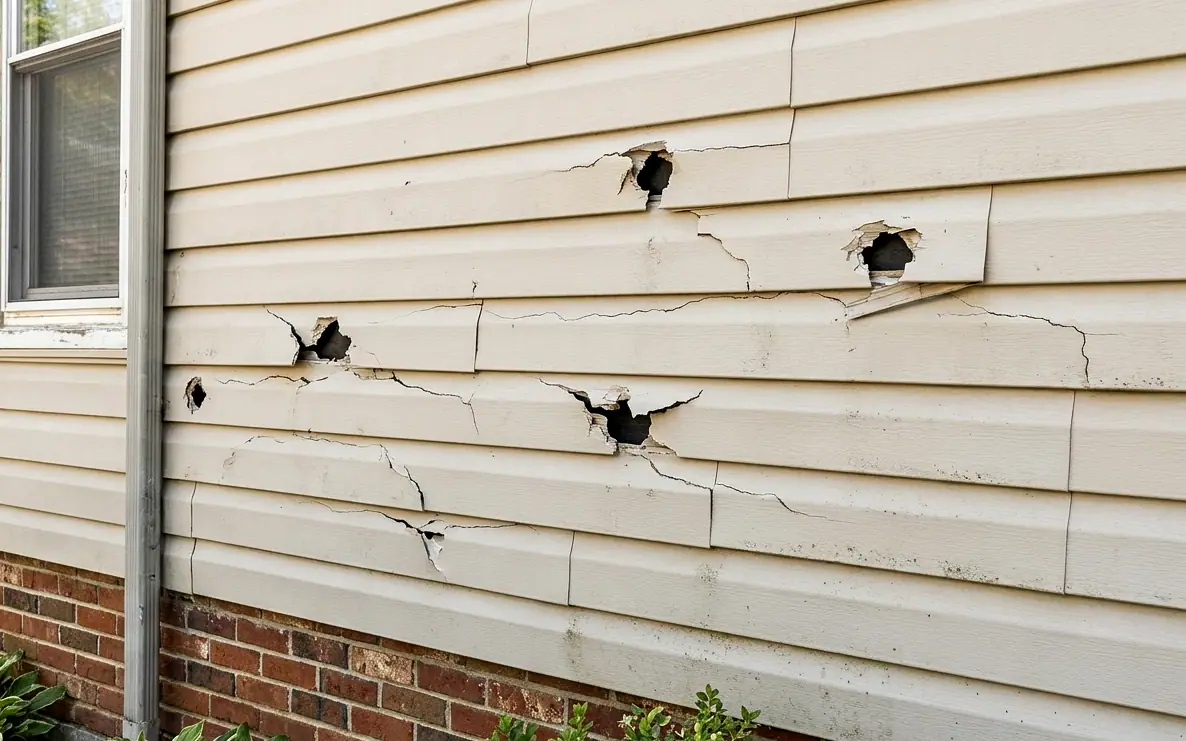
Hail damage siding repair addresses cracked or holed vinyl, dented or dimpled aluminum, and chipped fiber cement or wood boards after a storm. Damage often shows first on the south and west walls. A visit covers every elevation, photographs and marks each impact, seals open holes, and explains whether repair or replacement is the realistic fix.
How can you tell hail hurt your siding?
Round holes and star cracks in vinyl
Look for dime to quarter size holes or small cracks radiating outward, mostly on the south and west sides. Light shining through a hole means the panel has failed.
Dimples and creases in aluminum
Aluminum shows hail as shallow dents that catch the light, often with chipped paint. Run your hand lightly across it to feel dimpling you cannot see from far away.
Chipped corners on board siding
Fiber cement and wood board lose small chips at the edges and corners of lap boards. Exposed chips take on water and need sealing or board replacement.
Damaged gutters, vents and trim
Dented gutters, vent covers and window wraps show that hail hit with force. If those soft metals are dented, the siding behind them was likely hit too.
Bright spots where paint knocked off
Hail leaves bright or bare spots in painted board and aluminum. Bare areas rust or rot out, so they need sealing even if the panel looks flat.
Water stains after the next rain
A cracked panel may not leak until a wind-driven rain. Brown rings inside the wall below a window after a storm point to open siding and damaged wrap.
What happens on a hail damage siding visit
- 1
Make openings weather-tight
Holes and cracks are covered with a temporary patch or taped membrane, so rain stays out while repair planning goes on. Loose pieces are secured or removed before they fall.
- 2
Inspect all four elevations
We walk every wall from the ground, checking where hail hit, noting direction, and measuring impact marks. We also check roof edges, gutters and window screens for matching evidence.
- 3
Photograph and note each wall
Wide shots and close-ups, with marks showing each impact, are collected for you. Notes list material, panel count and the work each wall needs.
- 4
Explain repair or replacement
Scattered cracks may mean replacing individual panels, while heavy damage across a wall may mean replacing the entire elevation. We describe both and say which we think fits.
- 5
Replace panels and check wrap
Damaged panels come off, the wrap and sheathing behind them are inspected and patched, and new material goes on, matching profile and color as closely as possible.
How we handle hail damage siding repair on St. Louis homes
Hail does not hit every wall equally. Storms in the St. Louis area usually arrive from the west or southwest, so those elevations take the worst of it, with the north and east walls often clean. Impacts show differently by material: vinyl cracks or punches round holes, aluminum shows dimples and creases, fiber cement chips at edges, and wood or engineered board bruises and splits.
Cracked vinyl is the most urgent kind because holes let wind-driven rain reach the wrap and sheathing right away. Dented aluminum may still shed water, but dents often come with split paint that starts to corrode. We start by making sure every opening is covered, then document the damage with close-up photos and wide shots so the picture is complete for your records.
Many owners have questions about claims after a storm. We give you photos, wall-by-wall notes and a plain description of the repair scope, which you can pass along to your carrier. We do not decide coverage, and we do not promise outcomes. We focus on documenting what hail did and on what it takes to put the wall back right.
Hail on St. Louis siding: what the storms do
Hail season runs from roughly March to June in the St. Louis area, and a single supercell can cut a swath across the county, the city and the river into the Metro East. Older vinyl that has gone brittle in winter cold fails first, and aluminum on 1950s to 1960s ranches in St. Louis County shows dimpling clearly. Brick houses fare better on the main walls, but their dormers, bays and rear additions take a beating.
After a storm, the sequence matters. Open holes in siding let water into wall cavities, where it can sit against sheathing and insulation for weeks. We make quick weather-tight repairs first, then measure and photograph each wall. Hail often damages roofs, gutters and windows too, so we look at the whole exterior and sort what is cosmetic from what lets water in, which keeps the repair list honest.
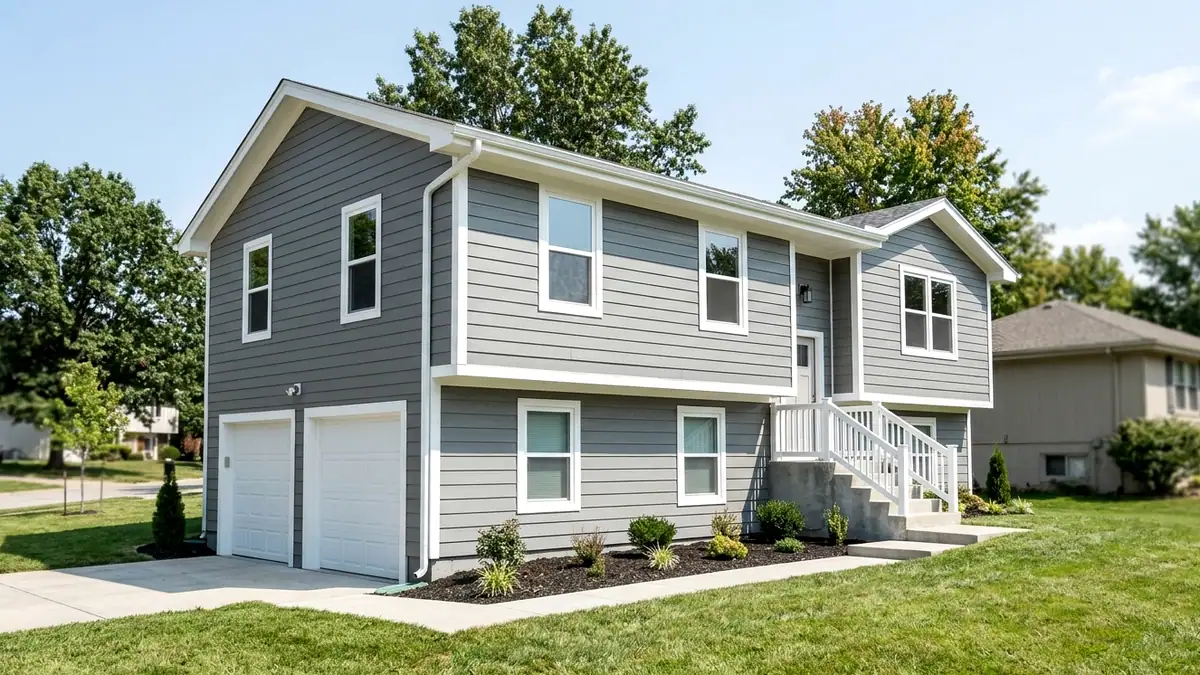
Repair choices for different siding materials after hail
Vinyl panel replacement
Cracked or holed vinyl is unlocked and replaced course by course. Older, faded vinyl may not match, so we often recommend replacing the whole damaged wall.
Aluminum swap or recoat
Dented aluminum is replaced where creases are deep. Where dents are minor and paint is intact, you may choose to leave them, understanding that appearance suffers.
Fiber cement and wood patching
Chipped board is sealed and painted when damage is minor, or individual boards are cut out and replaced when cracks reach all the way through the surface.
Full elevation replacement
When three or four walls are badly hit, replacing the entire elevation looks better than a patchwork, and lets us correct the wrap and flashing behind it.
What hail damage siding repair costs in St. Louis
Hail repairs vary widely because storms vary. A few cracked vinyl panels on a back wall is a small job, while a severe storm that damaged three elevations can approach the cost of residing. Material, wall height, how well replacement panels match and whether sheathing got wet drive the number. Temporary weather-tight patches are separate, small items. Insurance coverage, where it applies, is between you and your carrier.
Compare every roofing and siding price range or plan the order of your exterior work.
| Work | Typical range |
|---|---|
| Emergency patch of holes, per visit | $228 to $497 |
| Replace vinyl panels, per damaged wall | $673 to $1,486 |
| Replace dented aluminum, per damaged wall | $814 to $1,923 |
| Full elevation replacement, per wall | $2,136 to $4,982 |
These typical St. Louis ranges are for planning only, not quotes, and the real number depends on what the storm did to your walls.
Where we handle hail damage siding repair
The city, the counties and the towns below cover most of the homes we work on. If yours is not listed, call and ask.
- City of St. Louis 63102
- St. Louis County, MO 63105
- St. Charles County, MO 63301
- Florissant, MO 63031
- Chesterfield, MO 63017
- Oakville, MO 63129
- St. Charles, MO 63301
- O'Fallon, MO 63366
- St. Peters, MO 63376
- Kirkwood, MO 63122
- Mehlville, MO 63125
- Belleville, IL 62220
- University City, MO 63130
- Ballwin, MO 63011
- Wentzville, MO 63385
- Hazelwood, MO 63042
- Webster Groves, MO 63119
- Edwardsville, IL 62025
- Collinsville, IL 62234
- Alton, IL 62002
- O'Fallon, IL 62269
- Arnold, MO 63010
- Affton, MO 63123
- Jefferson County, MO 63050
Shingle, siding and window lines we install and repair around St. Louis include GAF, Owens Corning, CertainTeed and James Hardie, plus the other brands below.
- GAF
- Owens Corning
- CertainTeed
- IKO
- Atlas
- Malarkey
- James Hardie
- LP SmartSide
- Alside
- Mastic
- DaVinci
- Velux
- Carlisle
- Firestone
Hail Damage Siding Repair questions
How big does hail have to be to damage vinyl siding?
Stones around one inch can crack older, brittle vinyl, and larger ones can punch holes in newer panels. Damage depends on wind speed, panel age and temperature, because cold vinyl is more brittle. Smaller hail can still dent aluminum. If a storm drove ice against your walls, an inspection is the way to know.
Should I wait for the adjuster before covering holes in my siding?
No. Water getting in makes damage worse and can lead to mold. Cover or patch openings promptly, take photos before and after, and keep receipts. A temporary patch is expected and does not erase the damage record. Call us and we can make openings weather-tight and document each wall for you.
Do dents in aluminum siding need to be repaired at all?
If paint is intact and panels still shed water, dents are mostly cosmetic. Deep creases, split seams and chipped paint are different, because bare aluminum corrodes and water can find its way behind. We note which dents are cosmetic and which are damage, and you decide how far to go.
How can I tell hail damage from normal wear on my siding?
Hail marks are random, round impacts concentrated on the walls facing the storm, with fresh bare edges. Wear shows as even fading, chalking and brittle cracks across a whole wall. Fresh impacts often come with dented gutters and roof vents on the same side. We read these patterns during a walk-around.
Is it better to replace one damaged wall or the whole house after hail?
It depends on how many walls were hit and how well new panels match. If only one elevation took the storm, replacing that wall can look fine. If color or profile cannot be matched, a full resurface may look better. We lay out both options with photos and let you choose.
Related work we often pair with hail damage siding repair
Siding Repair
Spot siding repairs. Not every siding problem needs a full resurface.
Vinyl Siding
Vinyl siding options. Vinyl remains the most common siding on St.
Hail Damage Roof Repair
Hail impact repair. Hail rarely punches holes.
Storm Damage Roof Repair
After the storm passes. A severe storm seldom hurts a roof in just one way.
Need hail damage siding repair in St. Louis?
Call any hour. A roofer answers, asks a few questions and sets up a visit.