Modified bitumen roofing in St. Louis: torch and cold-applied
Modified bitumen is a layered asphalt roof, reinforced with polyester and finished with a granulated cap sheet. It is the tough, familiar choice for St. Louis flat roofs that see hail, foot traffic and heavy debris.
- Answered 24/7
- Flat & Commercial Roofs
- City, county and Metro East
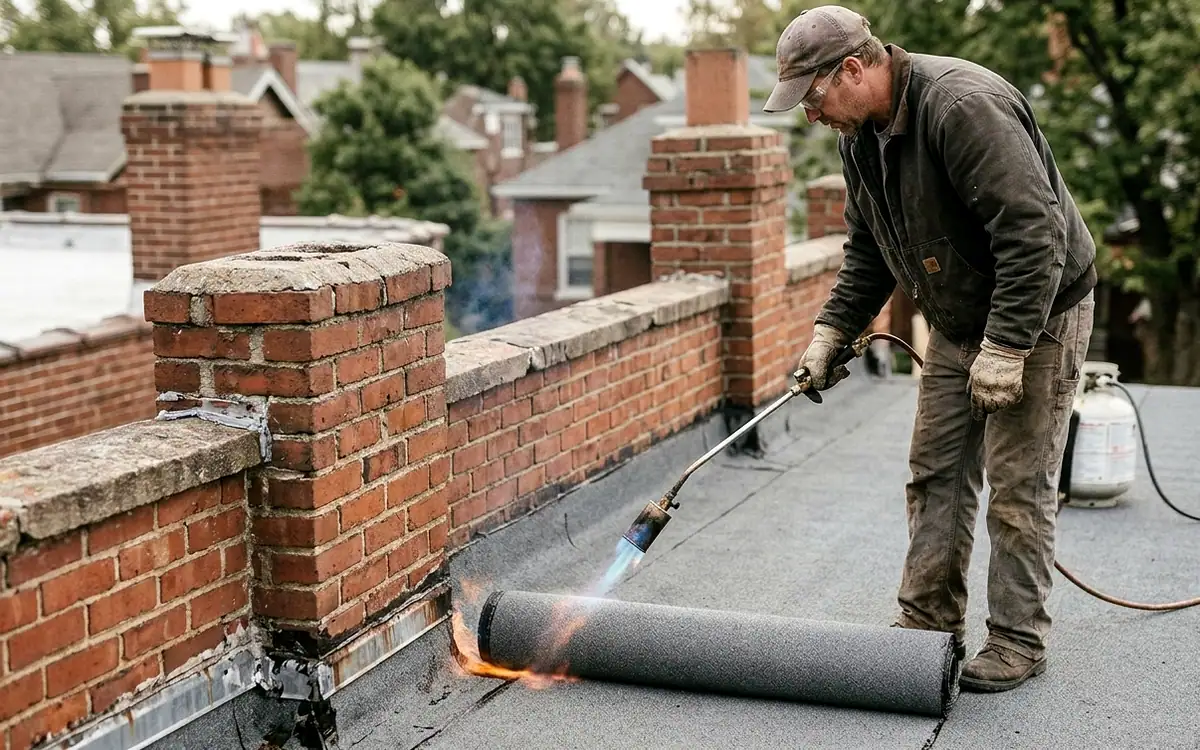
Modified bitumen roofing is a multi-layer asphalt membrane with a granulated cap sheet on top, installed on flat and low-slope roofs. The layers are joined with a torch, hot asphalt, cold adhesive or self-adhering backing. It is durable and easy to patch. A visit covers deck condition, drainage, flashing and which application method fits the building.
How we handle modified bitumen roofing on St. Louis homes
Modified bitumen, often called mod bit, is asphalt blended with polymers such as APP or SBS to stay flexible in cold weather and firm in the heat. Sheets are reinforced with polyester or fiberglass and come in rolls with a granulated top surface that shields the asphalt from sunlight. It is the modern descendant of the built-up tar and gravel roof that covers many older city flats.
Application method is the key decision. Torch-applied sheets are heated until the underside melts and bonds to the layer below, which makes strong, fast seams but requires care around old wood framing. Cold-applied systems use adhesive instead of flame, and self-adhered sheets peel and stick. In dense brick neighborhoods with shared roof framing, we choose the method that keeps fire risk lowest for your building.
Most mod bit roofs are installed as two or three plies: a base sheet, sometimes an interply, and the cap. That layered build gives redundancy, since a flaw in one ply is covered by the next. It also gives you a rugged surface for the occasional person walking out to service a vent, which thin single-ply membranes tolerate less well.
Torch, cold-applied and self-adhered options
Torch-applied cap sheet
Fast and strong when done properly. A flame heats the underside of the sheet so it bonds to the layer below. It requires open-flame safety and is limited near combustible framing.
Cold-applied adhesive system
Sheets are laid in a cold adhesive, with no open flame. It takes longer to cure but is preferred where fire safety, tight access or building conditions limit torching.
Self-adhered peel and stick
A sticky backing bonds the sheet to a primed substrate. It is clean and quiet, ideal for small areas such as rear roofs and flashing work on attached buildings.
SBS or APP polymer blends
SBS blends are rubber-like and flex well in cold weather, while APP blends are plastic-like and hold up in strong sun. We choose based on exposure and application method.
What modified bitumen roofing costs in St. Louis
Price follows the number of plies, the application method, whether insulation is needed, and the complexity of flashing at parapets and curbs. Cold-applied and self-adhered systems can cost slightly more in material than torch-down but may reduce risk and prep. Tear-off and disposal add to the total, especially on multi-layer roofs. We walk through each line item so you can compare materials fairly.
Compare every roofing and siding price range or plan the order of your exterior work.
| Work | Typical range |
|---|---|
| Two-ply mod bit over dry deck, small roof | $4,970 to $9,120 |
| Full tear-off and three-ply system, two-family | $9,640 to $18,350 |
| Parapet base flashing and metal termination | $1,175 to $3,490 |
| Cap sheet patch repair and stripping-in | $365 to $1,110 |
These are typical St. Louis ranges and not quotes; your price comes after a roof inspection.
How a modified bitumen roof goes on
- 1
Prepare deck and insulation
The deck is inspected and repaired, old layers are removed or tested for a recover, and insulation with a cover board is installed to create a smooth, dry base.
- 2
Set the base sheet
A fastened or adhered base sheet goes on first, lapped so water sheds, and edges are primed where the next layers will bond against walls and curbs.
- 3
Apply the cap sheet
The granulated cap sheet is torched, adhered with cold adhesive, or self-adhered, rolled out in staggered laps and pressed so the asphalt flows at the edges.
- 4
Flash walls and penetrations
Base flashing is stripped in up the parapet and around curbs, with a second flashing ply and a metal counterflashing or termination to shed water.
- 5
Inspect every lap and finish
We check each lap for a continuous bead of asphalt, clean the roof of debris, clear scuppers, and walk you through the photos of the completed work.
When does modified bitumen make sense for your roof?
Hail and debris hit the roof
The granulated cap and multiple plies absorb impact better than thin single-ply sheets, which helps on roofs under trees or exposed to spring hail.
Someone walks the roof often
If tenants, HVAC technicians or building staff cross the roof, mod bit tolerates foot traffic better than lighter single-ply materials, and walkway pads add protection.
Old tar and gravel roof
Built-up roofs are the older city standard. Modified bitumen uses familiar asphalt chemistry, bonds well to an old tar substrate, and avoids the compatibility issues some single-ply membranes have.
You want an easily patched roof
Torched or cold-applied patches blend into the granular surface, and most leaks can be repaired by the same crew in a short visit without rebuilding a whole section.
Parapet walls and curbs everywhere
Heavy flashing details, such as base flashing up parapets and around curbs, are a strength of this system. Layered stripping holds up where roofs meet vertical walls.
You prefer a granulated surface
Cap sheets come in light colors with reflective granules, or in dark tones that hide stains. The mineral surface also shields the asphalt from sun damage.
Modified bitumen on St. Louis flats and storefront roofs
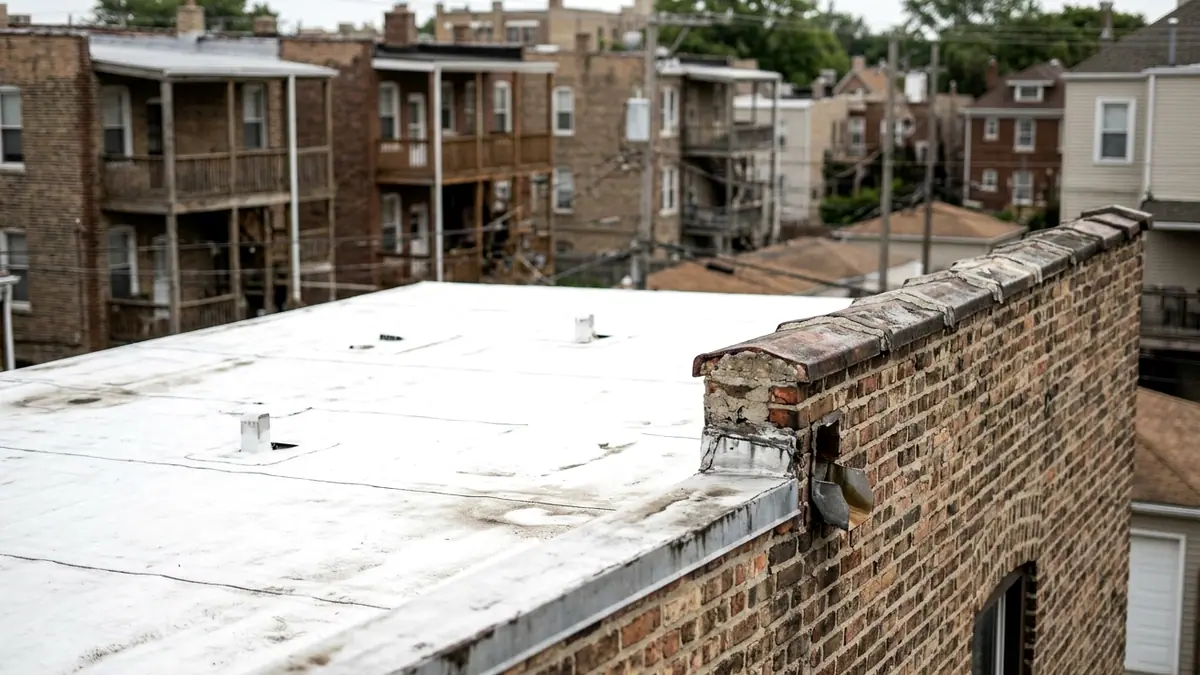
Walk down many streets in the city and you will see tar-and-gravel or modified bitumen roofs on rear additions, corner storefront buildings and small apartment blocks. The material fits the local building stock, because those roofs often join parapet walls and brick chimneys that need heavy, layered flashing. Mod bit also bonds to old asphalt substrates in a way many newer membranes cannot, which saves tear-off cost when the deck is sound.
Weather puts the system to the test. Heat in July softens the asphalt and can make a poorly installed roof slip, while January cold makes it stiffen and crack at the seams if the polymer blend is wrong. Hail between March and June scuffs granules, so we examine the cap sheet after each storm season. Torch work follows the building's layout, with a fire watch and a clear plan for tight rowhouse conditions.
Where we handle modified bitumen roofing
The city, the counties and the towns below cover most of the homes we work on. If yours is not listed, call and ask.
- City of St. Louis 63102
- St. Louis County, MO 63105
- St. Charles County, MO 63301
- Florissant, MO 63031
- Chesterfield, MO 63017
- Oakville, MO 63129
- St. Charles, MO 63301
- O'Fallon, MO 63366
- St. Peters, MO 63376
- Kirkwood, MO 63122
- Mehlville, MO 63125
- Belleville, IL 62220
- University City, MO 63130
- Ballwin, MO 63011
- Wentzville, MO 63385
- Hazelwood, MO 63042
- Webster Groves, MO 63119
- Edwardsville, IL 62025
- Collinsville, IL 62234
- Alton, IL 62002
- O'Fallon, IL 62269
- Arnold, MO 63010
- Affton, MO 63123
- Jefferson County, MO 63050
Shingle, siding and window lines we install and repair around St. Louis include GAF, Owens Corning, CertainTeed and James Hardie, plus the other brands below.
- GAF
- Owens Corning
- CertainTeed
- IKO
- Atlas
- Malarkey
- James Hardie
- LP SmartSide
- Alside
- Mastic
- DaVinci
- Velux
- Carlisle
- Firestone
Modified Bitumen Roofing questions
Is torch-down roofing safe on an old brick building?
It can be, with the right plan. Torch work carries real fire risk around dry wood framing, so we scan for combustible materials, keep a fire watch after the work, and choose cold-applied or self-adhered sheets where torching is unwise. Safety decides the method on every roof, not speed.
What does APP versus SBS mean on a mod bit roof?
APP and SBS are the two common polymers blended into the asphalt. APP is plastic-like and handles intense sun well. SBS is rubber-like and stretches more in cold weather. SBS is typically used for cold-applied and mopped systems, while APP is common on torch-applied sheets. We specify the one that suits your building.
Why does my modified bitumen roof shed gray granules into the gutter?
Granules loosen as a cap sheet ages and after hail or foot traffic. A few in the gutter after storms are normal. A bare patch of black asphalt is not, because sunlight degrades exposed asphalt quickly. We inspect granule loss and can restore bare areas with a coating or patch.
Can modified bitumen go over an old tar and gravel roof?
Sometimes. The old roof must be dry, firmly attached and a single layer, and the gravel must be removed or covered with a cover board. A moisture scan and test cuts tell us whether a recover is safe. If water is in the layers, we recommend a full tear-off instead.
How many layers should a modified bitumen roof have?
Most are two-ply, a base sheet and a cap, while higher-traffic or more exposed roofs get a third interply. More layers add redundancy and puncture resistance but also weight and cost. We recommend the number of plies based on the deck, the traffic and the exposure of your roof.
Related work we often pair with modified bitumen roofing
Flat Roof Replacement
Tear-off and a new flat roof. When patches stop holding, a full replacement resets the whole low-slope roof.
Flat Roof Repair
Low-slope roof leaks fixed. Most St.
TPO Roofing
Welded white flat roofing. TPO is a single-ply white membrane whose seams are welded with hot air into one continuous sheet.
Commercial Roofing
Small commercial roof work. We handle roofs on small commercial buildings, corner storefronts and multi-unit apartment buildings across the St.
Need modified bitumen roofing in St. Louis?
Call any hour. A roofer answers, asks a few questions and sets up a visit.