Siding repair and matching for St. Louis homes
Not every siding problem needs a full resurface. We replace damaged boards and panels, reseal gaps, and work to match what is already on the wall, so a repair does not stand out from the street.
- Answered 24/7
- Siding
- City, county and Metro East
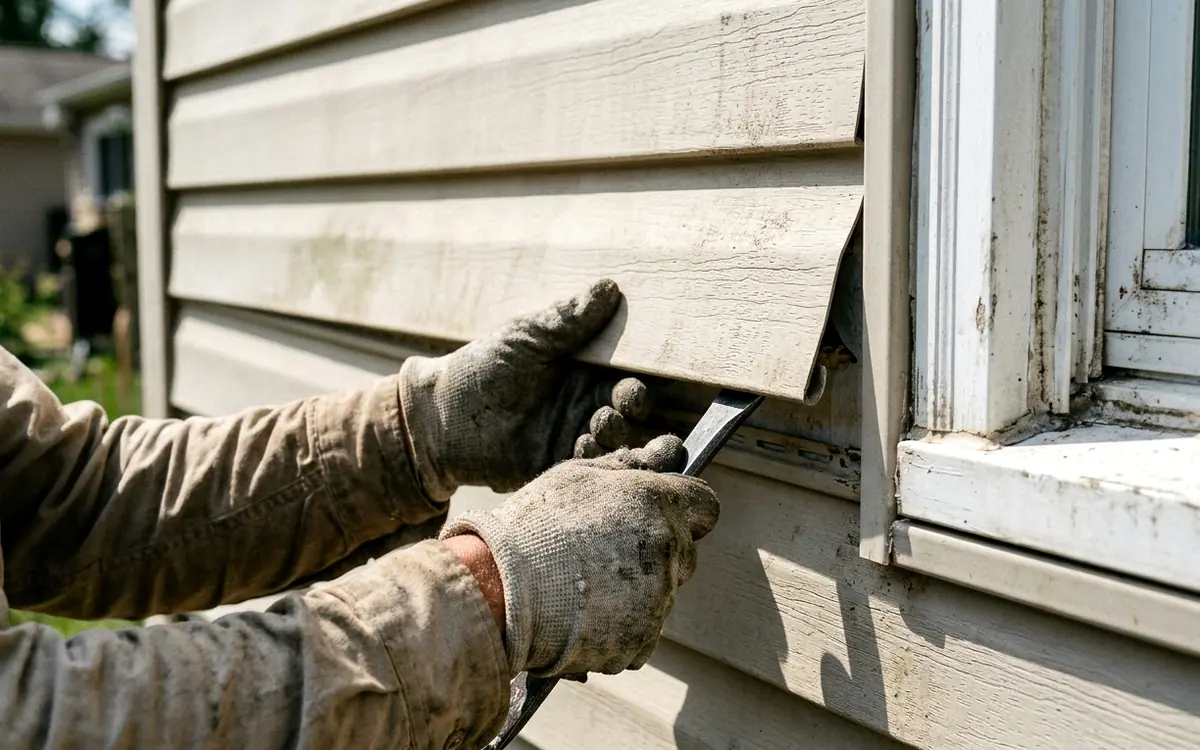
Siding repair covers replacing cracked, rotted or loose pieces, resealing open joints, and blending new material into the existing wall. You need it when one or two sections fail while the rest still holds up. A visit starts with finding why the piece failed, then replacing it and fixing the cause so the repair stays put.
How we handle siding repair on St. Louis homes
A good siding repair starts by asking why the piece failed. A cracked panel from a baseball is a one-piece swap. A rotted board at the base of a wall is a symptom of splash-back, a leaky gutter or missing flashing. If we only replace the board, the new one rots in a few years, so we trace the water, fix the source, and then repair the wall.
Matching is the hard part of repair. Vinyl fades, wood weathers, and manufacturers change profiles, so a brand-new panel can look different beside twenty-year-old siding. We compare the profile, reveal, texture and color against what is available, and when an exact match is not on the shelf we pull panels from a hidden wall, like the back or inside a gable, to patch visible areas. That keeps the front looking consistent.
Some repairs are quick: re-nailing a loose course, resealing a joint at a corner, or cutting out a damaged section and locking in a new piece. Others take more time, such as opening a wall to replace wet sheathing or rebuilding trim after rot. Either way, we give you a plain read on whether the wall is worth repairing or is approaching the point where a larger project makes more sense.
Repair, partial replacement or full resurface?
Single-piece swap
For one cracked panel or board with a dry wall behind it. This is the quickest option and works best when the siding is still in good shape overall.
Section replacement
When damage spreads across a gable, a dormer or one wall, replacing the full section gives a uniform look and lets us fix the wrap and flashing behind it.
Patch with hidden-wall siding
On faded siding that no longer matches, we can move good panels from a back wall to the front and place new ones where they will not be noticed.
Plan a full resurface
If panels are brittle everywhere, color has faded past matching, or rot keeps returning, repairs are spending money on a finished wall. We explain when resurfacing is cheaper over time.
What siding repair costs in the St. Louis area
Most siding repairs are priced by the visit and the amount of material, not by the square. Swapping a single panel takes less than an hour and costs little, while opening a wall to replace wet sheathing and rebuilding a corner takes a day or more. Hard-to-match materials, high second-story work and old homes with unusual profiles all raise the price. We explain the repair scope up front so the number makes sense.
Compare every roofing and siding price range or plan the order of your exterior work.
| Work | Typical range |
|---|---|
| Replace one or two vinyl panels | $187 to $342 |
| Reseal joints and reset trim, per wall | $264 to $538 |
| Replace rotted boards and sheathing, per section | $486 to $1,372 |
| Gable or dormer section replacement | $1,163 to $2,847 |
These are typical St. Louis ranges for planning, not quotes, and hidden damage behind a failed piece can change the scope.
How we repair and match siding on your wall
- 1
Find the cause before cutting
We check gutters, roof edges, window flashing and sprinkler spray for the source of the damage. A repair only lasts when whatever hurt the wall is fixed first.
- 2
Remove the damaged section
Using a zip tool for vinyl, or a pry bar and saw for boards, we release only what has to come out, protecting nearby pieces and the wrap behind them.
- 3
Repair wrap and sheathing
Wet or soft sheathing is replaced, wrap is patched with overlapping tape so water sheds, and any missing flashing is added before new material goes up.
- 4
Match and install the new piece
We test fit the closest profile and color, lock or nail the piece to the same pattern as the wall, and trim it to meet adjacent courses with a clean line.
- 5
Seal, paint and clean up
Joints are sealed where needed, new wood or board is primed and painted to blend, and the area is cleaned. We point out the repair so you know where to look in the future.
Which siding problems can be fixed with a spot repair?
One or two cracked panels
A single impact from a ball, branch or ladder usually breaks one panel. Cutting it out and locking in a matched replacement is a short job when the wall behind it is dry.
Loose or hanging courses
Panels that flap, rattle or hang from the wall after wind need to be re-hung, not just pushed back. Missing nails or torn nail slots are usually the cause.
Gaps at corners and trim
Open joints beside corner posts, windows or doors let water and insects in. A fresh sealant joint plus resetting trim often finishes the repair.
Rot at the bottom of boards
Soft board ends close to the ground or under a leaking gutter can be cut out and replaced. We also fix the splash source so the rot does not return.
Holes from woodpeckers or squirrels
Small holes can be filled or patched, but larger ones need a panel replaced. We also look for what attracted the animal, such as insects living inside the wall.
Missing pieces after a storm
A section blown off in wind leaves wrap and sheathing exposed. A quick patch limits water entry until the proper piece is matched and installed.
Siding repair on St. Louis brick, ranch and split level homes
On the city's brick houses, siding is limited to dormers, gables and the back, and those small areas take a lot of weather. Gable ends catch driving rain, and dormer cheeks sit where roof runoff splashes onto siding. A repair here often means fixing the roof-to-wall joint at the same time. We look at flashing where shingles meet siding, because a small gap turns into rot behind the boards.
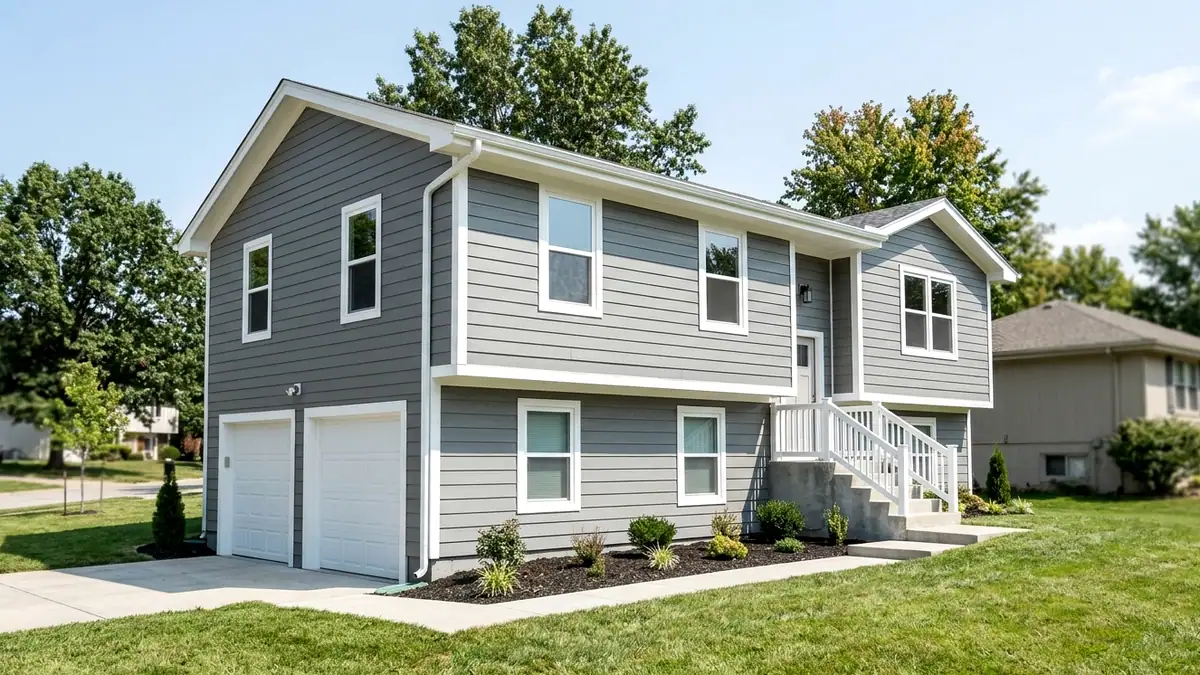
In St. Louis County and St. Charles County, the common repairs are different: loose vinyl on windy ridges, corner cracks on 1990s subdivision homes, and boards softened by gutter overflow. Old vinyl gets brittle in January cold, so a thrown snow shovel or a ladder bump can crack it. We bring a range of profiles to match, and where the siding is too faded to match, we say so and discuss options.
Where we handle siding repair
The city, the counties and the towns below cover most of the homes we work on. If yours is not listed, call and ask.
- City of St. Louis 63102
- St. Louis County, MO 63105
- St. Charles County, MO 63301
- Florissant, MO 63031
- Chesterfield, MO 63017
- Oakville, MO 63129
- St. Charles, MO 63301
- O'Fallon, MO 63366
- St. Peters, MO 63376
- Kirkwood, MO 63122
- Mehlville, MO 63125
- Belleville, IL 62220
- University City, MO 63130
- Ballwin, MO 63011
- Wentzville, MO 63385
- Hazelwood, MO 63042
- Webster Groves, MO 63119
- Edwardsville, IL 62025
- Collinsville, IL 62234
- Alton, IL 62002
- O'Fallon, IL 62269
- Arnold, MO 63010
- Affton, MO 63123
- Jefferson County, MO 63050
Shingle, siding and window lines we install and repair around St. Louis include GAF, Owens Corning, CertainTeed and James Hardie, plus the other brands below.
- GAF
- Owens Corning
- CertainTeed
- IKO
- Atlas
- Malarkey
- James Hardie
- LP SmartSide
- Alside
- Mastic
- DaVinci
- Velux
- Carlisle
- Firestone
Siding Repair questions
Can you match siding that has faded for twenty years?
Often, yes, but not always exactly. We compare profile, reveal and color against current stock and against what other walls look like. When new panels would stand out, we move sound panels from a hidden wall to the front and place the new ones in the back, or we suggest replacing the full wall for a uniform look.
How long does a typical siding repair take?
A single panel swap is usually done in under an hour. Resealing and resetting trim on one wall may take a half day, while replacing wet sheathing and boards across a gable can take one to two days. Weather affects timing, since wrap and sheathing should not be left open in rain.
Is it worth repairing old aluminum or wood siding?
Usually, if the wall behind it is dry and the damage is limited. Aluminum can be patched with matching panels, and wood boards can be spliced, primed and painted. If the paint has failed across most walls, or rot appears in many spots, a larger project is often the smarter use of money.
What can I fix myself before calling about siding repair?
Safe, small jobs include washing off mildew with a soft brush, re-seating a loose panel along its lock, and tracing where gutters overflow onto the wall. Avoid climbing ladders to nail or caulk high sections, and do not pry on brittle vinyl in cold weather. Call us for anything near windows, roofs or rot.
Does a siding repair include fixing the water damage behind it?
It should. Opening the wall around a failed piece shows whether wrap, sheathing or framing got wet. We replace what is soft, add flashing where it was missing, and let the wall dry before closing it up. A cosmetic patch over a wet wall is the repair we try to avoid.
Related work we often pair with siding repair
Vinyl Siding
Vinyl siding options. Vinyl remains the most common siding on St.
Hail Damage Siding Repair
Storm damaged siding. Spring hail leaves cracked vinyl, dented aluminum and bruised board on St.
Soffit & Fascia Repair
Roof edge trim repair. The soffit and fascia close the edge of your roof, keep out birds and wasps, and carry your gutters.
Gutter Repair
Fix the gutter, not the symptom. A gutter that sags, drips at a seam or hangs by a few old spikes can often be saved.
Need siding repair in St. Louis?
Call any hour. A roofer answers, asks a few questions and sets up a visit.