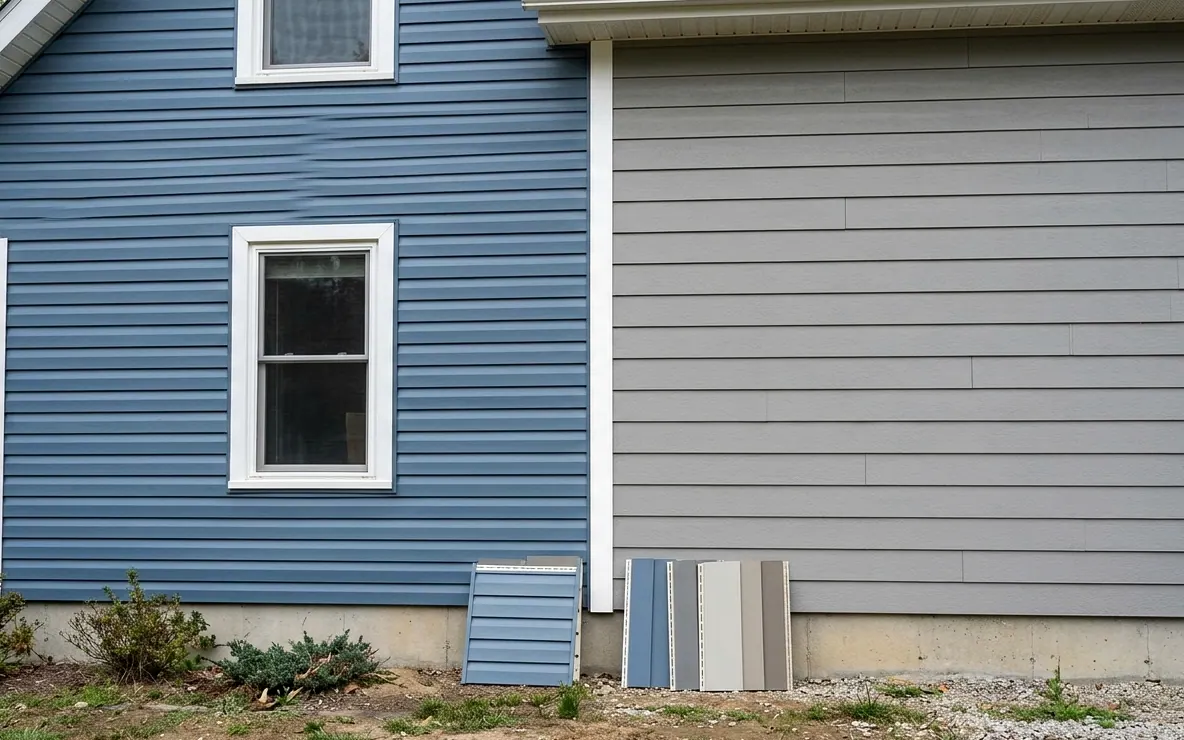
What each material actually is
Vinyl siding is extruded PVC plastic formed into long panels that hang from a nailing strip and lock together. It comes in many colors, some insulated with a foam backer, and the color runs all the way through the panel. It is light, quick to install, and the most common siding on St. Louis homes built from the 1960s on.
Fiber cement is a mix of cement, sand, and cellulose fibers pressed into planks and panels. Brands such as James Hardie are common. It is heavy, cut with special blades, and usually comes primed for paint or with a baked-on factory color. It mimics wood lap and shake closely and keeps its shape in heat.
Hail, cold, and heat performance
Vinyl gets brittle in a hard freeze, so a hail stone or a flying branch can crack a panel on a cold day. In summer, dark-colored vinyl can warp or buckle when it is nailed too tight and cannot slide as it expands. A big spring hailstorm often leaves cracked and chipped vinyl on the windward wall of the house.
Fiber cement is far less affected by temperature swings and tends to survive hail with small chips instead of cracks. It resists fire and does not rot like wood. The tradeoff is weight and handling, since a damaged board must be cut out and replaced with care, and cut edges must be sealed against the humid summers here.
- Vinyl costs less and needs no paint, but it cracks in cold and in hail more readily than fiber cement.
- Fiber cement handles hail and heat better, but it is heavier, costs more, and needs caulk and repainting over time.
- Siding is a water-management system, so flashing at windows and doors matters as much as the panel you choose.
- Ask for matching trim and flashing scope on every estimate so you compare the same job, not different ones.
How they look on St. Louis houses
Much of the city is brick, so siding goes on frame houses, upper stories, additions, gables, and dormers. Vinyl suits a ranch or split level in the county where the goal is clean lines and low upkeep. Fiber cement shines on bungalows, foursquares, and Craftsman-style frame homes, where deep shadow lines and wood-like trim details matter.
If your home sits in a historic district, ask about review rules before you order. Some neighborhoods want specific profiles, colors, or trim widths. Corner boards, window casings, and frieze trim change the whole look, and they matter as much as the siding material. We bring samples to the house so you can judge them in your light.
What each costs installed
Typical installed prices for a standard house run about $437 to $788 per square for basic vinyl and $812 to $1,340 per square for fiber cement, with premium insulated vinyl in between. A 20 square wall area therefore gives a gap of several thousand dollars between the two. Trim, tear-off, and house wrap change the total.
Watch what is included. Fiber cement that arrives unprimed and gets painted on site adds paint cost and labor, but factory finishes cost more up front and fade slowly. Vinyl is cheaper per square but may need more frequent replacement of cracked panels after storms. Ask for each estimate to show the same trim and flashing scope.
Upkeep, moisture, and the long run
Vinyl needs only an occasional wash, and it never needs paint. Fiber cement needs more attention: caulk joints should be checked every few years, and site-painted boards typically need repainting every 10 to 15 years. Neither material works without flashing at windows, doors, and horizontal transitions, because water behind the cladding is what causes real damage.
Siding is a water-management system, not just a skin. Good installers hang a weather barrier, tape the seams, flash every opening, and leave a gap at the bottom so water can drain. We look behind the old siding when it comes off and fix rotted sheathing before the new panels go up. That attention to hidden detail is where installers differ most.
How to choose between the two
Choose vinyl when budget and low upkeep come first, the house has simple walls, and you accept that a bad storm may mean replacing some panels. Choose fiber cement when you plan to stay a long time, want a more substantial look, or live in a neighborhood where hail is a regular visitor and appearance matters.
A third option is to mix the two: fiber cement on the street-facing wall and vinyl where it is hard to see. Whatever you pick, get the estimate in writing with the trim, flashing, and tear-off scope spelled out. Call (314) 461-6440 and we will bring samples and measure the house. Samples held against the brick and trim make the decision much easier than a catalog photo.
Elmer writes and updates the Exterior Guides for Stars and Stripes Roofing and Exteriors, drawing on the roofs, siding and gutters our crews work on across St. Louis, St. Louis County, St. Charles County and the Metro East.