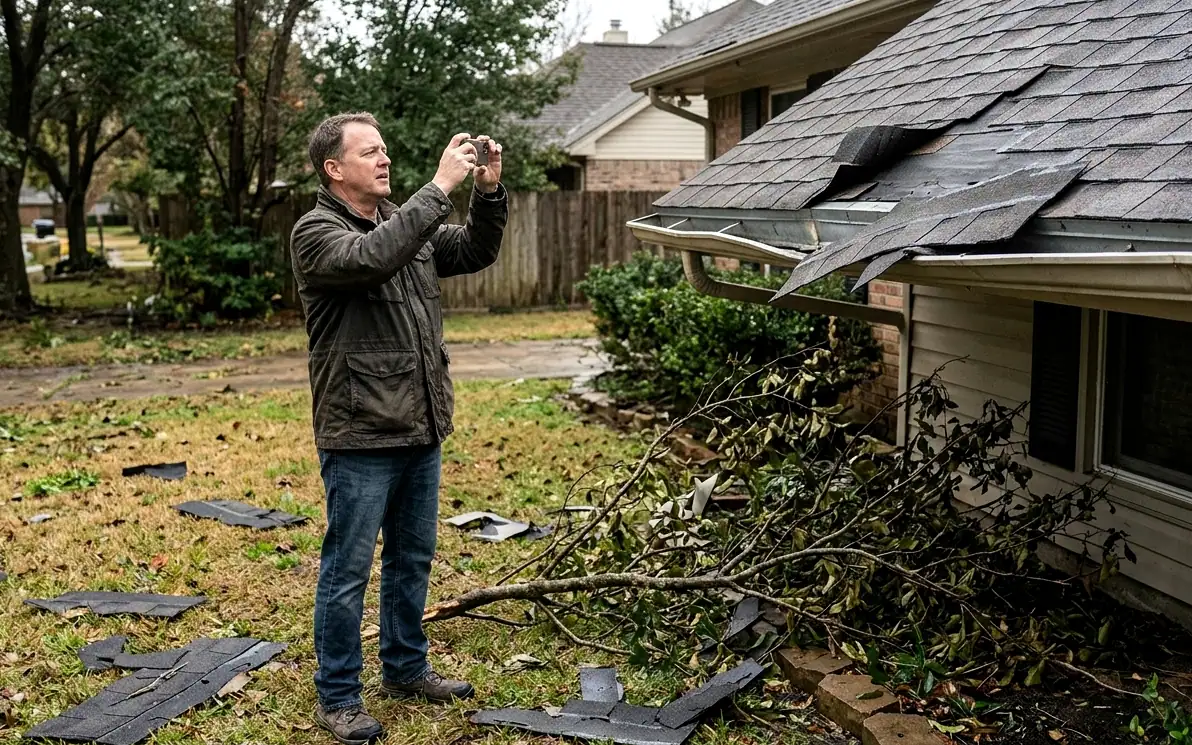
Step one: stop the damage and take photos
Your policy expects you to take reasonable steps to prevent more damage. That can mean a temporary tarp over an open section, plywood over a broken window, or buckets under a drip. Keep receipts for anything you spend on emergency protection, and photograph the damage before and after you cover it. Do not throw away damaged pieces until the carrier has had a chance to see them.
Take wide shots of each side of the house, then close-ups of dents, cracked shingles, broken siding, and any ceiling stains. Put the date and time of the storm in your notes. If a tree hit the roof, photograph the tree and the point of contact before anyone cuts it up. Good records make every later step easier.
Step two: read your policy before you call
Find the declarations page and check three things: your deductible for wind and hail, whether it is a flat dollar amount or a percentage of the home's coverage amount, and whether roof coverage pays actual cash value or replacement cost. Actual cash value subtracts depreciation for age, and that can make a big difference on an older roof.
Also look for the deadline to report a loss and any special rules for roofs over a certain age. Policies differ, and the wording governs. If you cannot find an answer, ask your agent to explain it in plain terms. We can describe what the roof needs, but only the policy tells you what will be covered.
- Protect the house first, keep receipts, and photograph damage before and after any temporary cover goes on.
- Check your wind and hail deductible, depreciation rules, and reporting deadline in the policy before you call.
- Your roofer can document the damage and walk the adjuster through it, but cannot decide or promise coverage.
- Review the estimate line by line, request a supplement for missing items, and keep every letter and photo organized.
Step three: file the claim and keep a log
Call the claims number on your policy or the carrier's app, describe what happened and when, and ask for a claim number. Write down the name of everyone you speak with, the date, and what they said. Send photos if the carrier asks for them, and follow up in writing so there is a record.
You do not need a contractor's estimate to open a claim. Describe the damage you can see and state that you want the roof inspected. Be accurate and avoid guessing at causes or speculating about what is covered. If a question is unclear, you can say you will confirm the detail and get back to them.
Step four: the adjuster inspection
The carrier will send an adjuster, or in some cases arrange a desk review from photos. If you can, be home for the visit, and have a roofer there to point out the damage the adjuster should see. Hand over your photos and your notes about the storm date. Ask the adjuster what the next step is and when you should expect the written result.
We walk the roof with you, mark the spots, and answer the technical questions, but we do not negotiate your claim and we cannot promise any outcome. That conversation belongs to you and your carrier. What we can do is make sure the damage is documented clearly, with photos and slope counts, so nothing visible is missed.
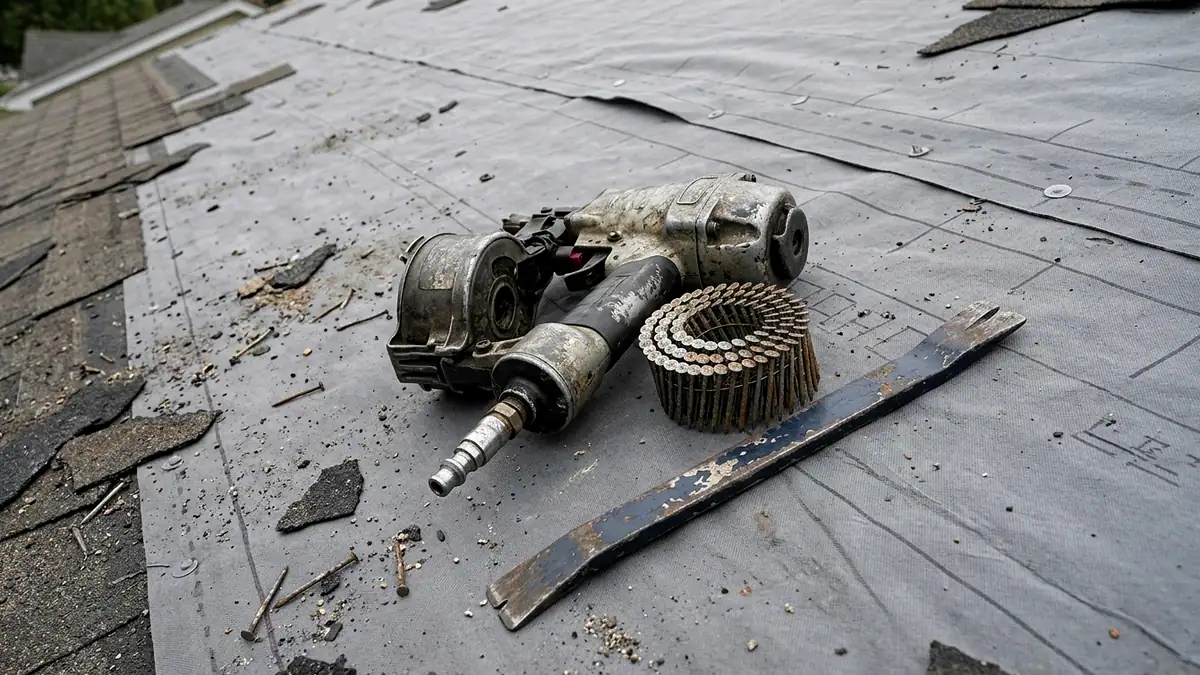
Step five: read the estimate line by line
When the estimate arrives, check the measurements, the number of squares, and whether it includes flashing, drip edge, ridge caps, vents, underlayment, and decking if needed. Compare the scope against what a roofer says the repair actually requires. Look at how much depreciation was subtracted and whether any of it can be recovered once the work is done.
If items are missing, a supplement can be requested with photos and a written reason. Keep the payment letter, the estimate, and a contractor's scope together in one folder. Do not sign a work agreement until you understand how much the claim will pay and what the roof will cost, so the two numbers can be compared.
Step six: if you disagree with the result
Start by asking the carrier to explain the decision in writing. If you have new evidence, such as a roofer's photos or a second inspection, ask for a reinspection. Your policy may include an appraisal clause for disputes over the amount of loss, and it is worth reading how that process works and what it costs.
You can also contact the Missouri Department of Commerce and Insurance, which takes consumer questions and complaints about carriers. Keep your tone factual and your paperwork organized. Many claims are settled by supplying clear documents. Call (314) 461-6440 if you want us to inspect the roof and give you a written scope of what we find.
Elmer writes and updates the Exterior Guides for Stars and Stripes Roofing and Exteriors, drawing on the roofs, siding and gutters our crews work on across St. Louis, St. Louis County, St. Charles County and the Metro East.