Asphalt shingles: 3-tab versus architectural
Three-tab shingles are being phased out, and the ones still on St. Louis homes typically last 15 to 20 years. Architectural shingles are thicker and are usually rated for 25 to 30 years, but here a realistic span is 18 to 25. Summer heat dries out the asphalt, hail bruises it, and a poorly ventilated attic cooks the shingles from underneath.
The roofs that reach the high end share a few traits. They have a simple shape with few valleys, good attic ventilation, a proper starter strip and drip edge, and no overhanging limbs rubbing the surface. The roofs that fail early are often on south and west slopes where sun and storm exposure are worst.
Metal roofs: standing seam and exposed fastener
A well-installed standing seam roof commonly gives 40 to 70 years, because the fasteners are hidden and the panels expand and contract on clips. Exposed fastener panels, the ribbed kind with visible screws, are shorter lived at roughly 20 to 35 years, since the rubber washers dry out and the screws back out over time.
Hail dents metal rather than breaking it, and dents often only change the look. Thin gauge panels dent easily, so gauge and finish matter in a hail state like Missouri. Metal also needs careful flashing at chimneys and walls, because a metal roof with bad flashing leaks as readily as any other roof. A homeowner who wants metal should ask about panel thickness, paint finish, and the clip system before comparing prices.
- Plan on 18 to 25 years from architectural shingles in Missouri, not the 30 printed on the wrapper.
- Standing seam metal commonly lasts 40 to 70 years, while exposed fastener panels often need work by year 25.
- Slate and clay tile outlast their nails, underlayment, and flashing, so repairs continue throughout their long lives.
- Flat roofs live or die by drainage, seams, and parapet flashing, so keep scuppers clear and check after storms.
Slate and clay tile: the long-lived options
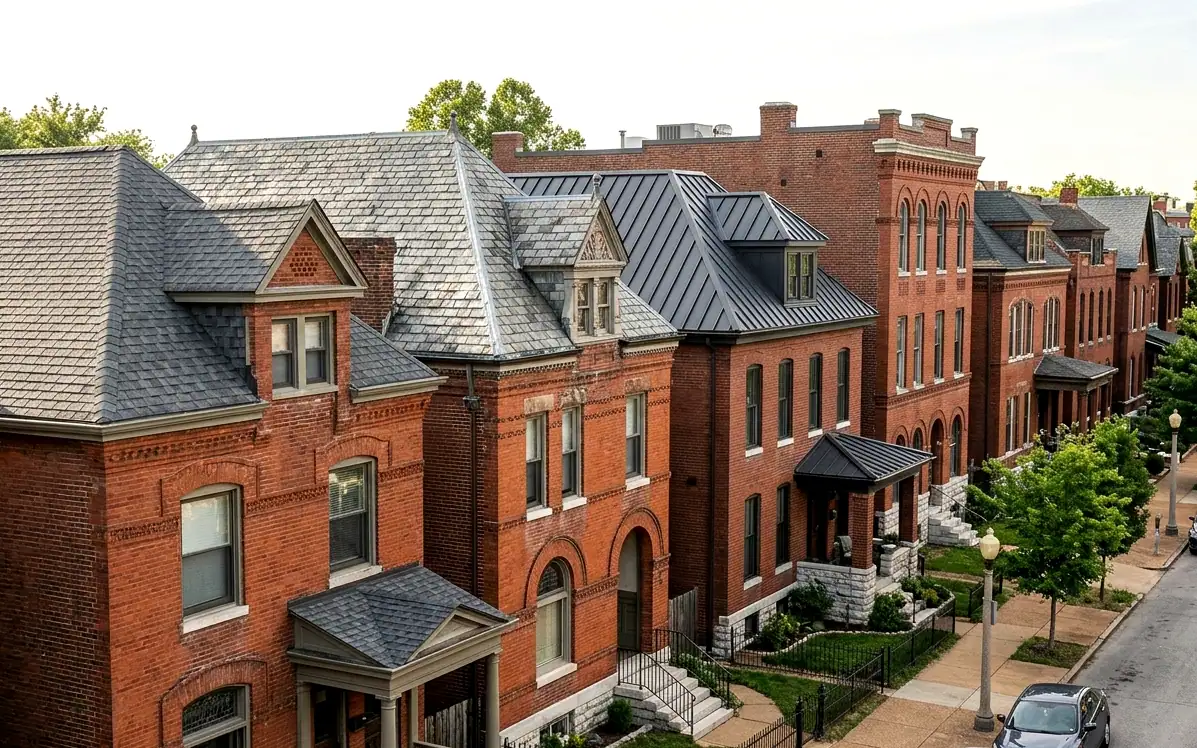
Hard slate can last 75 to 150 years, and clay tile commonly lasts 50 to 100. Both are common on older brick homes in south city, and both have the same weak points: underlayment, nails, and flashing wear out in 30 to 60 years even when the tile or stone is fine. A slate roof is really a series of repairs spread over a century.
Hail is the main hazard for tile, because a fast stone can crack a clay tile outright, and foot traffic breaks both materials. Cheap replacements that do not match the original profile stand out. Keep a small stock of matching pieces if you can, because sourcing them years later gets harder. A salvaged piece from a similar roof can also fill a gap when a new match does not exist.
Flat roofs: membranes and built-up systems
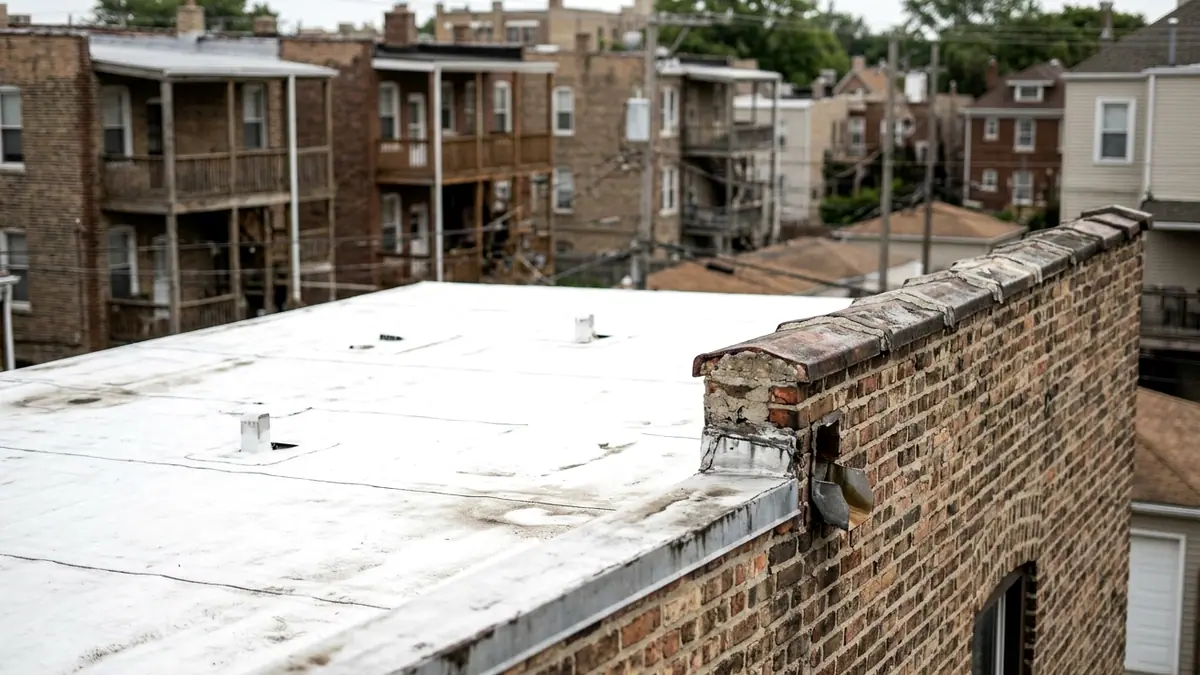
Flat roofs are where lifespans vary the most. TPO typically lasts 15 to 25 years, EPDM 20 to 30, and modified bitumen 15 to 25. Built-up gravel roofs on older commercial buildings often reach 20 to 30. Seams, flashing at parapets, and standing water decide whether a flat roof reaches the top of its range or fails in a decade.
St. Louis flats get hit with both summer heat and winter ice, so the membrane expands and contracts every day. Ponding water is the biggest killer. A flat roof that drains within two days of rain lasts much longer than one that holds puddles, and a clear scupper or drain is the cheapest insurance you can buy.
What shortens roof life around here
Missouri has a few repeat offenders. Attic heat accelerates shingle aging, spring hail bruises roofs that look fine from the street, and freeze-thaw cycles split sealant and lift flashing. Trees drop limbs, hold moisture against the surface, and clog gutters. Poor installation cuts life short more than any of those, especially thin underlayment and missing drip edge.
Maintenance adds years. Clearing debris, replacing cracked pipe boots, resealing flashing, and checking after storms catch small failures before water reaches the deck. A roof that gets a yearly look can reach the top of its range, while an ignored roof often loses five years or more to a problem that started small. Small repairs done on time cost far less than a decking replacement caused by a long-ignored leak.
How to tell yours is near the end
From the ground, look for curled or cupped shingles, bare patches where granules have worn away, cracked flashing, and moss or dark streaks on the north side. In the attic, look for daylight, stained decking, and damp insulation. A roof that shows several of these at once is usually near the end, regardless of what the calendar says.
Age is a clue, not a verdict. A 22 year old roof in good shape may have years left, and a 12 year old roof damaged by hail may be done. We inspect, take photos, and tell you where yours stands. Call (314) 461-6440 and we will walk you through what we see. Either way, a written look at the roof beats guessing from the street.
Elmer writes and updates the Exterior Guides for Stars and Stripes Roofing and Exteriors, drawing on the roofs, siding and gutters our crews work on across St. Louis, St. Louis County, St. Charles County and the Metro East.