Why our winters are hard on exteriors
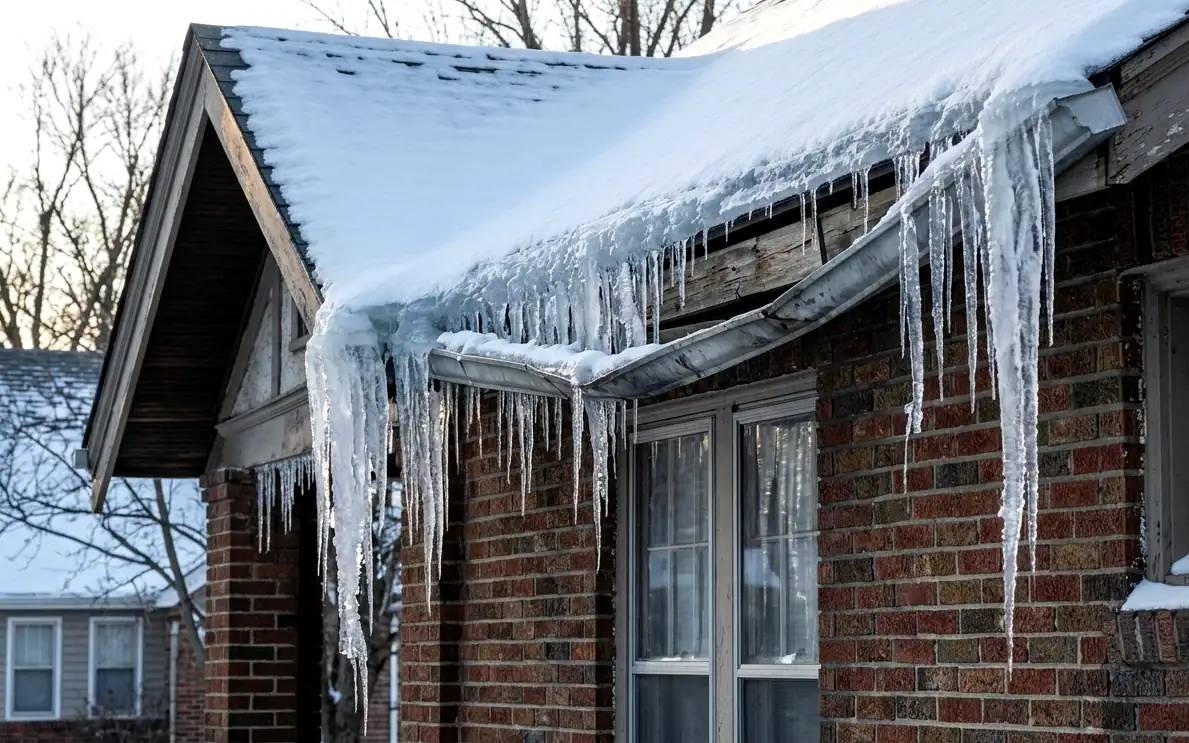
A single week in January can bring a freezing morning, a thaw by afternoon, freezing rain overnight, and a fresh dusting of snow. Each cycle moves water into small gaps, freezes it, and expands it. Over many winters that expansion pries open flashing seams, cracks sealant, and loosens shingles that looked sound in October. Spring is when the hidden damage shows itself.
Occasional ice storms add weight to branches, gutters, and power lines. Snow that melts on the sunny side of a roof and refreezes in the shade creates icicles and ice ridges. None of this is extreme by northern standards, but the constant switching between states is hard on every joint, which is why late winter is repair season.
How ice dams develop on St. Louis roofs
An ice dam starts inside the house. Heat leaking into the attic warms the roof deck, snow above melts, and the water runs down until it reaches the cold overhang past the wall, where it freezes into a ridge. The ridge grows, blocks the next melt, and the pooled water backs up under the shingles.
Ice dams are less common here than in Minnesota, but they do happen after a heavy snow followed by a cold snap. Homes with thin attic insulation, leaky ceiling penetrations, and poor ventilation are the usual victims, such as 1950s ranches and older brick homes with finished attics. The water shows up as stained ceilings along exterior walls.
- Repeated freezing and thawing pries open flashing, sealant, shingle seals, and masonry joints more than steady cold does.
- Ice dams begin with attic heat loss, so insulation, air sealing, and ventilation are the real cure.
- Clean gutters in November and clear drains after snow so meltwater has a path off the roof.
- Never chip ice off a roof, and call right away if water appears on a ceiling or an exterior wall.
What freeze-thaw does to shingles and gutters
Water that gets under the shingle edge freezes, lifts the tab, and breaks the seal strip that holds the shingle down. In spring those loose tabs catch the wind and tear off. Cracks in flashing and old sealant widen in the same way, and a small seep in December is a wet ceiling by March.
Gutters take a beating too. A gutter full of ice carries a load that can bend it or pull the hangers out of the fascia. Standing water in a clogged gutter freezes and splits seams, and downspouts blocked with ice send meltwater over the edge where it freezes on the walkway. A clean gutter in November avoids most of this.
Box gutters, flats, and parapet roofs
Many older south city homes have built-in box gutters, lined troughs tucked into the cornice. These hold water in winter, and a lined seam that has opened with age can leak straight into the wall. Ice sitting in the trough pushes the liner up and splits solder or sealant at the joints. Both spots deserve a look each fall, before the first hard freeze arrives.
Flat roofs behind parapet walls collect snow and release it slowly. Drains and scuppers choked with ice send meltwater across the surface, and the same water seeps into any gap at the wall edge. After a heavy snow, clear the drain openings gently from the ground or the roof hatch, and never chip at the membrane.
Brick, mortar, and chimney damage
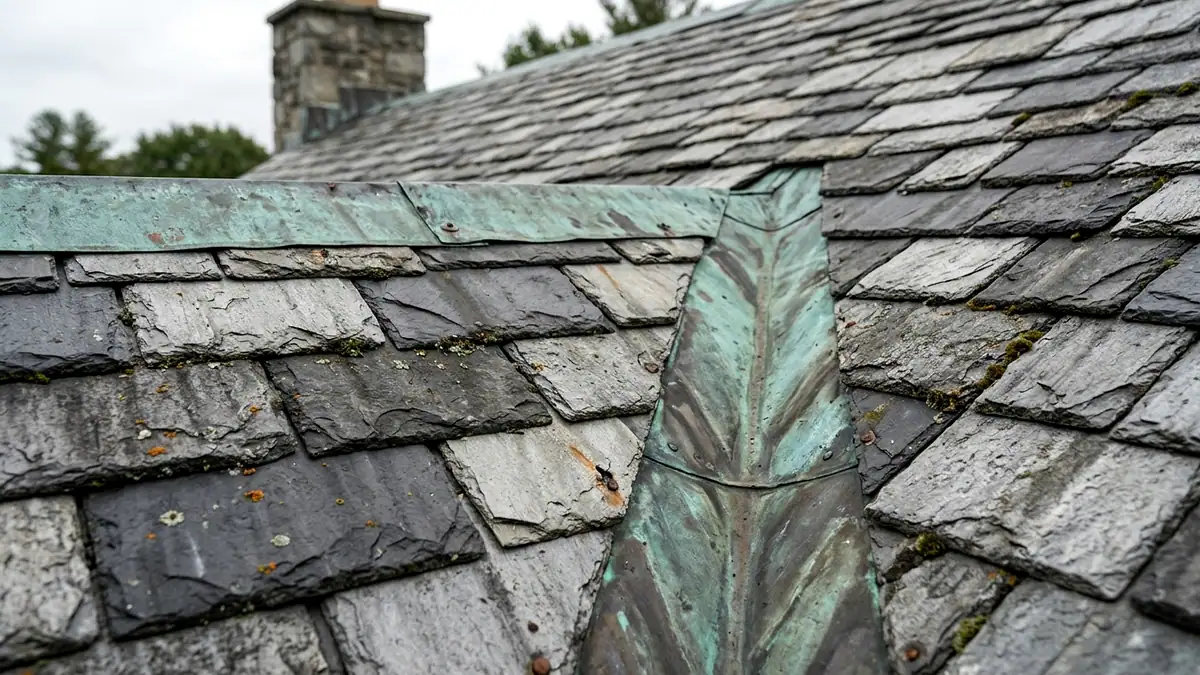
Soft historic brick absorbs water, and when that water freezes it pushes off the outer face of the brick in a process called spalling. Failed mortar joints let more water in. You see it as flaking brick, white salt deposits, and open joints, especially on parapets, chimneys, and the sides that stay damp. Left alone, that moisture also rusts the steel lintels over windows and doors.
Chimney crowns and caps take the worst of it. A cracked crown lets water into the flue and the brick below, and freeze-thaw widens the crack each winter. Repointing and a new crown or cap are cheaper than rebuilding a chimney top. We check masonry at the roofline during inspections because it affects the flashing as well.
What to do before and after winter
In fall, clean the gutters, look for loose shingles, check the flashing, and add insulation or air sealing where the attic leaks heat. Seal the gaps around recessed lights, plumbing chases, and the attic hatch, because warm air leaking up is what melts the snow. Ventilation keeps the roof deck cold enough to stay frozen.
After a storm, use a roof rake from the ground to pull snow off the lowest few feet if you can reach it safely. Do not hack at ice with a hammer or shovel, which damages shingles. If water is already coming through a ceiling, call (314) 461-6440 any hour and we will tell you what to do first.
Elmer writes and updates the Exterior Guides for Stars and Stripes Roofing and Exteriors, drawing on the roofs, siding and gutters our crews work on across St. Louis, St. Louis County, St. Charles County and the Metro East.